
Serwer DELL PowerEdge R750
Może Cię zainteresować


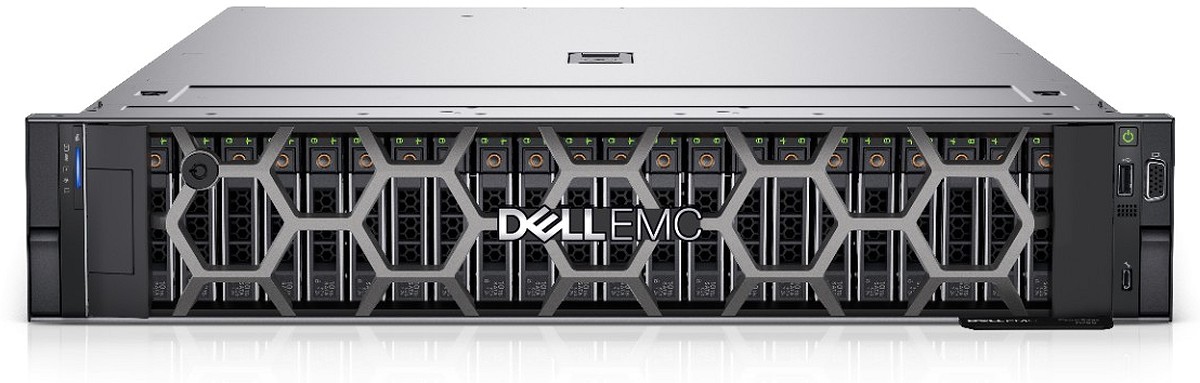
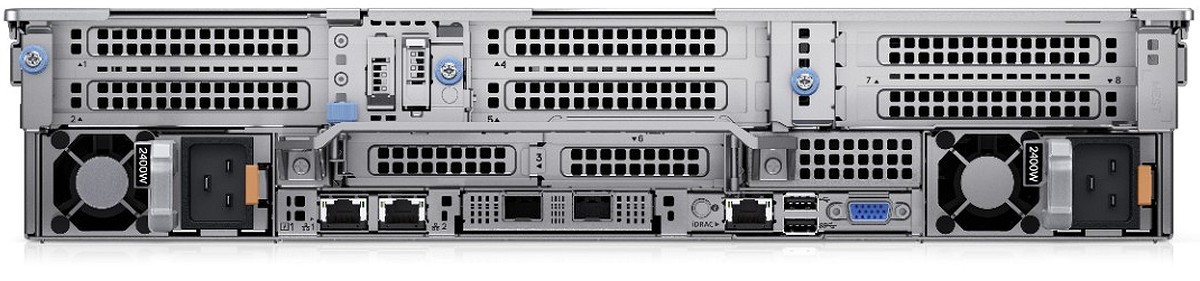
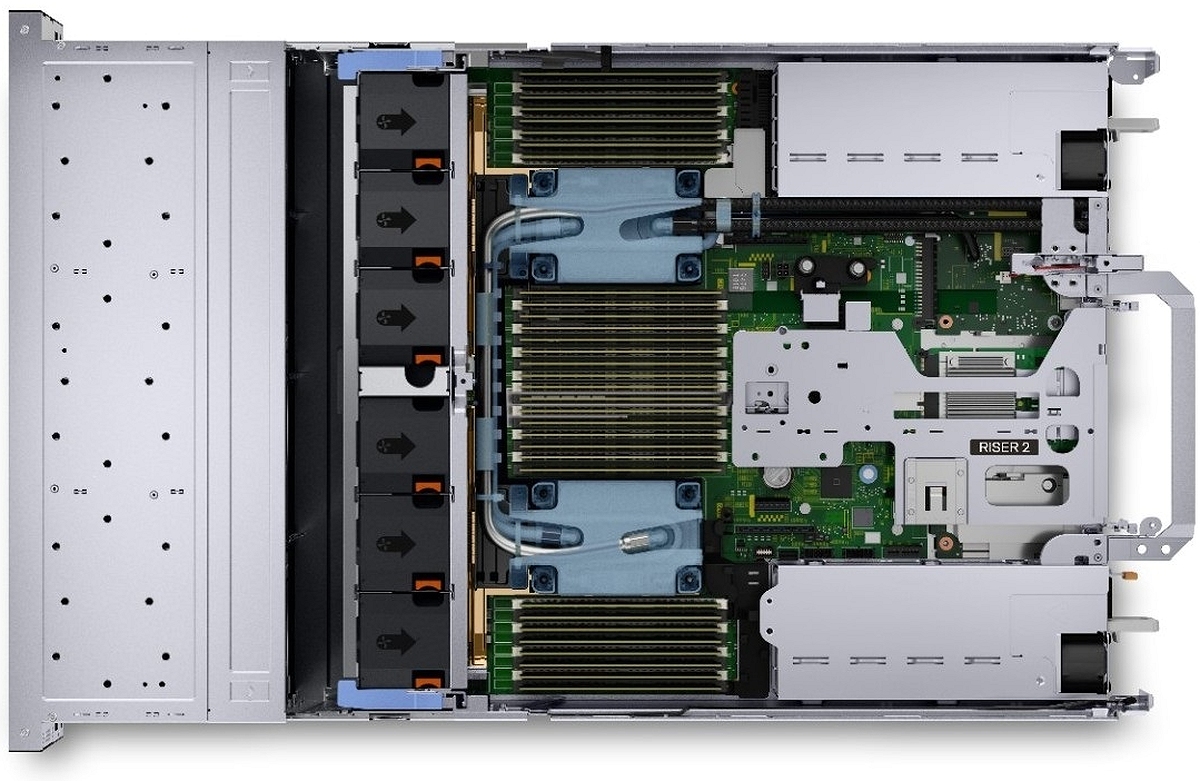

-
Condition
Refurbished
-
CPU
2×8GB DDR4 RDIMM 2133MHz
-
RAM
noHDD (up to 8 HDD 2.5'' SFF)
-
Condition
Refurbished
-
CPU
2×8GB DDR4 RDIMM 2133MHz
-
RAM
noHDD (up to 8 HDD 2.5'' SFF)
-
Condition
Refurbished
-
CPU
2×8GB DDR4 RDIMM 2133MHz
-
RAM
noHDD (up to 8 HDD 2.5'' SFF)
-
Condition
Refurbished
-
CPU
2×8GB DDR4 RDIMM 2133MHz
-
RAM
noHDD (up to 8 HDD 2.5'' SFF)

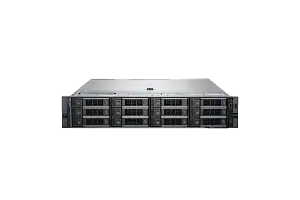
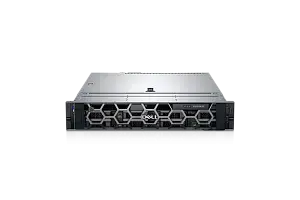
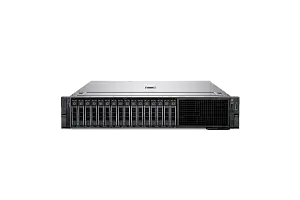


- Processors
- Up to two 3rd Generation Intel Xeon Scalable processors, with up to 40 cores per processor
- Memory
- 32 DDR4 DIMM slots, supports RDIMM 2 TB max or LRDIMM 4 TB max, speeds up to 3200 MT/s Up to 16 Intel Persistent Memory 200 series (BPS) slots, 8 TB max Supports registered ECC DDR4 DIMMs only
- Storage controllers
- Internal Controllers: PERC H745, HBA355I, S150, H345, H755, H755N Boot Optimized Storage Subsystem (BOSS-S1): HW RAID 2 x M.2 SSDs 240 GB or 480 GB Boot Optimized Storage Subsystem (BOSS-S2): HW RAID 2 x M.2 SSDs 240 GB or 480 GB External PERC (RAID): PERC H840, HBA355E
- Drive bays
- Front bays: Up to 12 x 3.5-inch SAS/SATA (HDD/SSD) max 192 TB Up to 8 x 2.5-inch NVMe (SSD) max 122.88 TB Up to 16 x 2.5-inch SAS/SATA/NVMe (HDD/SSD) max 245.76 TB Up to 24 x 2.5-inch SAS/SATA/NVMe (HDD/SSD) max 368.84 TB Rear bays: Up to 2 x 2.5-inch SAS/SATA/NVMe (HDD/SSD) max 30.72 TB Up to 4 x 2.5-inch SAS/SATA/NVMe (HDD/SSD) max 61.44 TB
- Power supplies
- 800 W Platinum AC/240 Mixed Mode 1100 W Titanium AC/240 Mixed Mode 1400 W Platinum AC/240 Mixed Mode 1100 W DC -48 - 60 V
- Cooling options
- Air cooling, optional processor liquid cooling
- Fans
- Standard fan/High performance SLVR fan/High performance GOLD fan Up to six hot plug fans
- Dimension
- Height – 86.8 mm (3.41 inches) Width – 482 mm (18.97 inches) Depth – 758.3 mm (29.85 inches) - without bezel and 772.14 mm (30.39 inches) - with bezel
- Form Factor
- 2U rack server
- Embedded management
- iDRAC9 iDRAC Direct iDRAC Service Module Quick Sync 2 wireless module
- Bezel
- Optional bezel or security bezel
- OpenManage Software
- OpenManage Enterprise OpenManage Power Manager plugin OpenManage SupportAssist plugin OpenManage Update Manager plugin
- Mobility
- OpenManage Mobile
- Integrations and Connections
- OpenManage Integrations BMC Truesight Microsoft System Center Red Hat Ansible Modules VMware vCenter and vRealize Operations Manager OpenManage Connections IBM Tivoli Netcool/OMNIbus IBM Tivoli Network Manager IP Edition Micro Focus Operations Manager Nagios Core Nagios XI
- Security
- Cryptographically signed firmware Secure Boot Secure Erase Silicon Root of Trust System Lockdown (requires iDRAC9 Enterprise or Datacenter) TPM 1.2/2.0 FIPS, CC-TCG certified, TPM 2.0 China NationZ
- Embedded NIC
- 2 x 1 GbE LOM
- Network Options
- 1 x OCP 3.0 (x8 PCIe lanes)
- GPU options
- Up to two double-width 300 W, or four single-width 150 W, or six single-width 75 W accelerators
- Ports
- Front Ports 1 x Dedicated iDRAC Direct micro-USB 1 x USB 2.0 1 x VGA Internal Ports 1 x USB 3.0 Rear Ports 1 x USB 2.0 1 x Serial (optional) 1 x USB 3.0 2 x RJ-45 1 x VGA (optional for liquid cooling configuration)
- PCIe
- Up to 8 x PCIe Gen4 slots (up to 6 x16) with support for SNAP I/O modules
- Operating System and Hypervisors
- Canonical Ubuntu Server LTS Citrix Hypervisor Microsoft Windows Server with Hyper-V Red Hat Enterprise Linux SUSE Linux Enterprise Server VMware ESXi
- OEM-ready version availabe
- From bezel to BIOS to packaging, your servers can look and feel as if they were designed and built by you.
Dell PowerEdge R750 overview
Dell PowerEdge R750 is a 2U, dual-socket rack server for enterprise workloads that need a balance of compute density, memory capacity, storage flexibility and PCIe expansion. As a Dell R750 2U rack server, it is based on 3rd Generation Intel Xeon Scalable processors, DDR4 memory and PCIe Gen4, making it a practical platform for modern data center consolidation without moving to a DDR5 generation.
The Dell PowerEdge R750 server can be configured with SFF, LFF and NVMe storage layouts, so it can serve as a virtualization host, database server, software-defined storage node, VDI platform, backup server or analytics system. It is also relevant for selected GPU workloads when the exact riser, PSU, airflow and cooling options are validated. Within Dell rack servers, the R750 sits between older budget platforms and newer-generation servers.
When to choose Dell PowerEdge R750
Choose the Dell R750 server when the workload is mixed, growing or difficult to size precisely. It is a good fit for virtualization clusters running VMware ESXi, Microsoft Hyper-V, Proxmox or KVM, especially when each host must support many virtual machines and still leave room for future RAM and network expansion.
For database environments such as Microsoft SQL Server, PostgreSQL, MySQL and Oracle, the R750 can be tuned toward higher CPU frequency, large memory pools and low-latency SSD or NVMe storage. For VDI and remote desktop environments, the platform provides predictable CPU performance, high RAM capacity and optional GPU acceleration, subject to configuration validation.
It also works well for software-defined storage, backup and disaster recovery nodes, business applications, analytics and general enterprise services. The main reason to consider the R750 is flexibility: it can combine dual-socket performance, scalable memory, multiple storage backplanes and PCIe Gen4 expansion in one standard 2U chassis.
Dell R750 chassis options: 8SFF, 16SFF, 24SFF and 12LFF
The chassis choice should follow the role of the server. A compute-heavy virtualization node may not need many local drives, while a database or SDS node may depend heavily on drive count, latency and redundancy. For backup and archive use, raw capacity is often more important than IOPS.
| Chassis option | Best for | Comment |
|---|---|---|
| Dell R750 8SFF | Balanced compute nodes | Good when local storage is not the main priority and the server mainly uses shared storage, SAN, NAS or external arrays. |
| Dell R750 16SFF | Virtualization and databases | Offers more room for SSD/SAS layouts, cache tiers and mirrored volumes while keeping the chassis balanced. |
| Dell R750 24SFF | High-density SSD or Dell R750 NVMe setups | Better for IOPS-oriented workloads, dense SSD pools and local storage-heavy applications. |
| Dell R750 12LFF | Backup, archive and capacity storage | Better when large raw capacity is more important than low latency or maximum IOPS. |
Final compatibility depends on the exact backplane, storage controller, riser configuration, power supplies, cabling and selected server build. This is especially important when combining NVMe drives, high-TDP CPUs, rear storage, expansion cards or GPU options in the same system.
Recommended Dell R750 configurations by workload
There is no single ideal Dell R750 configuration. A good build depends on workload profile, software licensing, redundancy model and growth plans. Use the table below as selection logic rather than a fixed bill of materials, and check the final build in the Dell server configurator.
| Workload | Recommended focus |
|---|---|
| Virtualization | More CPU cores, high RAM capacity, SSD or NVMe storage where local performance matters, and 10/25GbE networking for cluster traffic. |
| Database server | Balanced CPU frequency and core count, large RAM, low-latency SSD/NVMe storage and a controller matched to the database design. |
| Backup / archive | LFF chassis, capacity HDD/SAS/SATA drives, moderate CPU/RAM and enough network bandwidth for backup windows. |
| VDI / terminal services | High RAM, predictable CPU performance, fast boot/profile storage and optional GPU for graphics-heavy users. |
| AI inference / Dell R750 GPU workloads | Validate GPU compatibility, PSU capacity, riser layout, airflow, cooling and supported server GPUs before purchase. |
| Software-defined storage | HBA/JBOD mode, planned disk layout, redundant networking, cache strategy and cluster-level failure domains. |
For cluster deployments, it is usually better to keep hosts consistent. Matching CPU families, RAM layout, NICs and drive types simplifies maintenance and avoids uneven performance across VMware, Hyper-V, Proxmox or KVM nodes.
How to choose CPU, RAM, RAID and storage
CPU selection should start with workload behavior. More cores help virtualization, containers, multi-user environments and mixed application hosting. Higher clock speed is more useful for databases and business applications sensitive to single-thread performance. Licensing is also important: VMware, Windows Server, SQL Server, Oracle and other platforms may price by CPU, core count or edition, so the most powerful CPU is not always the most cost-effective one.
RAM is often the limiting factor in virtualization and databases. The R750 is suitable for memory-intensive workloads, and adding RAM often gives more practical value than a small CPU upgrade. Plan capacity for today’s virtual machines or database cache, future growth, failover headroom and maintenance scenarios.
For RAID and HBA selection, match the controller to the storage model. Hardware RAID is suitable for classic server deployments with mirrored or parity-protected arrays. HBA or JBOD mode is usually preferred for ZFS, Ceph, VMware vSAN, Proxmox/ZFS and other software-defined storage designs where the software layer controls disks directly. BOSS can be used for boot drives when available in the selected configuration.
Storage should follow performance and capacity requirements. HDD and LFF layouts are capacity-oriented. SSD and SFF layouts provide balanced performance and serviceability. NVMe is the best fit for low latency and high IOPS, but it must be planned together with redundancy, heat, controller/backplane support and budget.
Dell R750 vs R740, R750xs and R760
A Dell R750 vs R740, Dell R750 vs R750xs or Dell R750 vs R760 comparison is mainly about platform generation, expandability, memory type and budget. The R750 is often the balanced choice when a company wants a modern DDR4-based server with PCIe Gen4 but does not need the newest DDR5 platform.
| Model | When to consider |
|---|---|
| Dell PowerEdge R740 | Consider Dell PowerEdge R740 if budget is the priority and PCIe Gen4 or newer platform features are not required. For storage-heavy 14th Gen projects, Dell PowerEdge R740xd may also be relevant. |
| Dell PowerEdge R750 | Choose it as the balanced platform for modern DDR4-based enterprise workloads, especially when expandability matters. |
| Dell R750xs | Consider Dell R750xs as a cost-optimized alternative for scale-out and medium-density workloads, but not as the same server at a lower price. It has more limited expandability than the R750. |
| Dell PowerEdge R760 | Consider Dell PowerEdge R760 when a newer CPU platform, DDR5 memory and newer-generation I/O are required, usually at a higher price point. |
New and refurbished Dell PowerEdge R750 servers
Both new and refurbished units can be suitable for production when they are correctly configured, tested and covered by warranty. A Dell R750 refurbished system can be a rational choice for virtualization clusters, backup infrastructure, lab-to-production environments or capacity expansion when budget efficiency matters.
New units are a better fit when procurement policy requires new hardware, a very specific configuration or standardization across a new deployment. Servermall provides testing, warranty options and EU delivery for Dell PowerEdge R750 systems, including a 5-year warranty indicated on the current product page. Before ordering, confirm the exact condition, warranty terms, lead time and configuration details in the quote.
Summary: is Dell PowerEdge R750 the right server for your workload?
Dell PowerEdge R750 is a universal 2U server for enterprise workloads that need dual-socket performance, scalable RAM, flexible storage and PCIe Gen4 expansion. It is a strong candidate for virtualization, databases, VDI, software-defined storage, backup, analytics and selected GPU-accelerated workloads.
For tighter budgets, compare it with Dell PowerEdge R740. For cost-optimized scale-out nodes, compare it with Dell R750xs. For a newer DDR5 platform, compare it with Dell PowerEdge R760. Before purchase, align CPU, RAM, storage, RAID/HBA, GPU, network and warranty requirements with the intended workload.
zadawane
pytania
Zapytaj konsultanta
Gwarancja Servermall obejmuje:
- Dostęp 24x7 (w tym święta) do organizacji obsługi klienta i wsparcia Servermall w celu pomocy w rozwiązywaniu problemów z odnowionymi serwerami Servermall i powiązanymi towarami oraz wybranymi problemami z oprogramowaniem.
- 5-letnia gwarancja. W przypadku diagnostyki lub naprawy problemu, wykonamy ją w miejscu instalacji serwera. Bezpłatnie.
- Wysyłka części zamiennych na miejsce instalacji lub inną wspólnie uzgodnioną lokalizację firmy Klienta zatwierdzoną przez Servermall w celu rozwiązania problemu z produktem.
Zapisz się na nasz newsletter i uzyskaj 200 zł zniżki na serwer.
Darmowa wysyłka w całej UE przy zamówieniu sprzętu od 2100 zł. Dostawa od 4 dni roboczych.
w Servermall
gwarancji
testowanie
Chcemy mieć pewność, że nasz sprzęt jest dla Ciebie w pełni niezawodny. Dlatego cały nasz sprzęt (nawet nowy) podlega pełnej diagnostyce, testowaniu i wymianie części.
testowanie
W pełni ładujemy nasz sprzęt różnymi narzędziami i oprogramowaniem. Bądź pewien, że będzie działał przez bardzo długi czas.
Zasilanie
The components work at full capacity and are tested for several days. If we are not sure about something, we replace it.
of all equipment
Our regulations imply the same testing for both used and new equipment. Oh, and by the way, we complement the official manufacturer’s warranty with our own warranty.