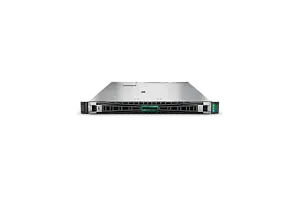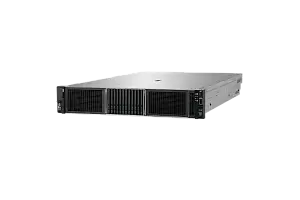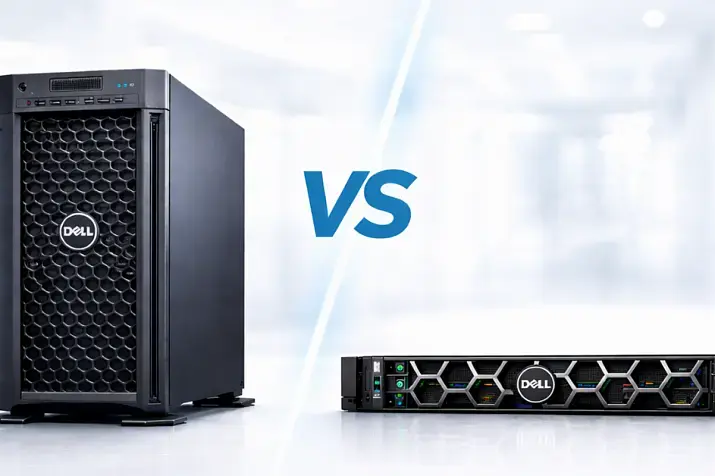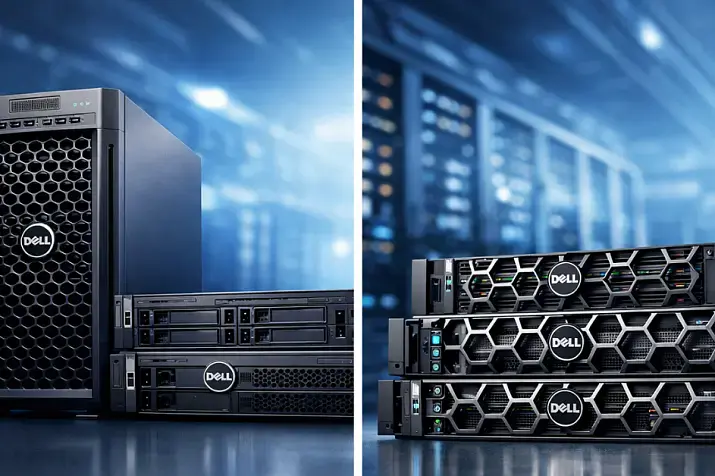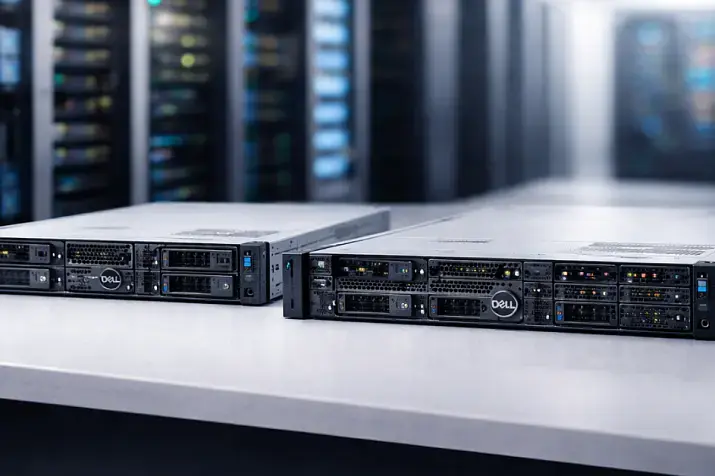
When choosing between the DELL PowerEdge R650 and R650xs, it's crucial to understand the key differences between these two 1U servers. The primary distinction lies in memory slot count and scalability: the R650 supports up to 32 DDR4 DIMM slots with a maximum capacity of 2 TB (using RDIMM) or 4 TB (using LRDIMM), while the R650xs is limited to 16 DDR4 DIMM slots with a maximum of 1 TB. Additionally, the R650 supports up to 40-core third-generation Intel Xeon Scalable processors, whereas the R650xs caps at 32-core processors from the same series.
Both models belong to DELL's 15th generation servers and are designed for enterprise workloads, virtualization, databases, and cloud computing. However, the R650 targets more demanding tasks requiring high compute density and large memory capacity, while the R650xs offers a more compact and cost-effective solution for moderate resource requirements.
In this article, we'll thoroughly examine the technical specifications of both models, their advantages and disadvantages, and help you determine which server best suits your specific needs. We'll analyze processor performance, memory expansion capabilities, storage configurations, power supply options, and other critical parameters.
DELL R650 vs R650xs Comparison Table
| Feature | DELL PowerEdge R650 | DELL PowerEdge R650xs |
|---|---|---|
| Processors | Up to two 3rd Gen Intel Xeon Scalable, up to 40 cores per processor | Up to two 3rd Gen Intel Xeon Scalable, up to 32 cores per processor |
| Memory (maximum) | 32 DDR4 DIMM slots, up to 2 TB (RDIMM) / 4 TB (LRDIMM), up to 3200 MT/s | 16 DDR4 DIMM slots, up to 1 TB (RDIMM), up to 3200 MT/s |
| Drive Bays (front) | Up to 10x 2.5" SAS/SATA/NVMe (max 153 TB) or 4x 3.5" SAS/SATA (max 64 TB) or 8x 2.5" SAS/SATA/NVMe (max 122.8 TB) | 0 drive bay or up to 4x 3.5" SAS/SATA (max 64 TB) or 8x 2.5" SAS/SATA/NVMe (max 61.44 TB) or 10x 2.5" SAS/SATA/NVMe (max 76.8 TB) |
| Drive Bays (rear) | Up to 2x 2.5" SAS/SATA/NVMe (max 30.7 TB) | Up to 2x 2.5" SAS/SATA/NVMe (max 15.36 TB) |
| Power Supplies | 800W Platinum, 1100W Titanium, 1400W Platinum, 1100W DC | 600W Platinum, 800W Platinum, 1100W Titanium, 1400W Platinum, 1100W DC |
| PCIe Slots | Up to 3x PCIe Gen4 low profile (all x16 except one x8 with SNAP I/O modules) or 2x PCIe Gen4 full height | Up to 3x PCIe Gen4 |
| GPU Support | Up to three 75W single-width GPU | Not supported |
| Cooling | Air cooling, optional processor liquid cooling, up to 4 sets of hot-plug dual fan modules | Air cooling, up to 7 cabled fans |
| Depth | 809 mm (without bezel), 822.84 mm (with bezel) | 734.95 mm (without bezel), 748.79 mm (with bezel) |
| Form Factor | 1U rack server | 1U rack server |
| Link | DELL PowerEdge R650 | DELL PowerEdge R650xs |
DELL PowerEdge R650 — Detailed Overview

The DELL PowerEdge R650 server represents a high-performance solution in a 1U form factor, designed for demanding enterprise workloads. This model stands out with its enhanced memory scalability and computational power, making it an ideal choice for virtualization, database processing, and high-load applications.
DELL PowerEdge R650 Technical Specifications
- Processors: Up to two 3rd Generation Intel Xeon Scalable processors with up to 40 cores per processor
- Memory: 32 DDR4 DIMM slots, RDIMM support up to 2 TB or LRDIMM up to 4 TB, speeds up to 3200 MT/s, registered ECC DDR4 DIMMs only
- Storage Controllers: Internal: PERC H745, HBA355I, S150, H355, H345, H755, H755N; BOSS-S1/S2 (HW RAID 2x M.2 SSD 240/480 GB); External: PERC H840, HBA355E
- Drive Bays (front): Up to 10x 2.5" SAS/SATA/NVMe (max 153 TB), or 4x 3.5" SAS/SATA (max 64 TB), or 8x 2.5" SAS/SATA/NVMe (max 122.8 TB)
- Drive Bays (rear): Up to 2x 2.5" SAS/SATA/NVMe (max 30.7 TB)
- Power Supplies: 800W Platinum AC/240 Mixed Mode, 1100W Titanium AC/240 Mixed Mode, 1400W Platinum AC/240 Mixed Mode, 1100W DC -48~-60V
- Cooling: Air cooling with optional processor liquid cooling; standard/high performance SLVR/GOLD fans, up to 4 sets of hot-plug dual fan modules
- Dimensions: Height 42.8 mm (1.7"), width 482 mm (18.97"), depth 809 mm (31.85") without bezel and 822.84 mm (32.39") with bezel
- Embedded Management: iDRAC9, iDRAC Direct, iDRAC Service Module, Quick Sync 2 wireless module
- Network Capabilities: 2x 1 GbE LOM; 1x OCP 3.0 (x8 PCIe lanes)
- GPU Support: Up to three single-width 75W GPU
- PCIe Slots: Up to 3x PCIe Gen4 low profile slots (all x16 except one x8 with SNAP I/O modules) or 2x PCIe Gen4 full height slots
- Security: Cryptographically signed firmware, Secure Boot, Secure Erase, Silicon Root of Trust, System Lockdown, TPM 1.2/2.0
- Operating Systems: Canonical Ubuntu Server LTS, Citrix Hypervisor, Microsoft Windows Server with Hyper-V, Red Hat Enterprise Linux, SUSE Linux Enterprise Server, VMware ESXi
Choosing the Right Equipment
Our specialists will contact you and answer all your questions
Who Should Choose DELL PowerEdge R650
The DELL PowerEdge R650 is ideal for organizations requiring maximum computational power and large memory capacity in a compact 1U form factor. This model excels at virtualization tasks for large VMware or Hyper-V environments, working with voluminous databases (SQL Server, Oracle, MySQL), high-load web applications, and big data analytics. The ability to install up to 4 TB of memory and two 40-core processors enables consolidation of multiple workloads on a single server, reducing total cost of ownership and datacenter power consumption.
DELL PowerEdge R650xs — Detailed Overview
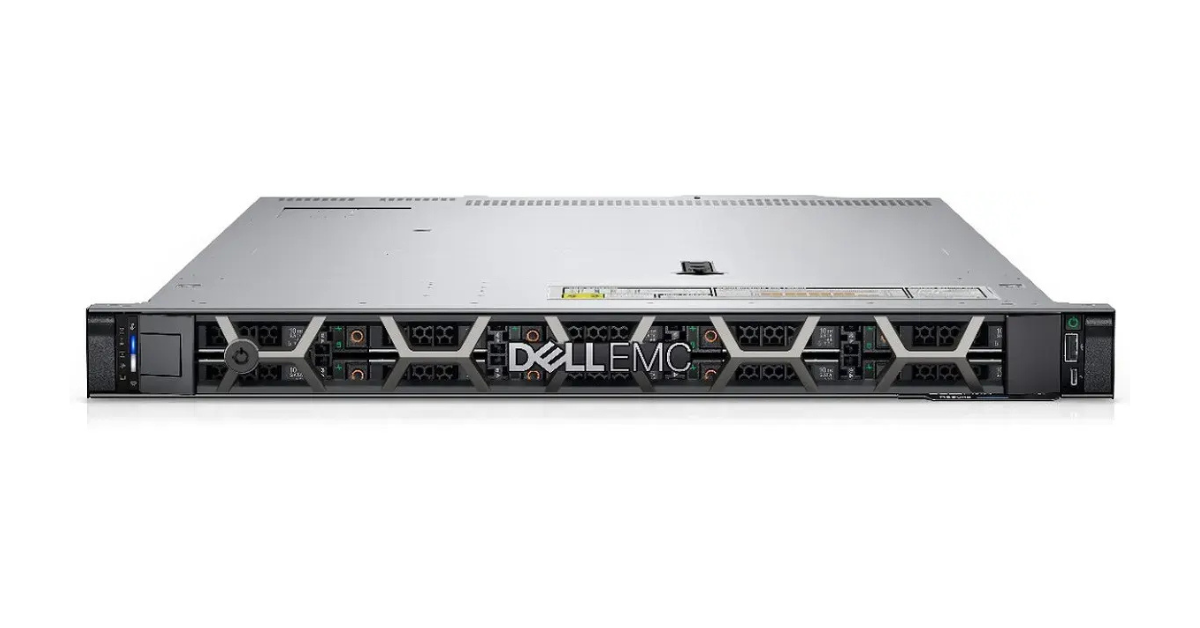
The DELL PowerEdge R650xs model is a more compact and economical version of the R650 server, designed for tasks with lower memory and expansion requirements. Despite reduced capabilities compared to its bigger brother, the R650xs remains a powerful and versatile solution for a wide range of enterprise applications.
DELL PowerEdge R650xs Technical Specifications
- Processors: Up to two 3rd Generation Intel Xeon Scalable processors with up to 32 cores per processor
- Memory: 16 DDR4 DIMM slots, RDIMM support up to 1 TB, speeds up to 3200 MT/s, registered ECC DDR4 DIMMs only
- Storage Controllers: Internal: PERC H345, H355, H745, H755, H755N, HBA355i, S150; BOSS-S1 (HW RAID 2x M.2 SSD), Internal Dual SD Module, USB; External: PERC H840, HBA355e
- Drive Bays (front): 0 drive bay, or up to 4x 3.5" SAS/SATA (max 64 TB), or 8x 2.5" SAS/SATA/NVMe (max 61.44 TB), or 10x 2.5" SAS/SATA/NVMe (max 76.8 TB)
- Drive Bays (rear): Up to 2x 2.5" SAS/SATA/NVMe (max 15.36 TB)
- Power Supplies: 600W Platinum Mixed Mode (100-240Vac or 240Vdc), 800W Platinum Mixed Mode, 1100W Titanium Mixed Mode, 1400W Platinum Mixed Mode, 1100W -48Vdc (works only with -48Vdc to -60Vdc)
- Cooling: Air cooling; standard (STD), high performance SLVR or high performance GOLD fans, up to 7 cabled fans
- Dimensions: Height 42.8 mm (1.68"), width 482 mm (18.97"), depth 734.95 mm (28.92") without bezel and 748.79 mm (29.47") with bezel
- Embedded Management: iDRAC9, iDRAC Direct, iDRAC Service Module, Quick Sync 2 wireless module
- Network Capabilities: 2x 1 GbE LOM; 1x OCP 3.0
- GPU Support: Not supported
- PCIe Slots: Up to 3x PCIe Gen4
- Security: Cryptographically signed firmware, Secure Boot, Secure Erase, Silicon Root of Trust, System Lockdown, TPM 1.2/2.0
- Operating Systems: Canonical Ubuntu Server LTS, Citrix Hypervisor, Microsoft Windows Server with Hyper-V, Red Hat Enterprise Linux, SUSE Linux Enterprise Server, VMware ESXi
Who Should Choose DELL PowerEdge R650xs
The DELL PowerEdge R650xs is an optimal choice for companies needing a reliable 1U server with a good balance of performance and cost. This model is well-suited for small to medium virtualized environments, file servers, web hosting, backup systems, and applications with moderate memory requirements. The shorter chassis depth (approximately 75mm shorter than R650) makes the R650xs an attractive option for compact server racks, while the absence of GPU support reduces power consumption and heat output. If your tasks don't require more than 1 TB of RAM and you don't plan to use GPU acceleration, the R650xs will be a more economical solution.
Key Differences Between R650 and R650xs
Memory Scalability
The main and most significant difference between the models is memory expansion capability. The R650 offers 32 DIMM slots versus 16 slots in the R650xs, meaning a twofold advantage in maximum memory capacity. Using RDIMM modules, the R650 supports up to 2 TB of memory, and with LRDIMM up to 4 TB, while the R650xs is limited to 1 TB of memory (RDIMM only). This is critically important for memory-intensive applications such as in-memory database systems, large virtualized environments, or analytics platforms.
Processor Capabilities
While both models support up to two 3rd Generation Intel Xeon Scalable processors, the R650 can work with processors up to 40 cores, whereas the R650xs maxes out at 32 cores per processor. This difference of 8 cores per processor (16 cores in a dual-processor configuration) can be substantial for highly parallel computational tasks such as video processing, scientific calculations, or massive virtualization.
GPU Support
The R650 supports installation of up to three single-width 75W GPUs, opening possibilities for GPU-accelerated computing, machine learning, rendering, and other specialized tasks. The R650xs completely lacks GPU support, making it unsuitable for tasks requiring graphics acceleration.
Physical Dimensions
The R650xs is approximately 75mm shorter than the R650 (735mm vs 809mm without bezel), which can be an important factor when planning placement in server racks of limited depth. Smaller dimensions also contribute to better air circulation in densely populated racks.
Storage Configurations
Both models offer flexible drive bay configuration options, but the R650 has a slight advantage in maximum storage capacity for some configurations. An important feature of the R650xs is the possibility of a zero-bay configuration (0 drive bay), which allows maximizing space for additional components or improving cooling.
Cooling
The R650 supports optional liquid cooling for processors, which can be critical for maximum performance of 40-core processors under high load. The R650xs uses only air cooling with seven cabled fans, which is sufficient for processors up to 32 cores and lower heat output.
Recommendations for Choosing Between R650 and R650xs
Choose DELL PowerEdge R650 if:
- You require more than 1 TB of RAM for your applications
- You plan to use processors with 32 to 40 cores
- Your tasks require GPU acceleration (machine learning, rendering, specialized computing)
- You're deploying a large virtualized environment with dozens of virtual machines
- You work with in-memory databases (SAP HANA, Oracle Database In-Memory, Microsoft SQL Server In-Memory OLTP)
- You need optional liquid cooling for maximum processor performance
- You plan long-term operation with future memory expansion possibilities
- Your budget allows investment in a more powerful configuration
Choose DELL PowerEdge R650xs if:
- Your applications fit within the 1 TB RAM limit
- Processors up to 32 cores are sufficient for you
- GPU support is not required
- Server compactness is important (shorter chassis depth)
- You're deploying a medium virtualized environment or file server
- You aim to optimize price-to-performance ratio
- Budget constraints exist but you need a reliable platform
- A zero-bay configuration is required for specialized tasks
- You plan to use racks of limited depth
Use Case Scenarios
For Virtualization:
R650: Large VMware vSphere or Microsoft Hyper-V environments with 50+ virtual machines, VDI infrastructures, consolidation of multiple workloads.
R650xs: Small to medium virtualized environments (up to 30-40 VMs), branch offices, test and development environments.
For Databases:
R650: Large transactional databases, analytical OLAP systems, in-memory databases, database clusters.
R650xs: Medium databases for business applications, web applications, CRM/ERP systems with moderate load.
For Applications:
R650: High-load web applications, machine learning applications, big data analytics, large-scale container platforms (Kubernetes).
R650xs: Web servers, application servers, mail servers, file servers, backup systems.
Our most popular servers

Free shipping on orders over 500 € in the EU, £500 in the UK, and $3,000 in the USA
Free shipping on orders over 500 € in the EU, £500 in the UK, and $3,000 in the USA
Free shipping on orders over 500 € in the EU, £500 in the UK, and $3,000 in the USA

Free shipping on orders over 500 € in the EU, £500 in the UK, and $3,000 in the USA
Choosing the Right Equipment
Our specialists will contact you and answer all your questions
Conclusion
The choice between DELL PowerEdge R650 and R650xs depends on your IT infrastructure's specific requirements and budget. The R650 is a flagship solution for organizations requiring maximum performance, large memory capacity, and GPU acceleration capability in a compact 1U form factor. This model is suitable for large virtualized environments, demanding databases, and high-load applications.
The R650xs, in turn, represents a balanced solution for companies needing a reliable and performant platform without excessive capabilities. Shorter depth, lack of GPU support, and 1 TB memory limitation are compensated by a more accessible price and sufficient performance for most enterprise tasks.
Both models support modern 3rd Generation Intel Xeon Scalable processors, offer flexible storage configurations, reliable management through iDRAC9, and meet DELL's high security standards. Regardless of which model you choose, you'll get a quality enterprise server with excellent support and ecosystem.
For more detailed consultation and assistance in choosing the optimal configuration, visit the DELL PowerEdge R650 and DELL PowerEdge R650xs pages in the ServerMall catalog. Our specialists will help you select the perfect solution for your tasks.