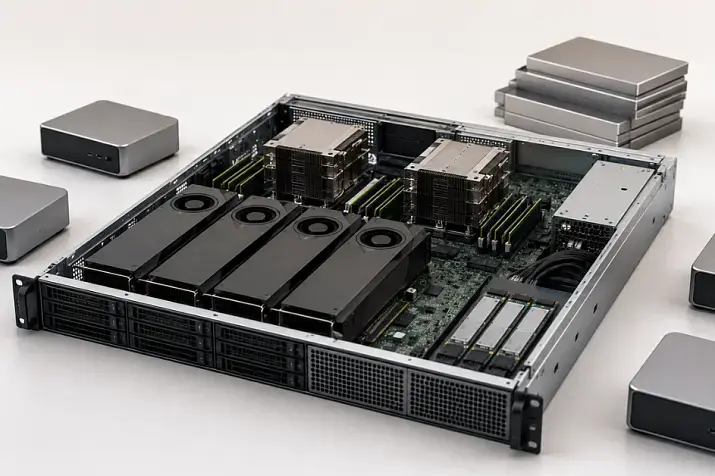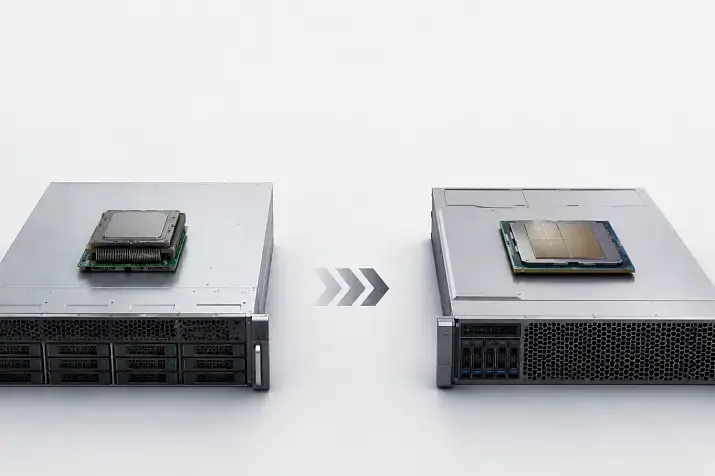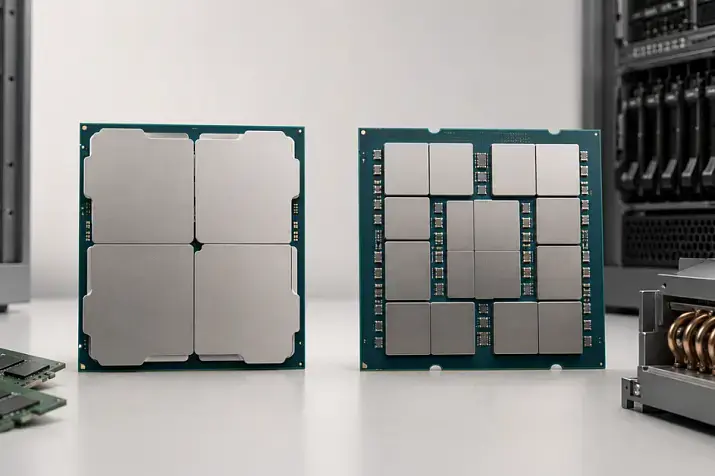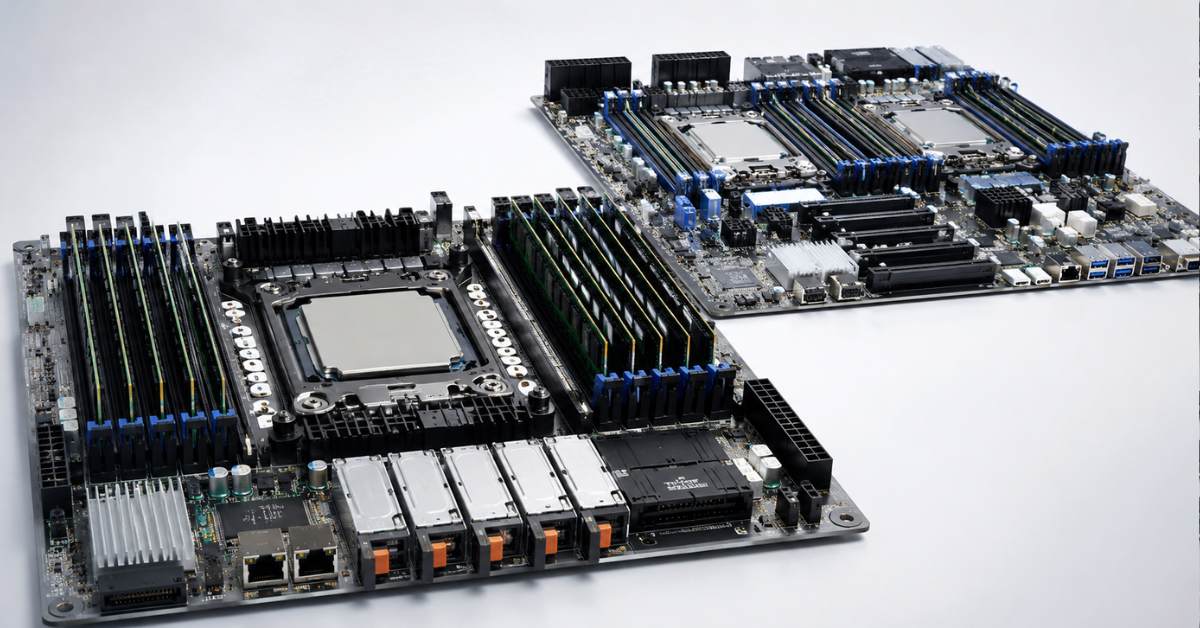
A single-socket AMD EPYC server is worth choosing when you need high core density, a lot of memory, fast NVMe drives, network cards or accelerators, but do not want to complicate the infrastructure with a dual-processor system. In a number of scenarios, one modern EPYC provides more predictable performance, is easier to cool, depends less on inter-processor communication and can be more cost-effective in terms of licensing. But if the server needs the maximum amount of RAM, many expansion cards, strict compatibility with an Intel platform or an application that scales well specifically across two processors, two Intel Xeon CPUs are still a justified choice.
For a long time, a dual-socket server was perceived as almost mandatory for serious infrastructure. If a company needed a server for virtualization, databases, terminal workplaces, file storage or enterprise applications, the logic seemed simple: two processors meant more power and more headroom.
With modern AMD EPYC processors, this logic is no longer so obvious. One processor can provide the number of cores, memory channels and PCIe lanes that used to be associated with a full dual-processor system. That is why you should compare not the number of sockets, but useful performance in a specific task: how many virtual machines will fit on a node, how much memory the database will get, whether there are enough PCIe lanes for NVMe and network cards, how licensing will behave and how difficult the server will be to maintain.
AMD EPYC Servers
Free shipping on orders over 500 € in the EU, £500 in the UK, and $3,000 in the USA
Free shipping on orders over 500 € in the EU, £500 in the UK, and $3,000 in the USA
Free shipping on orders over 500 € in the EU, £500 in the UK, and $3,000 in the USA
Free shipping on orders over 500 € in the EU, £500 in the UK, and $3,000 in the USA
Why two processors used to be the norm
Dual-socket servers were long the standard choice for tasks where one processor did not provide enough resources. The second CPU added not only extra cores. It also brought:
- additional memory channels;
- more slots for RAM modules;
- more PCIe lanes for network cards, controllers, NVMe drives and accelerators;
- the ability to install more expansion cards;
- headroom for workload growth;
- the sense of a more “serious” server platform.
This was especially important for older generations of Intel Xeon. A single processor could limit the configuration by cores, memory or I/O. If a company needed more virtual machines, more VDI users or more memory for a database, moving to two sockets looked like a natural decision.
Today, dual-socket architecture has not disappeared and has not become useless. But it is no longer the automatic default choice. One powerful AMD EPYC can cover the tasks for which companies previously bought two CPUs, while also simplifying the server architecture.
What are 1P and 2P servers?
A 1P server is a server with one processor.
A 2P server is a server with two processors.
In practice, the difference is not only the number of physical CPUs. Each processor has its own cores, memory controllers, connection to some PCIe devices and its own area of responsibility inside the system. In a dual-socket server, the processors have to exchange data with each other. One CPU may access memory or devices that are physically closer to the second CPU.
This does not make a 2P system bad. But it does make it more complex.
A simple way to think about it is this:
- a 1P server is one large office with a single control center;
- a 2P server is two offices in one building: there are more resources, but some processes require coordination between them.
In ordinary tasks, the user may not see this difference directly. But for virtualization, databases, analytics, VDI and high-load applications, inter-processor latency and memory placement can affect real performance.
Why one AMD EPYC can replace two processors
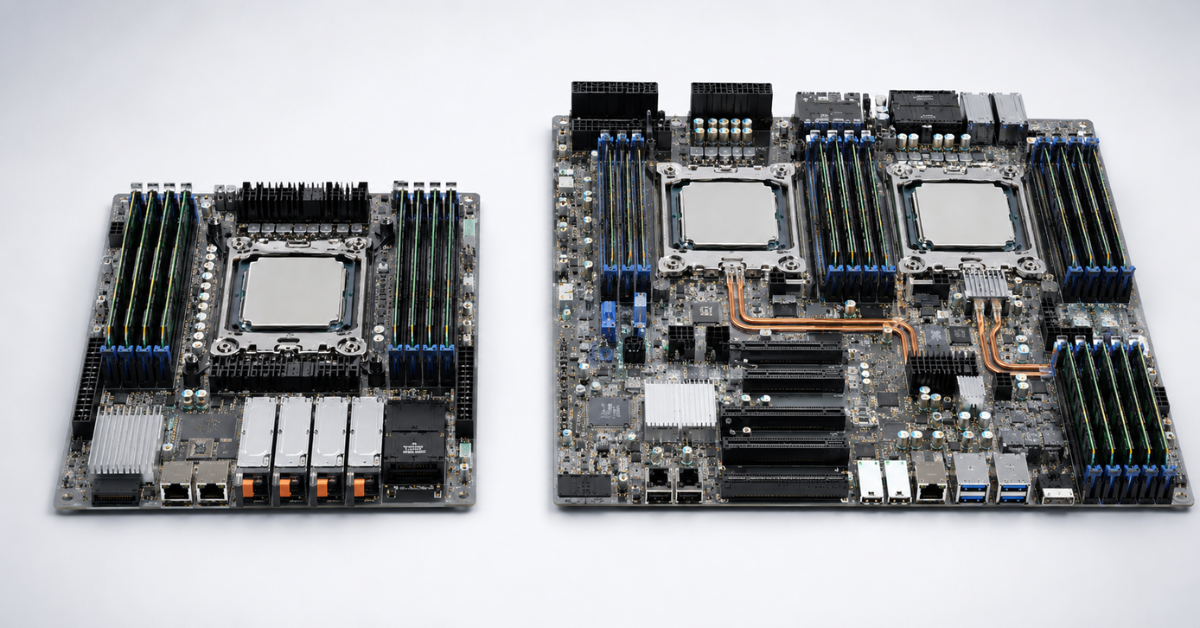
Modern AMD EPYC processors are designed from the start for high resource density in a single socket. In the official AMD materials, the EPYC 9005 series includes models with up to 192 cores, 12 DDR5 channels and a broad set of PCIe 5.0 capabilities in the server platform. This allows one processor to be viewed not as a budget compromise, but as a full foundation for a dense compute node.
EPYC 9004 also remains a strong platform: AMD lists up to 128 Zen 4 / Zen 4c cores and 12 DDR5 channels for this series. For many tasks, this is sufficient even in 2026–2027, especially if the server is not being purchased for extreme density, but for a clear and well-understood workload.
So the right question is not “which is better, one processor or two?” It is better to ask:
- how many cores the application really uses;
- how much memory is needed per virtual machine, user or database;
- how many NVMe drives are required;
- how many network ports the server needs;
- whether there are GPUs or other accelerators;
- how the software is licensed;
- whether the workload is sensitive to memory latency;
- how important ease of maintenance and predictability are.
If one AMD EPYC covers the task across these points, the second processor may turn out not to be an advantage, but a source of unnecessary complexity and cost.
1P AMD EPYC vs 2P Intel Xeon comparison
| Criterion | 1P AMD EPYC | 2P Intel Xeon | What matters |
|---|---|---|---|
| Number of processors | One | Two | One socket is easier to configure, cool and diagnose |
| Cores | Many cores in one CPU | Cores are summed across two CPUs | Look at useful performance, not the number of sockets |
| Memory | Many memory channels in one socket | Greater total capabilities in a dual-socket system | 2P is needed if the task is limited specifically by RAM capacity |
| PCIe | Enough for many NVMe drives, network cards and some GPU scenarios | Usually more expansion options | 2P wins when there are many devices |
| NUMA | There is an internal topology, but no second physical CPU; NUMA must be configured for the task (one processor can have several NUMA nodes) | There are inter-socket latencies, but no special settings | 2P requires careful placement of memory and threads; 1P requires tuning for optimal performance in a specific task |
| Power consumption | Often easier to keep the whole platform within reasonable limits | Two CPUs mean more heat and higher power requirements | Calculate the whole server, not only the processors |
| Licensing | Can be more cost-effective with the right model | Can be more expensive with many cores or sockets | A calculation is needed for the specific software |
Intel also has strong modern platforms. The Intel Xeon 6 materials describe different processor lines, PCIe 5.0 support, modern memory capabilities and options for single-, dual- and multi-socket configurations. Therefore, the comparison should not be “AMD versus Intel in general”, but “a specific 1P AMD EPYC configuration versus a specific 2P Intel Xeon configuration for your workload.”
GPU servers
Free shipping on orders over 500 € in the EU, £500 in the UK, and $3,000 in the USA
Free shipping on orders over 500 € in the EU, £500 in the UK, and $3,000 in the USA

Free shipping on orders over 500 € in the EU, £500 in the UK, and $3,000 in the USA
Free shipping on orders over 500 € in the EU, £500 in the UK, and $3,000 in the USA
Choosing the Right Equipment
Our specialists will contact you and answer all your questions
NUMA usage nuances
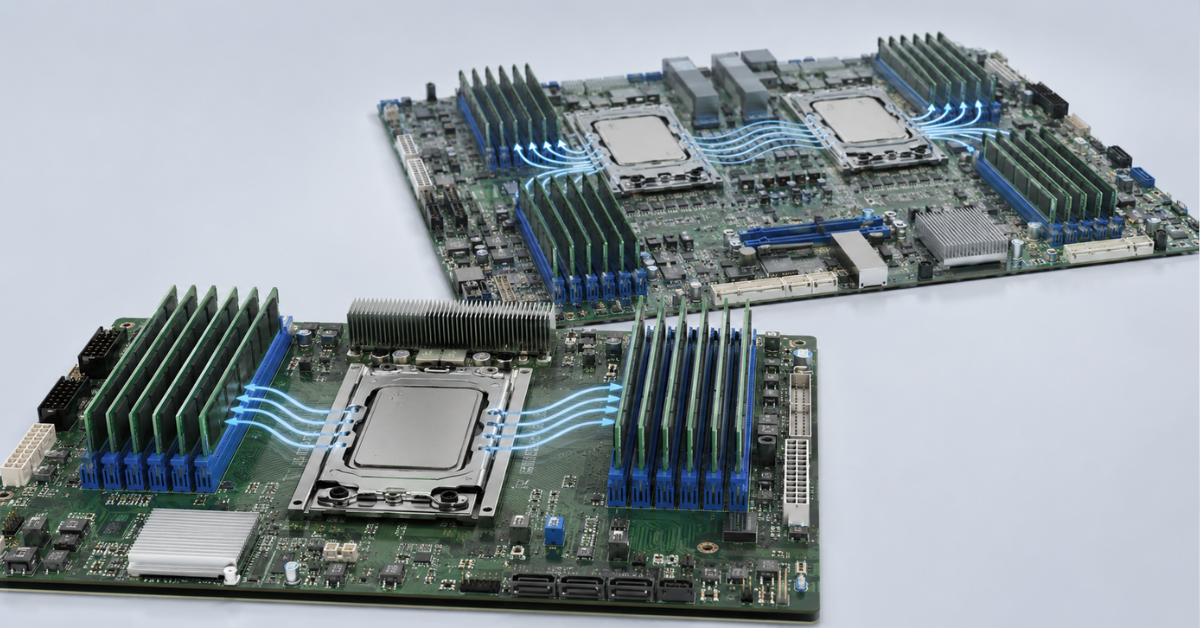
One of the main arguments in favor of 1P AMD EPYC is a more flexible memory architecture compared with a dual-socket system.
NUMA is a situation where the processor accesses different areas of memory at different speeds. In a 2P server, some memory is physically closer to the first CPU, and some is closer to the second. If an application runs on one processor but constantly accesses memory connected to the other processor, additional latency appears.
This is especially noticeable in tasks with many threads and active memory access:
- virtualization;
- databases;
- analytics;
- VDI;
- file services;
- container platforms;
- applications with many parallel processes.
A single-socket EPYC does not completely remove the processor’s internal topology. Modern many-core CPUs also have their own organization of dies, cache and memory; as a result, NUMA nodes are configurable. For example, EPYC 9005 in its default configuration exposes 4 NUMA nodes to the system (as if there were 4 processors), which provides more bandwidth for parallel tasks, but for resource-intensive applications that consume a lot of memory, it is possible to configure 1 NUMA node.
For an administrator, this means that NUMA must be configured at the software level for the specific task, reducing scenarios where the desired performance is not achieved under certain workloads. In a 2P system, on the other hand, NUMA tuning is more limited, and memory distribution and consumption must be monitored carefully.
Memory is easier to configure
For servers with many cores, memory is often more important than it seems when choosing a processor. A server may have 96, 128 or 192 cores, but if each virtual machine, container or user does not have enough RAM, the processor’s power will remain unused.
In a single-socket system, memory configuration is easier to plan:
- there is no need to balance modules between two processors;
- it is easier to understand which memory channels are populated;
- there is less risk of building an unbalanced configuration;
- it is easier to diagnose a drop in memory bandwidth;
- it is easier to estimate the real headroom for workload growth.
For virtualization, what matters is not only total RAM, but memory per virtual machine. For VDI, it is memory per user and headroom for peak hours. For databases, it is memory for cache, working data sets and background processes. For storage and backup servers, it is memory for cache, metadata and service operations.
A dual-socket system can provide more total slots and a higher maximum RAM capacity. But if the task fits within the capabilities of a 1P EPYC platform, one processor often makes the configuration clearer and more predictable.
Lower power consumption and easier cooling
Two processors are not only the cost of the second CPU. They also mean additional heat, more complex airflow and higher requirements for heatsinks, power supplies and server layout.
In real infrastructure, it is important to consider more than the purchase price. A server lives in a rack for several years and consumes electricity, generates heat and occupies space every month. Therefore, the economics should be calculated at the level of the whole platform.
A single-socket server can be more cost-effective if it provides the required performance without a second CPU. This is especially important when a company has limits on:
- rack power capacity;
- cooling in the server room;
- the number of rack units;
- maintenance budget;
- available power headroom;
- noise and heat requirements in a small server room.
However, it is important not to oversimplify this point. High-end AMD EPYC processors can also have a high thermal design power, quite comparable to two traditional Xeons, and require high-quality cooling. One powerful CPU does not always mean a “cool” server. That is why specific models must be compared, not the general idea of “one processor versus two.”
Licensing can change the entire calculation
In many enterprise projects, server hardware is not the most expensive part of the solution. Licenses for databases, virtualization or application software can cost more than the difference between two server configurations.
For example, Microsoft SQL Server is licensed by cores, with pricing specified for a two-core pack. The Broadcom vSphere documentation also describes core-based licensing with a minimum licensing capacity of 16 cores per CPU.
Because of this, the maximum number of cores is not always economically beneficial. Sometimes it is better to choose fewer cores with a higher frequency and get sufficient performance with a lower licensing cost. In another case, the opposite may be true: one large EPYC can replace two processors and simplify the calculation.
You need to look at how the specific software is licensed:
- by the number of physical cores;
- by the number of processors;
- by the number of virtual machines;
- by product edition;
- by users;
- by hosts or clusters.
For databases, ERP, virtualization and commercial analytics systems, the final cost often depends not on which processor is “faster in a vacuum”, but on the cost of one unit of useful load: one database, one virtual machine, one user, one job or one container.
Fewer components mean simpler maintenance
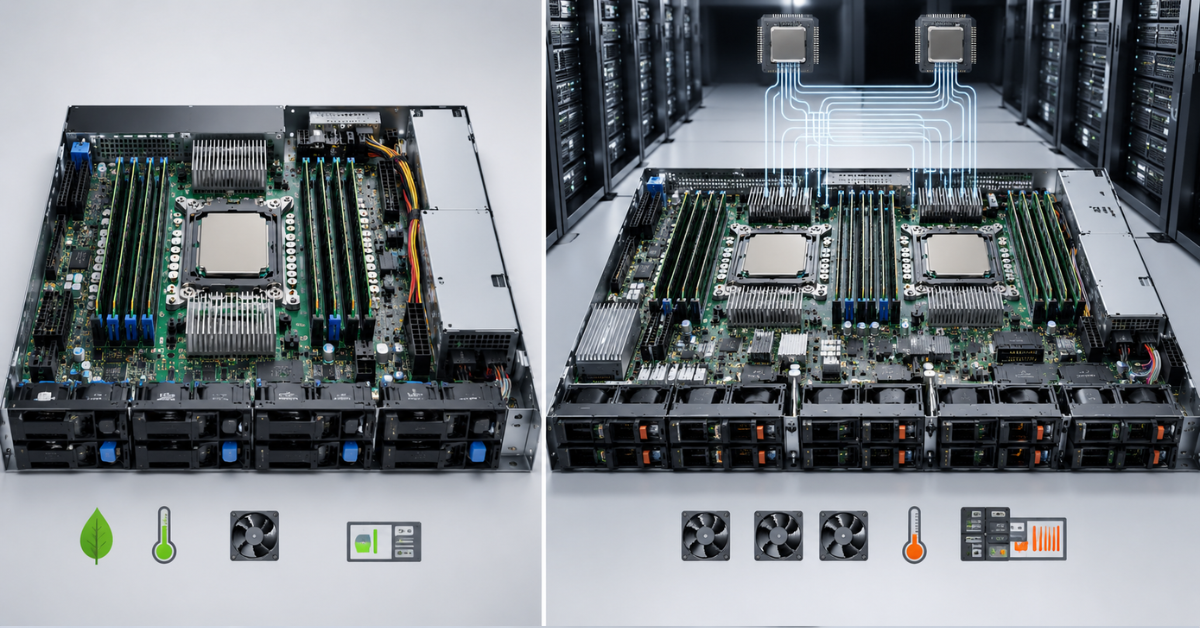
A single-socket server is simpler as an engineering system. It has fewer processor components and fewer points where problems may arise with temperature, CPU seating, firmware, memory distribution or inter-processor communication.
In practice, this makes the following easier:
- diagnosing overheating;
- updating BIOS and firmware;
- analyzing CPU load;
- selecting compatible CPUs;
- planning memory configuration;
- moving workloads between nodes;
- explaining server behavior during incidents.
This does not mean that a 1P server is automatically more reliable than a dual-socket one. Reliability depends on the entire system: power supplies, drives, controllers, network cards, cooling, firmware, monitoring and build quality. And if one processor fails, a multiprocessor system may continue working, although with limited performance, while a single-processor system fails completely.
But all else being equal, one socket is simpler. For small and medium-sized infrastructures, this is often more important than maximum scalability.
Where 1P AMD EPYC is especially strong
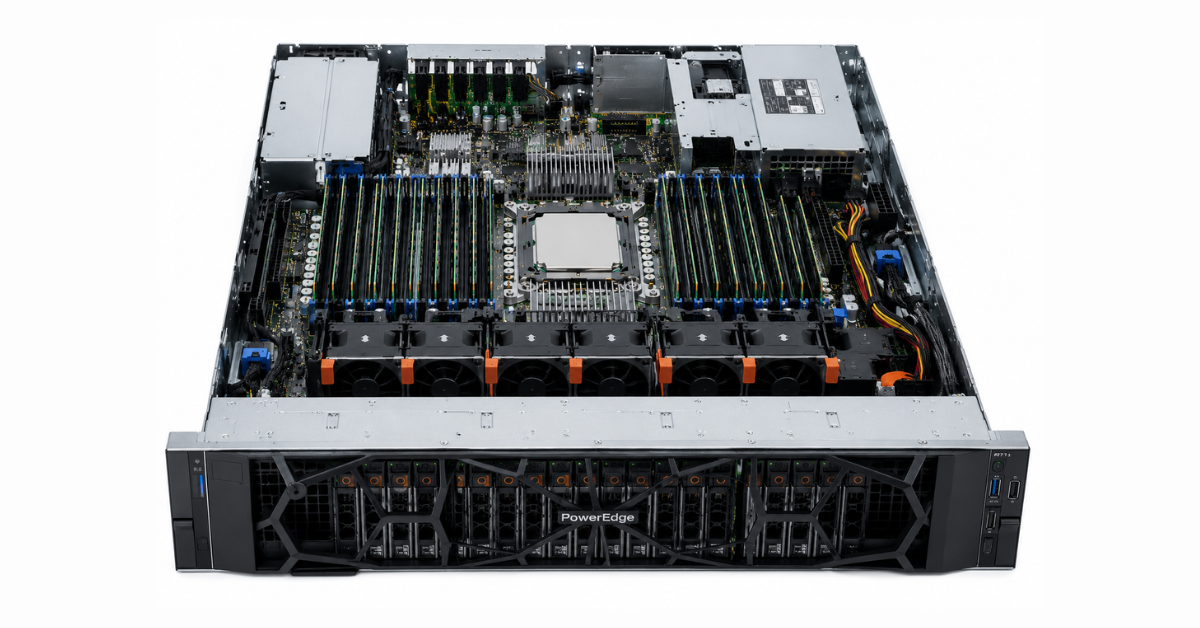
Virtualization
For virtualization, one powerful AMD EPYC can be a very good choice. It provides many cores, high memory bandwidth and enough resources for dense virtual machine placement.
This approach is well suited for:
- enterprise virtualization;
- private cloud;
- VDS/VPS platforms;
- test and development environments;
- consolidating old servers;
- infrastructure where saving rack space matters.
The main thing is not to turn one powerful server into a single point of failure. The more virtual machines are placed on one node, the more important clustering, network and power redundancy, fast drives, external storage or replication become.
If the server replaces several old dual-socket machines, the benefit may go beyond performance. Often the number of physical nodes, cables, network ports, power supplies and maintenance operations decreases. In such projects, AMD EPYC servers should be considered not simply as a replacement of one processor with another, but as a way to redesign compute density.
Containers and Kubernetes
Container environments work well on platforms with many cores. When many small services run on one node, the scheduler can distribute tasks across a large number of threads.
1P AMD EPYC is appropriate if:
- the number of microservices is growing quickly;
- more containers are needed on one physical server;
- there are many background tasks, queues and workers;
- density matters without a sharp increase in the number of nodes;
- the infrastructure is being built for several years ahead.
However, an overly dense node also creates risks. If too many critical services are concentrated on one server, its failure will be more painful. Therefore, along with the processor choice, it is necessary to think through the placement of system components, CPU and RAM limits, access to images, the network and storage.
Databases
In databases, a larger number of processors does not always mean better performance. For PostgreSQL, MySQL, Microsoft SQL Server, Oracle and other DBMSs, not only cores matter, but also memory latency, drives, cache, locks, query tuning and licenses.
A single-socket AMD EPYC can be a good choice if the database:
- actively uses memory;
- works with fast NVMe drives;
- runs parallel queries;
- serves many background operations;
- does not require maximum RAM beyond the limits of a 1P platform;
- is sensitive to extra latency between processors.
But if the database is limited by drives, locks, poorly written queries or licensing restrictions, a new processor alone will not solve the problem. Sometimes it is more reasonable to buy fewer cores, more RAM, fast drives and tune the DBMS correctly.
File services, storage and backup
For file services and backup servers, the second processor is often not the main factor. More important are:
- the number of drives;
- fast NVMe drives for cache;
- 25/40/100/200 Gbit/s network cards;
- HBA or RAID controllers;
- RAM capacity;
- PCIe bandwidth;
- firmware and driver stability.
One AMD EPYC with many PCIe lanes can be a good foundation for a storage server, especially if many NVMe drives, fast network cards and controllers must be connected without moving to 2P.
For such tasks, it is worth looking not only at the processor, but also at the chassis, drive bays, hot-swap support, drive cooling and the real number of available expansion slots.
VDI and virtual desktops
In VDI, the processor matters, but it is rarely the only bottleneck. Users often hit limits in memory, profiles, drives, graphics, network storage or morning login peaks.
1P AMD EPYC can be a good option for:
- office desktops;
- call centers;
- education platforms;
- remote work;
- typical enterprise applications;
- environments without heavy graphics.
But VDI cannot be calculated only by the formula “users per core.” You need to account for how much memory one user needs, whether there are video calls, where profiles are stored, how fast the disk subsystem works and what happens during mass morning logins.
If VDI requires many GPUs, a large amount of RAM or a certified platform for specific software, a dual-socket server may be more suitable.
Servers with GPU
A CPU does not replace a GPU in machine learning, 3D graphics or heavy inference tasks. But the processor serves data, the network stack, NVMe, queues, preprocessing and the services around accelerators.
One AMD EPYC can be a sufficient processor for a server with 1–2 or even 4 GPUs, if there are enough PCIe lanes, power, cooling and chassis space. For some AI inference, ranking, feature processing and smaller models, this is enough.
But for 8 GPUs, complex topologies, dense AI platforms and certified configurations, specialized dual-socket servers are often needed. There, the choice is determined not only by the CPU, but by the whole platform: chassis, PCIe switching, power, cooling, networking and vendor support.
Choosing the Right Equipment
Our specialists will contact you and answer all your questions
When to choose 1P AMD EPYC and when to choose 2P Intel Xeon
| Scenario | 1P AMD EPYC is better | 2P Intel Xeon is better |
|---|---|---|
| Virtualization | Density, simplicity and many VMs per node are needed | Maximum RAM or a unified Intel fleet standard is required |
| Databases | Memory, NVMe and lower inter-socket latency matter | Intel features, certification or more memory are needed |
| Kubernetes | There are many services and worker-node density matters | The cluster is already standardized on Intel |
| VDI | Office users and moderate graphics | Very high density, many GPUs or special software requirements |
| Storage and backup | Many NVMe drives and network cards in one system | Maximum expansion cards and controllers are needed |
| AI inference | The CPU serves data and several GPUs | A complex 8-GPU or vendor-certified platform is needed |
| Licensed software | The CPU can be selected for the cost of licenses | The software is optimized or certified for Intel |
| Budget | Complexity and total cost of ownership need to be reduced | There is already a fleet, spare parts and licenses for Intel |
When two Intel Xeon CPUs are still needed
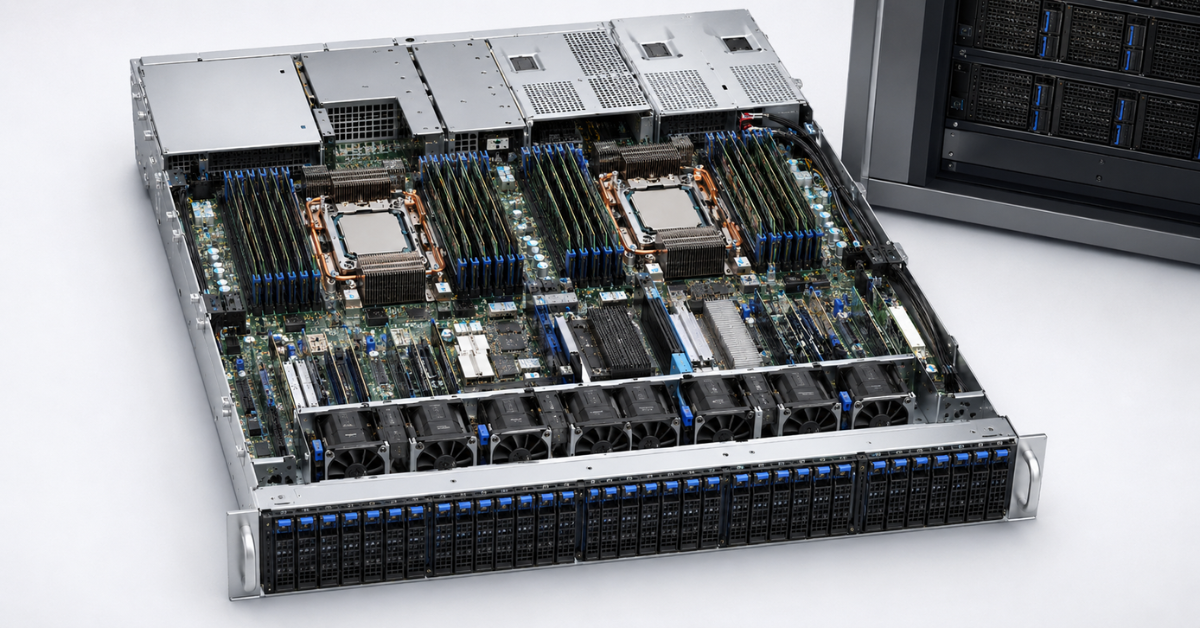
A single-socket AMD EPYC does not cover every possible scenario. There are tasks where two Intel Xeon CPUs remain a reasonable or even mandatory choice.
A dual-socket system may be better if you need:
- more total RAM than is available in the selected 1P platform;
- more memory slots;
- more expansion cards;
- more PCIe devices;
- certification for specific enterprise software;
- compatibility with the existing Intel fleet;
- support for specific Intel instructions;
- maximum performance in an application that scales well across two processors;
- unified maintenance procedures, spare parts and OS images in an already existing infrastructure.
Sometimes a customer chooses Intel not because a specific Xeon is faster than a specific EPYC, but because the entire environment is built that way: licenses, support, documentation, spare servers, images, hypervisor, familiar settings and requirements from the application software vendor.
This is a valid argument. A server is selected not only by CPU characteristics, but by how calmly it will fit into the existing infrastructure.
If a company is updating an old fleet, it is worth comparing not only new platforms, but also available refurbished configurations. For example, Dell PowerEdge 16th generation servers can be a reasonable option when modern performance is needed without buying the newest platform. And if the project is being built for several years ahead and requires maximum density, Dell PowerEdge 17th generation servers can be considered.
Common selection mistakes
Looking only at the number of sockets
Two processors are not always faster than one. If an application does not use all cores, suffers from memory latency or is limited by drives, the second CPU will not provide the expected increase.
For many tasks, one modern EPYC can be faster, simpler and more cost-effective than two processors of an older generation.
Looking only at the number of cores
A large number of cores looks convincing in specifications, but in real infrastructure, cores must be supported by memory, drives and network capacity. If there is not enough RAM, if NVMe drives are overloaded, or if the network channel is saturated, the processor will wait for data.
This is especially important for virtualization, VDI, Kubernetes and analytics.
Forgetting about NUMA
In a dual-socket system, incorrect placement of virtual machines, database threads or memory can reduce performance. Sometimes the problem looks like “the server is powerful, but it works inconsistently,” although the cause is in the architecture and settings.
A 1P server can reduce this risk, but it does not remove the need to understand how memory and cache are organized inside a modern processor and to tune NUMA for the specific task.
Not calculating licenses
For SQL Server, virtualization and commercial software, licensing costs can change the platform choice. Sometimes a processor with many cores turns out to be expensive not because of the hardware, but because of licensing.
Before purchasing, you need to calculate not only the cost of the server, but also the cost of software over the entire service life.
Buying “the maximum” without a workload profile
The top processor in a line is not always necessary. If an application scales poorly beyond 32–64 cores, buying the maximum EPYC may be excessive. In that situation, it is better to invest in memory, NVMe, networking, redundancy or a more suitable CPU model with a high frequency.
Comparing a new EPYC with an old Xeon incorrectly
The phrase “EPYC is better than two Xeons” is too general. You need to compare specific generations, models, servers and configurations. Two modern Xeons can be stronger in some tasks, while one EPYC can be stronger in others. What matters is not a brand victory, but fit for the workload.
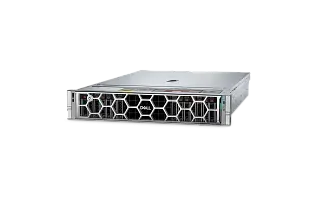
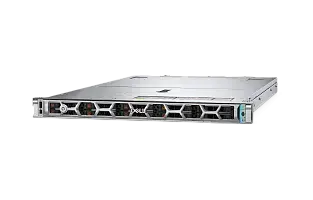
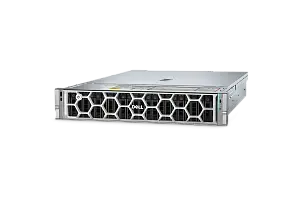
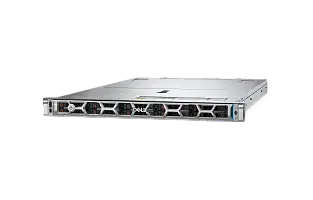
Popular DELL 17th generation servers
Free shipping on orders over 500 € in the EU, £500 in the UK, and $3,000 in the USA
Free shipping on orders over 500 € in the EU, £500 in the UK, and $3,000 in the USA
Free shipping on orders over 500 € in the EU, £500 in the UK, and $3,000 in the USA
Free shipping on orders over 500 € in the EU, £500 in the UK, and $3,000 in the USA
How to calculate the economics of the choice
The right metric is not the price of the processor, or even the price of the server. What matters more is the cost of useful load:
- one virtual machine;
- one VDI user;
- one database;
- one container;
- one terabyte of served storage;
- one computing job;
- one service in a private cloud.
The calculation should include:
- server cost;
- processor;
- memory;
- NVMe, SSD and HDD;
- network cards;
- controllers;
- licenses;
- electricity;
- cooling;
- rack space;
- support and warranty;
- downtime risk;
- migration cost;
- the option to buy a refurbished server.
1P AMD EPYC often wins where it reduces the number of physical nodes, simplifies maintenance and covers the workload without a second processor. But if one powerful CPU sharply increases licensing costs or requires an overly expensive memory configuration, the calculation may change.
How to choose a specific configuration
It is better to start not with the processor, but with the workload.
If the server is needed for virtualization, first you need to understand:
- how many virtual machines there will be;
- how much CPU and RAM each one needs;
- which VMs are critical;
- whether there will be a cluster;
- where VM disks will be stored;
- what growth is expected over the next 2–3 years.
If the server is needed for a database, other questions matter more:
- how much data is actively in use;
- whether the cache is sufficient;
- which queries are the heaviest;
- whether there are locks;
- how the DBMS is licensed;
- whether the database is limited by CPU, RAM or drives.
For a storage and backup server, you need to look at:
- how many drives will be installed;
- whether NVMe is needed;
- how many network ports are required;
- which controller mode is needed;
- whether there is enough PCIe;
- how the drives are cooled;
- whether expansion headroom is needed.
For a GPU server, it is important to check:
- how many accelerators are planned;
- what their power requirements are;
- how they connect to PCIe;
- whether the CPU is sufficient for data preparation;
- whether the network or NVMe will become a bottleneck;
- whether the server physically supports the required configuration.
After that, you can choose the platform. If density, simplicity and predictability are important for the task, it is worth looking toward 1P AMD EPYC. If maximum memory, many expansion cards, strict Intel compatibility or an existing fleet standard are required, dual-socket Intel Xeon may be more logical.
For comparison, it is also worth considering Intel Xeon servers, especially if the company already has infrastructure, licenses and procedures built around Intel platforms.
Conclusion
A single-socket AMD EPYC is not a “cut-down” server and not a compromise for simple tasks. In modern configurations, one CPU can provide many cores, high memory bandwidth, enough PCIe lanes and good resource density for virtualization, containers, databases, VDI, storage and some GPU scenarios.
It is especially strong where simple architecture, fewer inter-processor delays, clear memory configuration, moderate maintenance complexity and a reasonable cost of useful load matter.
Two Intel Xeon CPUs remain appropriate when maximum RAM, more expansion cards, strict certification, specific Intel features, unification with an existing fleet or an application that truly scales efficiently across two processors are required.
Therefore, the choice should start not with the question “one CPU or two,” but with the workload profile. If one AMD EPYC covers cores, memory, PCIe, licenses and growth headroom, the second processor may be unnecessary. If the project requires maximum expansion, large memory capacity or strict Intel compatibility, a dual-socket server remains the right decision.
Choosing the Right Equipment
Our specialists will contact you and answer all your questions
Content:
Free shipping on orders over 500 € in the EU, £500 in the UK, and $3,000 in the USA
Free shipping on orders over 500 € in the EU, £500 in the UK, and $3,000 in the USA

Free shipping on orders over 500 € in the EU, £500 in the UK, and $3,000 in the USA

Free shipping on orders over 500 € in the EU, £500 in the UK, and $3,000 in the USA

Free shipping on orders over 500 € in the EU, £500 in the UK, and $3,000 in the USA
Free shipping on orders over 500 € in the EU, £500 in the UK, and $3,000 in the USA