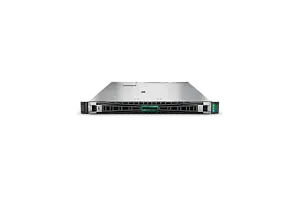
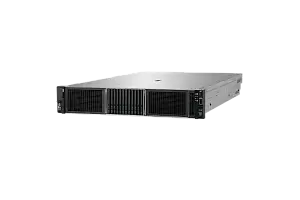
Virtualization has become the cornerstone of modern IT infrastructure, enabling efficient hardware resource utilization and reducing operational costs. Choosing the right server for virtualization is critically important: it requires a balance between processor performance, RAM capacity, storage reliability, and support for modern virtualization technologies.
Used servers present an optimal solution for companies requiring high performance within budget constraints. Previous generation models from DELL and HPE, such as PowerEdge series 14-15 and ProLiant Gen10-Gen10 Plus, offer excellent price-to-performance ratios for virtualization workloads. These servers are fully compatible with popular virtualization platforms: VMware vSphere, Microsoft Hyper-V, Proxmox VE, and KVM.
In this article, we'll review five best used servers for virtualization in 2025, analyze their technical specifications, and help you choose the optimal solution for your infrastructure. We've considered key parameters: processor core count, maximum RAM capacity, expandability, energy efficiency, and compatibility with modern hypervisors.
Server Comparison Table
| Model | Processor | Maximum RAM | Storage | Use Case |
|---|---|---|---|---|
| DELL PowerEdge R740 | 2x Intel Xeon Scalable (up to 28 cores) | 3 TB DDR4 | Up to 16x 2.5" or 8x 3.5" | Large virtualization clusters, VDI |
| DELL PowerEdge R640 | 2x Intel Xeon Scalable (up to 28 cores) | 3 TB DDR4 | Up to 10x 2.5" SAS/SATA/NVMe | Compact virtualization solutions, Edge |
| DELL PowerEdge R750 | 2x Intel Xeon Scalable Gen3 (up to 40 cores) | 4 TB DDR4 | Up to 24x 2.5" SAS/SATA/NVMe | High-load virtualization environments |
| HPE DL380 Gen10 | 2x Intel Xeon Scalable (up to 28 cores) | 3 TB DDR4 | Up to 24x 2.5" or 12x 3.5" | Universal virtualization, hybrid clouds |
| DELL PowerEdge R650 | 2x Intel Xeon Scalable Gen3 (up to 40 cores) | 3 TB DDR4 | Up to 10x 2.5" SAS/SATA/NVMe | Next-gen virtualization, containerization |
DELL PowerEdge R740

The DELL PowerEdge R740 server represents a powerful dual-processor 2U platform ideally suited for demanding virtualization environments. With support for 2nd Generation Intel Xeon Scalable processors with up to 28 cores per processor, this server provides high virtual machine density while maintaining excellent performance for each individual VM.
Choosing the Right Equipment
Our specialists will contact you and answer all your questions
Technical Specifications
- Processors: up to two 2nd Generation Intel Xeon Scalable processors, up to 28 cores per processor
- Memory: 24 DDR4 DIMM slots, maximum 3 TB when using 128 GB modules
- Storage: up to 16x 2.5" SAS/SATA (HDD/SSD) max 122.88 TB or up to 8x 3.5" SAS/SATA HDD max 128 TB
- Storage controllers: PERC H330, H730P, H740P, HBA330, Software RAID S140
- Network adapters: embedded 4x 1GbE or optional 2x 10GbE + 2x 1GbE or 4x 10GbE or 2x 25GbE
- Expansion slots: up to 8 PCIe Gen 3 slots with support for maximum 4x16 slots
- Power supplies: Titanium 750W, Platinum 495W, 750W, 1100W, 1600W, 2000W and 2400W
- Management: iDRAC9 with remote management capabilities
- Form factor: 2U rack server
- Virtualization support: VMware ESXi, Microsoft Hyper-V, Citrix Hypervisor, Red Hat Enterprise Linux with KVM
Who Should Choose This Server
DELL PowerEdge R740 is optimal for medium and large enterprises deploying virtualization clusters with high VM density. This server excels at VDI (Virtual Desktop Infrastructure) solutions, supporting hundreds of concurrent virtual desktops. With support for up to 3 TB of RAM and powerful dual-processor configurations, the R740 is ideal for consolidating multiple legacy servers into a single virtualization platform. GPU accelerator support makes it suitable for virtualizing graphics applications and lightweight AI workloads in virtualized environments.
DELL PowerEdge R640

The DELL PowerEdge R640 server is a compact single or dual-processor solution in 1U form factor, designed for dense virtualization environments where rack space conservation is critical. Despite its compact dimensions, the R640 delivers impressive performance thanks to support for high-frequency Intel Xeon Scalable processors.
Choosing the Right Equipment
Our specialists will contact you and answer all your questions
Technical Specifications
- Processors: up to two 2nd Generation Intel Xeon Scalable processors, up to 28 cores per processor
- Memory: 24 DDR4 DIMM slots, supports RDIMM/LRDIMM, speeds up to 2933 MT/s, maximum 3 TB
- Storage: up to 10x 2.5" SAS/SATA (HDD/SSD) with up to 8 NVMe SSDs max 76.8 TB or up to 10 NVMe drives max 64 TB
- Storage controllers: PERC H330, HBA330, HBA350i, H730P, H740P, H750, external H840, 12 Gbps SAS HBA
- Boot: Boot Optimized Storage Subsystem (BOSS) with support for 2x M.2 SSDs 240 GB or 480 GB
- Network adapters: 4x 1GbE or 2x 10GbE + 2x 1GbE or 4x 10GbE or 2x 25GbE
- Expansion slots: 3 PCIe Gen3 slots (all x16 except one x8 with SNAP I/O modules) or 2 PCIe Gen4 full-height slots
- Power supplies: 495W Platinum, 750W Platinum/Titanium, 1100W Platinum, 1600W Platinum with hot-swap support
- Management: iDRAC9, iDRAC Direct, iDRAC RESTful API with Redfish, Quick Sync 2
- Form factor: 1U rack server
- GPU support: up to 3 single-width GPUs (NVIDIA T4) or up to 1 FPGA
Who Should Choose This Server
DELL PowerEdge R640 is ideal for organizations with limited datacenter space or for edge locations requiring a powerful virtualization platform in a compact chassis. This server is excellent for branch offices of large companies needing local virtualization solutions with centralized management. NVMe drive support makes the R640 a superior choice for virtualized databases and applications with high IOPS requirements. GPU accelerator capability enables creating virtualized workstations for CAD systems and remote graphics processing.
DELL PowerEdge R750

The DELL PowerEdge R750 server represents a next-generation platform with support for 3rd Generation Intel Xeon Scalable processors. This powerful 2U server is designed for the most demanding virtualization workloads and offers significant performance improvements over previous generations thanks to enhanced processor architecture and DDR4-3200 support.
Choosing the Right Equipment
Our specialists will contact you and answer all your questions
Technical Specifications
- Processors: up to two 3rd Generation Intel Xeon Scalable processors, up to 40 cores per processor
- Memory: 32 DDR4 DIMM slots, supports RDIMM up to 2 TB or LRDIMM up to 4 TB, speeds up to 3200 MT/s
- Persistent Memory: up to 16 Intel Persistent Memory 200 series (BPS) slots, maximum 8 TB
- Storage: up to 12x 3.5" SAS/SATA (HDD/SSD) max 192 TB, up to 8x 2.5" NVMe (SSD) max 122.88 TB, up to 16x 2.5" SAS/SATA/NVMe max 245.76 TB, or up to 24x 2.5" SAS/SATA/NVMe max 368.84 TB
- Rear bays: up to 2x 2.5" SAS/SATA/NVMe max 30.72 TB or up to 4x 2.5" max 61.44 TB
- Storage controllers: PERC H745, HBA355I, S150, H345, H755, H755N, external PERC H840, HBA355E
- Boot: BOSS-S1 or BOSS-S2 with support for 2x M.2 SSDs 240 GB or 480 GB
- Power supplies: 800W Platinum, 1100W Titanium, 1400W Platinum, 1100W DC
- Cooling: air cooling, optional processor liquid cooling
- Expansion slots: up to 8 PCIe Gen4 slots (up to 6 x16) with SNAP I/O module support
- Management: iDRAC9, iDRAC Service Module, Quick Sync 2
- GPU support: up to two dual-width 300W or four single-width 150W, or six single-width 75W accelerators
Who Should Choose This Server
DELL PowerEdge R750 is the choice for organizations requiring maximum virtualization performance and ready to invest in a modern platform. The server is ideal for large enterprise-level virtualization clusters, cloud providers, and hosting companies. Intel Persistent Memory support opens new possibilities for optimizing database performance in virtualized environments, providing near-memory access speeds with data persistence. Expanded drive installation capabilities make the R750 an excellent choice for hyperconverged infrastructures (HCI) based on VMware vSAN or Microsoft Storage Spaces Direct.
HPE DL380 Gen10

The HPE DL380 Gen10 server is one of the world's most popular servers thanks to its versatility, reliability, and proven reputation. This 2U server supports Intel Xeon Scalable processors of first and second generations and offers an excellent balance between performance, expandability, and total cost of ownership for virtualization workloads of any scale.
Choosing the Right Equipment
Our specialists will contact you and answer all your questions
Technical Specifications
- Processors: up to two Intel Xeon Scalable processors first or second generation, up to 28 cores per processor
- Memory: 24 DIMM slots, maximum 3 TB with 128 GB DDR4, up to 6 TB with HPE 512 GB 2666 Persistent Memory Kit
- Persistent Memory: support for Intel Optane persistent memory 100 series for HPE (2nd generation processors only)
- NVDIMM: HPE NVDIMM-N 16 GB (1st generation processors only)
- Storage: 8 or 12 LFF SAS/SATA/SSD, 8, 10, 16, 18 or 24 SFF SAS/SATA/SSD, 2 M.2 SATA SSDs on primary riser, optional rear drives
- NVMe support: 20 SFF NVMe optional via Express Bay
- Storage controllers: HPE Smart Array S100i, P408i-a, P816i-a, E208i-a in various configurations
- Network adapters: HPE 1Gb 331i 4-port Ethernet adapter and/or optional HPE FlexibleLOM
- Expansion slots: 8 slots, for detailed descriptions refer to QuickSpecs
- Power supplies: 800W, 1000W, or 1600W dual hot-swap with 1+1 redundancy HPE Flexible Slot
- Management: HPE iLO 5 Standard with Intelligent Provisioning, HPE OneView Standard
- Form factor: 2U rack server
Who Should Choose This Server
HPE DL380 Gen10 suits virtually any organization implementing virtualization - from small businesses to large enterprises. This server is particularly attractive for companies already using the HPE ecosystem, thanks to integration with HPE OneView for centralized management and monitoring. Intel Optane Persistent Memory support makes the DL380 Gen10 an excellent choice for virtualized in-memory databases such as SAP HANA in virtual environments. Wide selection of storage configurations allows optimizing the storage system for specific virtualization infrastructure requirements - from economical SATA HDDs for archival virtual machines to high-performance NVMe SSDs for critical applications.
DELL PowerEdge R650

The DELL PowerEdge R650 server represents a compact 1U platform with support for 3rd Generation Intel Xeon Scalable processors, ideally suited for modern virtualization and container workloads. This server combines high compute density with improved energy efficiency, making it an excellent choice for large virtualization farms and cloud environments.
Choosing the Right Equipment
Our specialists will contact you and answer all your questions
Technical Specifications
- Processors: up to two 3rd Generation Intel Xeon Scalable processors, up to 40 cores per processor
- Memory: 32 DDR4 DIMM slots, supports RDIMM up to 2 TB or LRDIMM up to 8 TB, speeds up to 3200 MT/s
- Memory support: registered ECC DDR4 DIMMs only
- Front bays: up to 10x 2.5" SAS/SATA/NVMe (HDD/SSD) max 153 TB, up to 4x 3.5" SAS/SATA max 64 TB, or up to 8x 2.5" SAS/SATA/NVMe max 122.8 TB
- Rear bays: up to 2x 2.5" SAS/SATA/NVMe max 30.7 TB
- Storage controllers: PERC H745, HBA355I, S150, H355, H345, H755, H755N, external PERC H840, HBA355E
- Boot: BOSS-S1 or BOSS-S2 with support for 2x M.2 SSDs 240 GB or 480 GB
- Power supplies: 800W Platinum, 1100W Titanium, 1400W Platinum, 1100W DC
- Cooling: air cooling, optional processor liquid cooling
- Expansion slots: up to 3 PCIe Gen4 low profile slots (all x16 except one x8 with SNAP I/O modules) or 2 PCIe Gen4 full-height slots
- Management: iDRAC9, iDRAC Direct, iDRAC Service Module, Quick Sync 2
- GPU support: up to three 75W single-width GPUs
- Form factor: 1U rack server
Who Should Choose This Server
DELL PowerEdge R650 is ideal for organizations building modern virtualization infrastructures with container and microservices support. Thanks to its compact 1U form factor and high performance of 3rd Generation Intel Xeon Scalable processors, this server allows maximally efficient rack space utilization when deploying large virtualization clusters. The R650 is particularly well-suited for Kubernetes clusters in virtualized environments, hybrid cloud infrastructures, and edge computing. Support for up to 8 TB of RAM with LRDIMM modules makes this server capable of simultaneously handling hundreds of containers or dozens of resource-intensive virtual machines with minimal overhead.
Server Selection Recommendations for Virtualization
Server Selection Criteria
Processor Core Count: For virtualization, high core count is critically important since each virtual machine uses one or more virtual processors (vCPU). A ratio of no more than 4:1 between virtual and physical cores is recommended for production environments. For light workloads, ratios up to 8:1 or even 10:1 can be used.
RAM Capacity: Memory is the most critical resource in virtualization. Unlike CPU time, memory cannot be efficiently shared between virtual machines through time-sharing. Plan for at least 32 GB of base memory for the hypervisor plus the sum of all virtual machine requirements. For typical environments, 128-256 GB RAM is recommended initially with expansion capability to 512 GB-1 TB and higher.
Storage Subsystem: Storage subsystem performance directly impacts virtual machine responsiveness. For virtualization, using SSD or NVMe drives is recommended, especially for virtual machines with intensive I/O operations. RAID controllers with cache memory and BBU (Battery Backup Unit) significantly improve random access performance. Consider separating drives by workload types: fast NVMe for databases and critical VMs, SATA SSDs for standard applications.
Network Subsystem: Virtualization requires high-bandwidth network connectivity, especially when using network storage systems (NFS, iSCSI) or vMotion/Live Migration. Minimum recommendation is 10 Gbps, with 25 Gbps or higher optimal for large environments. Multiple network interfaces allow separating management, virtual machine, and storage system traffic.
Which Server for Which Tasks
Small Business and Branch Offices (5-20 Virtual Machines): DELL PowerEdge R640 or HPE DL360 Gen10 Plus will provide sufficient performance in a compact 1U chassis. These servers support up to 3 TB RAM and powerful dual-processor configurations, allowing consolidation of multiple physical servers into one virtualization platform. For small offices without dedicated storage systems, choose configurations with larger drive counts and hardware RAID.
Medium Business (20-50 Virtual Machines): DELL PowerEdge R740 or HPE DL380 Gen10 offer optimal balance of performance and expandability. The 2U form factor provides better cooling and more expansion slots for network adapters and HBA controllers. These servers can operate as standalone ESXi/Hyper-V hosts or be part of small 2-3 node clusters with shared storage.
Enterprise Virtualization Clusters (50-200+ VMs): DELL PowerEdge R750 or R650 with 3rd Generation Intel Xeon Scalable processors provide maximum per-core performance and support for modern technologies such as PCIe Gen4 for accelerating NVMe storage access. Building fault-tolerant clusters requires minimum 3 identical servers with centralized storage (SAN/NAS) or hyperconverged infrastructure.
VDI Solutions (Virtual Desktops): DELL PowerEdge R740 with GPU accelerator support (up to 6 NVIDIA T4) enables creating virtual desktops with GPU acceleration for CAD systems, video editing, and other graphics applications. For standard office desktops, any servers from our list will work - plan for 2-4 GB RAM per user for Windows 10/11 virtual desktops.
Hyperconverged Infrastructure (HCI): All featured servers support HCI solutions such as VMware vSAN, Microsoft Storage Spaces Direct, Nutanix, or Proxmox Ceph. For HCI, having minimum 4-6 NVMe or SSD drives per node is critical to ensure necessary distributed storage performance. DELL PowerEdge R750 with support for up to 24 drives is ideal for large HCI clusters.
Container Platforms on Virtualization: DELL PowerEdge R650 or R640 are optimal for running Kubernetes clusters inside virtual machines. High processor core density (up to 40 per processor in R650) ensures efficient operation of numerous containers. For such scenarios, configurations with large memory capacity (512 GB-1 TB+) and fast NVMe drives are recommended.
Hypervisor Recommendations
VMware vSphere/ESXi: All featured servers are fully compatible with VMware vSphere 6.x, 7.x, and 8.x. Check current driver versions for network and RAID controllers in the VMware Hardware Compatibility List (HCL). vSAN requires minimum 3 nodes, each with at least 1 cache disk (NVMe) and several capacity disks (SSD or HDD).
Microsoft Hyper-V: Windows Server 2019/2022 with Hyper-V role is fully supported on all servers. Hyper-V Failover Cluster requires minimum 2 nodes and shared storage (SAN, SMB 3.0 file share) or Storage Spaces Direct for hyperconverged configuration. Windows Server Datacenter edition is recommended for unlimited virtual machines.
Proxmox VE: Free alternative to commercial hypervisors based on Debian Linux with KVM and LXC container support. Works excellently on all featured servers. Proxmox includes built-in Ceph support for creating distributed storage without additional licenses. Minimum recommendation is 3 nodes for Ceph cluster.
Citrix Hypervisor (XenServer): Supported on DELL and HPE servers, especially popular in educational institutions and organizations using Citrix Virtual Apps and Desktops. Free version has functionality limitations, full feature set available in paid editions.
Most popular refurbished servers

Free shipping on orders over 500 € in the EU, £500 in the UK, and $3,000 in the USA

Free shipping on orders over 500 € in the EU, £500 in the UK, and $3,000 in the USA

Free shipping on orders over 500 € in the EU, £500 in the UK, and $3,000 in the USA

Free shipping on orders over 500 € in the EU, £500 in the UK, and $3,000 in the USA
Conclusion
Choosing the right used server for virtualization requires careful analysis of your infrastructure's current and future needs. DELL PowerEdge R740 and HPE DL380 Gen10 represent time-tested platforms with excellent balance of performance and cost for most virtualization scenarios. For organizations seeking maximum performance and ready to invest in more modern equipment, DELL PowerEdge R750 and R650 with 3rd Generation Intel Xeon Scalable processors will provide significant performance gains and support for cutting-edge technologies.
When choosing server configuration, prioritize RAM capacity - this is the most critical resource for virtualization and difficult to increase later on some platforms. Processor power can be compensated by adding nodes to the cluster, but memory shortage on individual hosts directly limits the number and size of virtual machines.
Don't forget the importance of quality storage subsystem - even the most powerful server won't reach its potential with slow disks. Investment in SSD or NVMe drives will substantially improve virtual machine responsiveness and overall infrastructure performance.
All featured servers are available in various configurations in the ServerMall catalog. Our specialists will help select the optimal configuration for your tasks and budget, ensure equipment testing before shipment, and provide extended warranty on all components. Browse our complete catalog of used servers for virtualization on our website.