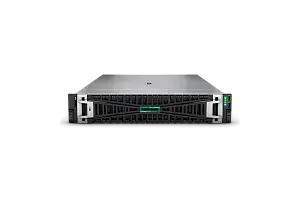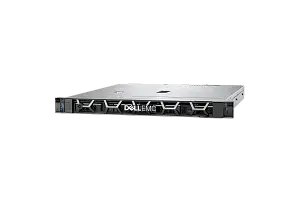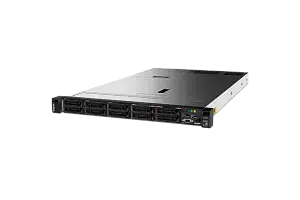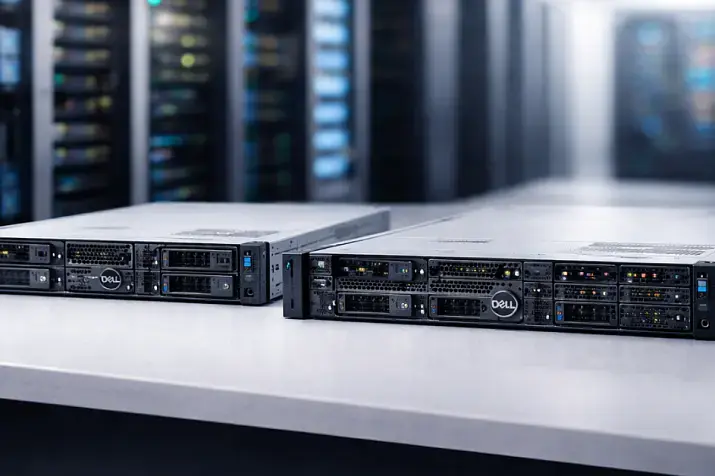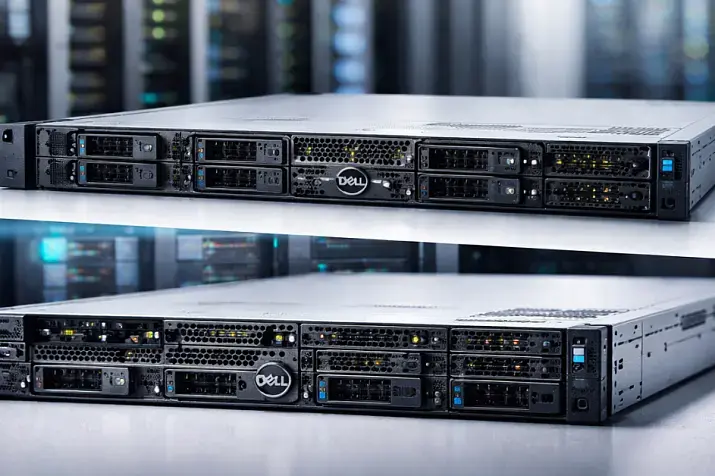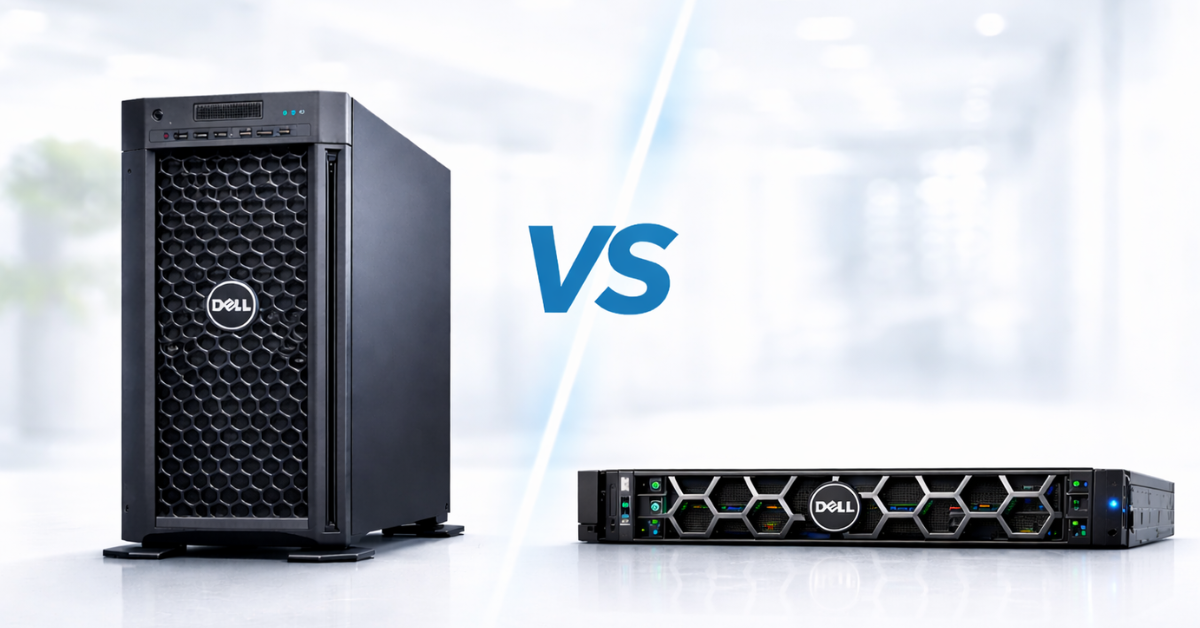
When choosing between the DELL PowerEdge R650 and DELL PowerEdge R640, organizations face a critical question: is it worth upgrading to the latest generation or does the previous model still meet their needs? The R650 represents DELL's 15th generation servers with 3rd Generation Intel Xeon Scalable processors, while the R640 belongs to the 14th generation with 2nd Generation Intel Xeon Scalable processors. Both are 1U rack-mount solutions, but the differences in architecture, performance, and functionality are substantial.
The R650's primary advantages include support for up to 40 cores per processor versus 28 cores in the R640, DDR4 memory running at up to 3200 MHz instead of 2933 MHz, and enhanced storage capabilities with support for up to 10 drives in the front panel. The R640, however, remains an attractive solution for organizations with budget constraints, offering time-tested reliability and sufficient performance for many business applications.
In this article, we'll comprehensively compare both models across key parameters: processors, memory, storage, expandability, management, and energy efficiency. You'll learn which server better suits virtualization, databases, web applications, and other enterprise workloads, and receive clear recommendations based on your specific requirements.
DELL PowerEdge R650 vs R640 Comparison Table
| Feature | DELL PowerEdge R650 | DELL PowerEdge R640 |
|---|---|---|
| Generation | 15th Generation | 14th Generation |
| Processors | Up to 2× Intel Xeon Scalable 3rd Gen, up to 40 cores per processor | Up to 2× Intel Xeon Scalable 2nd Gen, up to 28 cores per processor |
| Memory | 32 DDR4 RDIMM/LRDIMM slots, up to 3200 MHz, max 8 TB | 24 DDR4 RDIMM/LRDIMM slots, up to 2933 MHz, max 3 TB |
| Storage (Front Bays) | Up to 10× 2.5" SAS/SATA/NVMe (HDD/SSD) or 4× 3.5" SAS/SATA | Up to 10× 2.5" SAS/SATA/NVMe or 4× 3.5" SAS/SATA |
| Storage (Rear Bays) | Up to 2× 2.5" SAS/SATA/NVMe (optional) | Up to 2× 2.5" SAS/SATA/NVMe (optional) |
| RAID Controllers | PERC H745, H755, H755N, HBA355I, S150, H345 | PERC H730P, H740P, H750, HBA330, HBA350i, S140 |
| Power Supplies | 800W Platinum, 1100W Titanium, 1400W Platinum, 1100W DC | 495W-1600W Platinum, 750W Titanium |
| PCIe Slots | Up to 3× PCIe Gen4 (all x16 except one x8) | Up to 3× PCIe Gen3 (all x16) |
| GPU Support | Up to 3× single-width 75W GPUs | Up to 3× single-width GPUs (NVIDIA T4) or 1× FPGA |
| Management | iDRAC9, Quick Sync 2 | iDRAC9, Quick Sync 2 |
| Cooling | Up to 4 sets (dual fan modules) hot plug fans | Up to 8 hot plug fans |
| Form Factor | 1U rack server | 1U rack server |
| Ideal Use Cases | Virtualization, databases, HPC, cloud computing, AI/ML | Web hosting, enterprise applications, medium workloads |
| Link | Buy R650 | Buy R640 |
DELL PowerEdge R650: Overview and Specifications

The DELL PowerEdge R650 1U rack server represents DELL's 15th generation and is designed for modern enterprise workloads requiring high performance in a compact footprint. This server is built on 3rd Generation Intel Xeon Scalable processors and delivers significant computing power improvements over the previous generation.
Key Technical Specifications
- Processors: Up to two 3rd Generation Intel Xeon Scalable processors with support for up to 40 cores per processor
- Memory: 32 DDR4 DIMM slots supporting RDIMM/LRDIMM, speeds up to 3200 MHz, maximum capacity up to 8 TB
- Storage (Front Bays): Up to 10× 2.5" SAS/SATA/NVMe drives (max 153 TB) or up to 4× 3.5" SAS/SATA (max 64 TB), or up to 8× 2.5" SAS/SATA/NVMe (max 122.8 TB)
- Storage (Rear Bays): Up to 2× 2.5" SAS/SATA/NVMe (max 30.7 TB)
- RAID Controllers: PERC H745, HBA355I, S150, H355, H345, H755, H755N; External: PERC H840, HBA355E
- Boot Devices: BOSS-S1 or BOSS-S2 (HW RAID 2× M.2 SSDs 240 GB or 480 GB)
- Power Supplies: 800W Platinum AC/240 Mixed Mode, 1100W Titanium AC/240 Mixed Mode, 1400W Platinum AC/240 Mixed Mode, 1100W DC -48~-60V
- Cooling: Air cooling with optional processor liquid cooling; up to 4 sets of hot plug dual fan modules (Standard, High Performance SLVR, or GOLD)
- PCIe Expansion: Up to 3× PCIe Gen4 low-profile slots (all x16 except one x8) with SNAP I/O module support
- Network Adapters: Embedded 2× 1 GbE LOM, optional 1× OCP 3.0 (x8 PCIe lanes)
- GPU Support: Up to three single-width 75W GPUs
- Management: iDRAC9, iDRAC Direct, iDRAC Service Module, Quick Sync 2 wireless module
- Security: Cryptographically signed firmware, Secure Boot, Secure Erase, Silicon Root of Trust, System Lockdown, TPM 1.2/2.0 FIPS, CC-TCG certified
- Dimensions: Height 42.8 mm (1.7"), Width 482 mm (18.97"), Depth 809 mm (31.85") without bezel, 822.84 mm (32.39") with bezel
- Form Factor: 1U rack server
Choosing the Right Equipment
Our specialists will contact you and answer all your questions
Who Should Choose the DELL PowerEdge R650
The R650 is ideal for organizations requiring maximum performance in a compact 1U form factor. This server excels in:
- Virtualization: High VM density thanks to 40 cores per processor and 8 TB of memory capacity
- Databases: Fast transaction processing with 3rd Gen processors and DDR4-3200 memory
- High-Performance Computing (HPC): PCIe Gen4 support and optional liquid cooling for intensive computational tasks
- Cloud Services: Scalability and flexibility for private cloud infrastructure deployments
- AI/ML Applications: Support for up to 3 GPUs for machine learning and data analytics
- Infrastructure Consolidation: Combining multiple workloads on a single platform
DELL PowerEdge R640: Overview and Specifications

The DELL PowerEdge R640 1U rack server belongs to DELL's 14th generation and is built on 2nd Generation Intel Xeon Scalable processors. Despite being from the previous generation, the R640 remains a reliable and proven solution for many enterprise applications, offering a balance of performance and value.
Key Technical Specifications
- Processors: Up to two 2nd Generation Intel Xeon Scalable processors with support for up to 28 cores per processor
- Memory: 24 DDR4 DIMM slots supporting RDIMM/LRDIMM, speeds up to 2933 MHz, maximum capacity up to 3 TB
- Storage (Front Bays): Up to 10× 2.5" SAS/SATA/NVMe drives (up to 8 NVMe SSDs max 76.8 TB) or up to 10 NVMe drives (max 64 TB), or up to 4× 3.5" SAS/SATA HDD (max 64 TB)
- Storage (Rear Bays): Up to 2× 2.5" SAS/SATA/NVMe (max 15.36 TB)
- RAID Controllers: PERC H330, HBA330, HBA350i, H730P, H740P, H750; External: H840, 12 Gbps SAS HBA, HBA355e
- Boot Devices: BOSS (HW RAID 2× M.2 SSDs 240 GB or 480 GB), Internal Dual SD Module
- Power Supplies: 495W Platinum, 750W Platinum, 750W 240HVDC Platinum, 1100W 48VDC, 1100W Platinum, 1100W 380HVDC Platinum, 1600W Platinum, 750W Titanium; hot swap with full redundancy
- Cooling: Up to 8 hot plug fans with full redundancy
- PCIe Expansion: Up to 3× PCIe Gen3 low-profile slots (all x16)
- Network Adapters: Embedded 4× 1 GbE, or 2× 10 GbE + 2× 1 GbE, or 4× 10 GbE, or 2× 25 GbE
- Accelerator Support: Up to 3 single-width GPUs (NVIDIA T4) or up to 1 FPGA
- Management: iDRAC9, iDRAC Direct, iDRAC RESTful API with Redfish, optional Quick Sync 2 wireless module
- Security: TPM 1.2/2.0, TCM 2.0 optional; cryptographically signed firmware, Secure Boot, Silicon Root of Trust, Secure Erase, System Lockdown
- Dimensions: Height 42.8 mm (1.69"), Width 482.0 mm (18.98"), Depth 808.5 mm (31.8")
- Weight: 21.9 kg (48.3 lbs)
- Form Factor: 1U rack server
Who Should Choose the DELL PowerEdge R640
The R640 is an excellent choice for organizations seeking a reliable and proven platform with a strong balance of performance and cost. This server is well-suited for:
- Web Hosting: Hosting websites and applications with moderate loads
- Enterprise Applications: ERP, CRM, document management systems
- Medium-Scale Virtualization: Deploying virtual environments for small and mid-sized companies
- File Servers: Centralized storage and shared data access
- Medium-Sized Databases: SQL Server, MySQL, PostgreSQL for medium workloads
- Test and DevOps Environments: Development, testing, and staging environments
- Budget-Conscious Projects: Organizations with limited budgets that don't require cutting-edge performance
Detailed Comparison of Key Parameters
Processor Performance
The key difference between the R650 and R640 lies in the processor generation. The R650 uses 3rd Generation Intel Xeon Scalable (Ice Lake) processors offering up to 40 cores per processor, which is 43% more than the 28 cores in 2nd Generation (Cascade Lake) processors in the R640. The 3rd Generation processors also deliver improved per-core performance thanks to architectural enhancements, including increased L3 cache and optimizations for AI/ML workloads.
In real-world benchmarks, 3rd Generation processors in the R650 demonstrate performance gains ranging from 20% to 46% depending on the workload. For compute-intensive tasks such as rendering, scientific computing, or big data processing, the R650 provides a significant advantage. For standard enterprise applications and web services, the difference is less pronounced, and the R640 may be sufficient.
Memory and Bandwidth
The R650 supports up to 32 DDR4 memory slots with a maximum frequency of 3200 MHz and total capacity up to 8 TB, which is double the 24 slots and 3 TB in the R640 with frequencies up to 2933 MHz. This is critical for applications requiring large amounts of RAM, such as in-memory databases (SAP HANA, Redis), high-density virtualization, or big data analytics.
The increased DDR4-3200 memory frequency in the R650 provides 9% greater bandwidth compared to DDR4-2933 in the R640. For memory-latency-sensitive applications like DBMS, this can result in noticeable performance improvements. The additional memory slots also provide better scalability for future growth.
Storage and Configuration Flexibility
Both servers offer flexible storage options with support for SAS, SATA, and NVMe drives. The R650 supports up to 10× 2.5" drives in the front panel with a maximum capacity of 153 TB when using NVMe, while the R640 also supports up to 10× 2.5" drives but with a maximum capacity of 76.8 TB (with 8 NVMe configuration).
The R650 gains an advantage in storage controllers with support for the more modern PERC H755 and H755N, which deliver better performance and additional features compared to the H730P/H740P in the R640. The PERC H755 supports up to 32 physical disks, cache up to 8 GB with BBU, and higher throughput.
Both servers support BOSS (Boot Optimized Storage Subsystem) boot devices with 2 M.2 SSDs in RAID configuration, which frees up drive slots for data storage. The R640 also supports Internal Dual SD Module, which is not available in the R650, but the M.2 solution is more reliable and performant.
PCIe Expandability and GPU Support
A significant technological advantage of the R650 is PCIe Gen4 support, which provides twice the bandwidth compared to PCIe Gen3 in the R640. PCIe Gen4 is critical for high-speed network adapters (100 GbE, 200 GbE), NVMe drives, and GPU accelerators. For AI/ML workloads requiring fast data transfer between CPU and GPU, PCIe Gen4 can significantly improve performance.
Both servers support up to 3 single-width GPUs, but with PCIe Gen4 in the R650, accelerators gain more bandwidth for data exchange. The R640 supports NVIDIA T4 GPUs and FPGAs, making it suitable for AI model inference, but the R650 is better suited for model training and more intensive computations.
Energy Efficiency and Cooling
The 3rd Generation Intel Xeon Scalable processors in the R650 are manufactured using the more advanced 10nm SuperFin process compared to 14nm in 2nd Generation processors in the R640. This provides better energy efficiency—more performance per watt. In real-world conditions, the R650 can consume 10-20% less power when performing the same tasks as the R640, leading to reduced operational costs in the long term.
The R650 offers power supplies with higher efficiency certifications, including 1100W Titanium and 1400W Platinum options, compared to a maximum 750W Titanium option in the R640. More efficient power supplies reduce energy losses and heat generation, decreasing the load on data center cooling systems.
Both servers support hot-swappable fans with redundancy. The R650 uses up to 4 sets of dual fan modules, while the R640 uses up to 8 individual fans. The R650 also offers optional processor liquid cooling for intensive workloads, which is not available in the R640.
Management and Security
Both servers use iDRAC9 (integrated Dell Remote Access Controller) for remote management, but the version in the R650 may include additional features and optimizations added in the new generation. iDRAC9 provides complete control over the server, including remote console, hardware monitoring, firmware updates, and management task automation.
From a security perspective, both servers offer similar features: Silicon Root of Trust, Secure Boot, cryptographically signed firmware, TPM 2.0, and System Lockdown. The R650 may have some improvements in the implementation of these features thanks to more modern architecture, but the basic capability set is comparable.
Operating System and Virtualization Support
Both servers support a wide range of operating systems and hypervisors:
- Microsoft Windows Server (all LTSC versions) with Hyper-V
- VMware ESXi (all supported versions)
- Red Hat Enterprise Linux
- SUSE Linux Enterprise Server
- Ubuntu Server LTS
- Citrix Hypervisor
- Oracle Linux
The R650, thanks to more modern processors, may have better support for the latest OS and hypervisor versions with additional optimization features. For virtualization, the R650 provides a significant advantage with more cores (up to 80 cores with two processors versus 56 in the R640) and memory (8 TB versus 3 TB).
Choosing the Right Equipment
Our specialists will contact you and answer all your questions
Recommendations for Choosing Between R650 and R640
Choose DELL PowerEdge R650 if:
- Maximum performance is required: Compute-intensive tasks, large databases, high-load applications
- High-density virtualization is planned: Multiple virtual machines requiring significant resources
- Large memory capacity is needed: In-memory databases, big data analytics requiring more than 3 TB RAM
- AI/ML workloads are used: Machine learning, deep learning requiring GPUs and PCIe Gen4
- Long-term operation is planned: Investment in a modern platform that will remain relevant for the next 5-7 years
- Energy efficiency is critical: Reducing operational costs for power and cooling
- High-speed network connections are needed: 100 GbE, 200 GbE adapters requiring PCIe Gen4
- Maximum storage performance is required: NVMe drives requiring full PCIe Gen4 bandwidth
Choose DELL PowerEdge R640 if:
- Budget is limited: R640 offers better price/performance for medium workloads
- Workloads are moderate: Web servers, file servers, enterprise applications without extreme requirements
- 3 TB of memory is sufficient: Most applications don't require more than 3 TB RAM
- PCIe Gen4 is not required: Existing network adapters and drives operate on PCIe Gen3
- Short-term projects: Planned service life of 2-3 years before the next upgrade
- Proven platform is needed: R640 has a multi-year history of reliable operation
- Compatibility requirements exist: Specific software or configurations already tested on R640
- Purchasing refurbished is planned: R640 is more readily available in the refurbished equipment market
Application Scenarios and Examples
For enterprise virtualization: R650 with 2× 40-core processors (80 cores total) and 8 TB of memory can host 200+ medium-sized virtual machines versus 100-150 on R640.
For databases: R650 with fast DDR4-3200 memory and 3rd Gen processors will deliver 25-35% better transaction performance in SQL Server or Oracle Database compared to R640.
For web hosting: R640 with 2× 20-24 core processors and 512 GB - 1 TB of memory will be an optimal solution, providing sufficient performance at lower costs.
For HPC: R650 with PCIe Gen4, liquid cooling, and 40-core processors is suitable for scientific computing, simulation, and engineering analysis.
For AI/ML: R650 with 3 NVIDIA A2/A10 GPUs and PCIe Gen4 will provide twice the bandwidth for GPU↔CPU data transfer compared to R640.
For container platforms: A Kubernetes cluster based on R650 with 80 cores can run 1.5 times more containerized applications compared to R640 with 56 cores.
Our most popular servers

Free shipping on orders over 500 € in the EU, £500 in the UK, and $3,000 in the USA
Free shipping on orders over 500 € in the EU, £500 in the UK, and $3,000 in the USA
Free shipping on orders over 500 € in the EU, £500 in the UK, and $3,000 in the USA

Free shipping on orders over 500 € in the EU, £500 in the UK, and $3,000 in the USA
Conclusion
Choosing between the DELL PowerEdge R650 and DELL PowerEdge R640 depends on your specific performance requirements, budget, and long-term strategy. The R650 represents significant technological progress with 3rd Generation Intel Xeon Scalable processors, doubled memory capacity, PCIe Gen4, and improved energy efficiency. This makes it an ideal choice for organizations needing maximum performance, scalability, and future-proofing.
The R640, despite belonging to the previous generation, remains a reliable and proven solution that delivers excellent price/performance for many enterprise applications. For organizations with limited budgets or moderate performance requirements, the R640 may be a more economically sound choice.
The key differences come down to this: R650 provides 40-46% more computing power, double the memory (8 TB versus 3 TB), PCIe Gen4 for modern accelerators and network adapters, and better energy efficiency. R640 offers a proven platform with sufficient performance for most tasks at a more accessible price point.
When making your decision, consider not only current but also future needs. If you plan to operate the server for 5-7 years, the investment in R650 can pay off through longer relevance and lower operational costs. If quick deployment with a limited budget is needed and an upgrade is planned in 2-3 years, the R640 will be a reasonable choice.
The ServerMall team is ready to help you select the optimal R650 or R640 configuration based on your specific requirements. We offer both new and certified refurbished DELL servers with quality guarantees and technical support. Explore our DELL PowerEdge server catalog or contact our specialists for consultation.