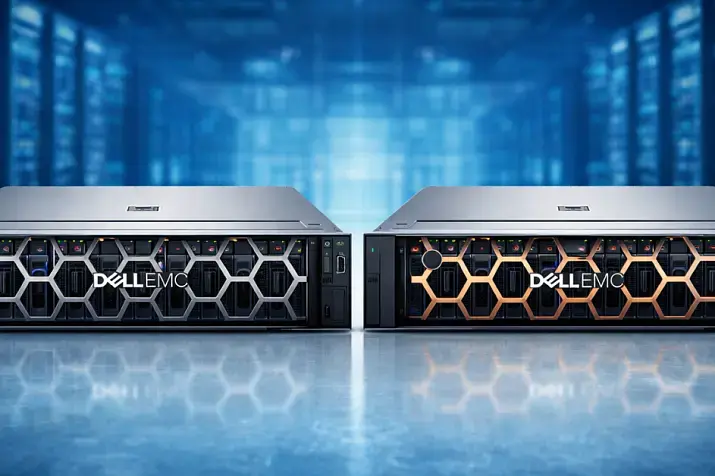
Choosing between DELL PowerEdge R660 and DELL PowerEdge R760 is a critical decision for enterprises planning IT infrastructure modernization in 2026. Both servers belong to the 16th generation PowerEdge lineup but have significant differences in form factor, performance, and scalability.
The R660 is a compact 1U rack server optimized for virtualization and cloud computing, while the R760 is a powerful 2U platform with enhanced storage capabilities and GPU support. The right choice depends on your specific requirements: rack density and energy efficiency or maximum performance and configuration flexibility.
In this article, we will conduct a detailed comparison of technical specifications, performance, expansion capabilities, and applications of both models to help you make an informed decision when selecting server equipment.
DELL R660 vs R760 Comparison Table
| Feature | DELL PowerEdge R660 | DELL PowerEdge R760 |
|---|---|---|
| Model | DELL PowerEdge R660 | DELL PowerEdge R760 |
| Form Factor | 1U rack server | 2U rack server |
| Processor | Up to two 3rd Gen Intel Xeon Scalable, up to 40 cores | Up to two 3rd Gen Intel Xeon Scalable, up to 40 cores |
| Base CPU Config | Intel Xeon Bronze 3408U (8C, 1.80 GHz) | Intel Xeon Bronze 3408U (8C, 1.80 GHz) |
| Maximum Memory | Specifications to be confirmed | Up to 8 TB (LRDIMM) |
| Memory Slots | Specifications to be confirmed | 32 DDR4 DIMM slots |
| Base RAM | 16GB DDR5 RDIMM 4800MHz | 16GB DDR5 RDIMM 4800MHz |
| Drive Bays (Front) | Up to 8 LFF (base configuration) | Up to 12 x 3.5" / 16 x 2.5" / 24 x 2.5" SAS/SATA/NVMe |
| Drive Bays (Rear) | Specifications to be confirmed | Up to 2 x 2.5" / 4 x 2.5" SAS/SATA/NVMe |
| Maximum Storage Capacity | Specifications to be confirmed | Up to 368.84 TB (front) + 61.44 TB (rear) |
| RAID Controller | DELL H755 (8GB+BBU) | DELL H755 (8GB+BBU) |
| Power Supplies | 2 × DELL 800W Hot-Plug | 700W to 2800W Titanium/Platinum |
| Remote Management | iDRAC 9 Express | iDRAC 9 |
| GPU Support | No | No in base configuration |
| Dimensions (HxWxD) | 42.8mm x 482mm (specifications to be confirmed) | 86.8mm x 482mm x 758.3-772.14mm |
| Cooling | Air cooling | Air cooling / Optional processor liquid cooling |
| Optimal Applications | Virtualization, web hosting, lightweight databases | High-density virtualization, databases, analytics, HPC |
DELL PowerEdge R660: Compact Power

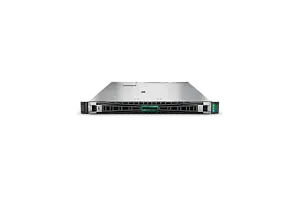
The DELL PowerEdge R660 is a single or dual-processor platform in a compact 1U form factor, designed for organizations that need a balance between performance and rack density.
DELL R660 Technical Specifications
- Processors: Up to two 3rd Generation Intel Xeon Scalable processors with up to 40 cores per processor
- Base CPU Configuration: Intel Xeon Bronze 3408U (8 cores, 22.5 MB cache, 1.80 GHz)
- Memory: 16GB DDR5 RDIMM 4800MHz in base configuration
- Storage: 8 drive bays in base configuration
- RAID Controller: DELL H755 with 8GB cache and battery backup
- Power: Two DELL 800W Hot-Plug power supplies with hot-swap support
- Management: iDRAC 9 Express for remote administration
- Network Adapters: Integrated 2-port 1Gb/s adapter
- Form Factor: 1U rack server with 42.8mm height
- Operating System: Ships without OS (flexibility of choice)
DELL R660 Advantages
The primary advantage of the R660 is space savings in the rack while maintaining high compute power. The single-processor form factor is ideal for data centers with limited space where high server density is important. Support for 3rd Generation Intel Xeon Scalable processors provides excellent performance for virtualization and cloud applications.
The iDRAC 9 Express management system provides advanced remote monitoring and administration capabilities, including remote console, power management, and firmware updates without physical server access.
Who Should Choose DELL R660
- Small and medium companies with limited server room space
- Web hosting providers requiring high density placement
- Organizations implementing virtualization on VMware vSphere or Microsoft Hyper-V
- Companies working with lightweight databases and mid-tier applications
- Edge computing and distributed IT infrastructures
- Development and testing environments with compactness requirements
Choosing the Right Equipment
Our specialists will contact you and answer all your questions
DELL PowerEdge R760: Maximum Performance and Scalability

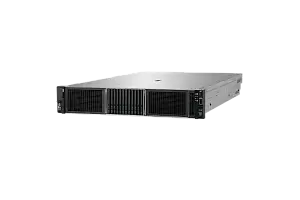
The DELL PowerEdge R760 is a high-performance platform in a 2U form factor, designed for mission-critical enterprise applications requiring maximum compute power, memory, and storage configuration flexibility.
DELL R760 Technical Specifications
- Processors: Up to two 3rd Generation Intel Xeon Scalable processors with up to 40 cores per processor
- Base CPU Configuration: Intel Xeon Bronze 3408U (8 cores, 22.5 MB cache, 1.80 GHz)
- Memory: Up to 8 TB maximum (LRDIMM), 32 DDR4 DIMM slots, speeds up to 3200 MT/s
- Base RAM: 16GB DDR5 RDIMM 4800MHz
- Intel Persistent Memory Support: Up to 16 Intel Persistent Memory 200 series (BPS) slots, 8 TB max
- Storage Controllers: PERC H745, H755, H755N, HBA355I, S150, H345
- Base RAID: DELL H755 with 8GB cache and battery backup
- Boot Devices: BOSS-S2 (2 x M.2 SSD 240GB or 480GB) or BOSS-S1
- Front Drive Bays:
- Up to 12 x 3.5" SAS/SATA (HDD/SSD) — max 192 TB
- Up to 8 x 2.5" NVMe (SSD) — max 122.88 TB
- Up to 16 x 2.5" SAS/SATA/NVMe (HDD/SSD) — max 245.76 TB
- Up to 24 x 2.5" SAS/SATA/NVMe (HDD/SSD) — max 368.84 TB
- Rear Drive Bays:
- Up to 2 x 2.5" SAS/SATA/NVMe (HDD/SSD) — max 30.72 TB
- Up to 4 x 2.5" SAS/SATA/NVMe (HDD/SSD) — max 61.44 TB
- Power Supplies: From 700W Titanium to 2800W Titanium HLAC/240 with mixed mode AC/DC support
- Base Power: 2 × DELL 800W Hot-Plug
- Cooling: Standard air cooling, optional processor liquid cooling
- Fans: Up to six hot-swappable fans (Standard/High performance SLVR/High performance GOLD)
- Dimensions: Height 86.8mm (3.41"), Width 482mm (18.97"), Depth 758.3mm without bezel (29.85") or 772.14mm with bezel (30.39")
- Management: iDRAC 9 with advanced capabilities, iDRAC Service Module, iDRAC Direct, Quick Sync 2 wireless module
- Network Adapters: Integrated 2-port 1Gb/s adapter
- Operating System: Ships without OS
DELL R760 Advantages
The DELL R760 provides unprecedented storage configuration flexibility with support for up to 24 front 2.5" bays and additional rear bays, allowing total capacity exceeding 430 TB. This makes the platform ideal for applications requiring large local data storage, such as database management systems, analytical platforms, and high-density virtualization.
Intel Persistent Memory (Optane) support expands in-memory data capabilities, providing ultra-fast performance for in-memory database applications and analytics. The ability to install up to 8 TB of RAM enables running hundreds of virtual machines or processing massive data arrays in memory.
The 2U form factor provides more space for expansion and improved ventilation, which is critical for maintaining stable operation under maximum loads. Optional liquid cooling for processors allows achieving higher clock frequencies while maintaining acceptable temperatures.
Who Should Choose DELL R760
- Large enterprises with mission-critical applications
- Organizations requiring maximum database performance (Oracle, SQL Server, PostgreSQL)
- Virtualization platforms with high virtual machine density (VMware vSphere, Hyper-V, KVM)
- Data centers with computationally intensive workloads
- Analytical systems and Big Data platforms (Hadoop, Spark, SAP HANA)
- Data storage systems with high capacity and performance requirements
- Medium and large companies implementing private clouds
- Research organizations performing computationally intensive tasks
Detailed Architecture and Capabilities Comparison
Processor Power and Scalability
Both models support 3rd Generation Intel Xeon Scalable processors with a maximum of 40 cores per processor. Base configurations include the Intel Xeon Bronze 3408U with 8 cores and 1.80 GHz clock speed. However, scalability capabilities differ significantly.
The R660 in 1U form factor has thermal and power limitations that may affect the choice of processors with higher clock frequencies or more cores. The R760, thanks to its 2U form factor and improved cooling system, can work with maximum performance processors without thermal constraints.
Memory Subsystem
A critical difference lies in memory capabilities. The R760 offers 32 DDR4 DIMM slots with support for up to 8 TB of RAM using LRDIMM modules. This is double the typical capabilities of 1U servers and allows creating configurations with enormous memory volumes for high-density virtualization.
An additional advantage of the R760 is support for Intel Persistent Memory 200 series with maximum capacity up to 8 TB. This technology provides performance close to DRAM while retaining data after power off, which is critical for in-memory database applications like SAP HANA, Redis, or Memcached.
The R660 in base configuration is equipped with 16GB DDR5 RDIMM 4800MHz, indicating support for newer memory technology, though exact maximum capacity specifications require manufacturer confirmation.
Storage Subsystem
The most significant difference between models manifests in storage subsystem capabilities. The R760 offers unprecedented configuration flexibility:
- 24 x 2.5" bay configuration allows creating arrays up to 368.84 TB with NVMe support for maximum performance
- 12 x 3.5" bay configuration provides up to 192 TB for applications requiring large capacity with moderate IOPS requirements
- Hybrid configurations allow combining SAS/SATA HDD for capacity and NVMe SSD for performance
- Rear bays (up to 4 x 2.5") add 61.44 TB for operating system or caching
The R660 in base configuration offers 8 LFF bays, suitable for most virtualization and web application tasks, but significantly inferior to R760 capabilities for data-intensive scenarios.
Power Systems and Energy Efficiency
Both models in base configuration are equipped with two DELL 800W Hot-Plug power supplies with hot-swap and redundancy support. However, the R760 offers a wider range of power options — from economical 700W Titanium to powerful 2800W Titanium for configurations with maximum processors, memory, and drives.
Titanium certification ensures efficiency over 96%, which is critical for reducing operational costs for electricity and cooling in large data centers. Support for mixed mode AC/240V and DC -48V to -60V options expands deployment possibilities in specialized environments.
Cooling System
The R660 uses standard air cooling with optimized airflow in a compact 1U chassis. The R760 offers a choice of standard, high-performance SLVR, or GOLD fans, plus optional liquid cooling for processors.
Liquid cooling in the R760 allows:
- Maintaining higher processor frequencies under load
- Reducing noise levels in the server room
- Improving overall energy efficiency of data center cooling
- Ensuring stable operation at maximum configurations
Management and Monitoring
Both platforms are equipped with integrated iDRAC 9 remote management controller, but with different functionality levels. The R660 comes with iDRAC 9 Express, providing basic remote management capabilities. The R760 is equipped with full-featured iDRAC 9 with an extended toolset:
- iDRAC Service Module for deep integration with the operating system
- Quick Sync 2 wireless module for simplified initial setup
- Advanced monitoring and predictive analytics capabilities
- Integration with Dell OpenManage for centralized infrastructure management
Expandability and Integration
The 2U form factor of the R760 platform provides more space for PCIe expansion slots, which is critical for integrating additional network adapters, storage controllers, or specialized acceleration cards. The R660, being a 1U server, has a limited number of expansion slots, which must be considered when planning configuration.
Most popular refurbished servers

Free shipping on orders over 500 € in the EU, £500 in the UK, and $3,000 in the USA

Free shipping on orders over 500 € in the EU, £500 in the UK, and $3,000 in the USA

Free shipping on orders over 500 € in the EU, £500 in the UK, and $3,000 in the USA

Free shipping on orders over 500 € in the EU, £500 in the UK, and $3,000 in the USA
Choosing the Right Equipment
Our specialists will contact you and answer all your questions
Practical Application Scenarios
When to Choose DELL R660
Scenario 1: Web Hosting Provider
A company providing web hosting services for small and medium businesses requires maximum server density in the data center. The R660 allows placing up to 42 servers in a standard 42U rack, providing an excellent ratio of performance to occupied space.
Scenario 2: Edge Computing in Retail Network
A retail network deploys servers in regional offices for processing data from video surveillance systems, POS terminals, and inventory. The compactness of the R660 and relatively low cooling requirements make it ideal for placement in small server rooms.
Scenario 3: Medium-Scale Virtualization Environment
An organization with 50-100 virtual machines with moderate resource requirements can effectively use several R660 servers, creating a fault-tolerant virtualization cluster with minimal rack space costs.
When to Choose DELL R760
Scenario 1: Mission-Critical Database
A large enterprise implements a fault-tolerant Microsoft SQL Server Always On or Oracle RAC cluster. The R760 with 8 TB of RAM and an NVMe drive array provides performance for processing millions of transactions per second while maintaining low latency.
Scenario 2: High-Density Virtualization Platform
An organization consolidates infrastructure and plans to host 200-300 virtual machines on one physical server. The R760's capabilities for scaling memory up to 8 TB and support for up to 80 processor cores make this task realistic.
Scenario 3: Big Data Analytics Platform
A company implements a data analytics platform based on Apache Spark or Hadoop. The R760 with maximum storage configuration (up to 430 TB) and Intel Persistent Memory provides optimal performance for processing petabyte-scale data volumes.
Scenario 4: VMware vSphere Private Cloud
An organization builds a private cloud based on VMware vSAN to provide flexible and scalable infrastructure. The R760 with its data storage capabilities and high performance is ideal as a vSAN node, providing high virtual machine density and excellent cost-effectiveness.
Selection Recommendations Between DELL R660 and R760
Selection Criteria
Choose DELL R660 if:
- Rack space is limited and maximum placement density is required
- Power and cooling budget is strictly controlled
- Planned load is virtualization up to 50-100 VMs per server
- Local storage requirements are moderate (up to tens of terabytes)
- Main applications are web servers, application servers, domain controllers
- Deployment in edge locations or branches with limited conditions
- Priority is the ratio of performance to occupied space
Choose DELL R760 if:
- Maximum performance and scalability are required
- High-density virtualization is planned (150+ virtual machines)
- Large memory volumes are critical (over 2 TB)
- Large-capacity local storage is necessary (100+ TB)
- Database applications with high performance requirements are used
- Intel Persistent Memory or in-memory databases are planned
- Flexibility in storage configuration choice is required (hybrid SAS/NVMe arrays)
- Liquid cooling option is needed for maximum performance
- Applications require additional PCIe slots for specialized cards
Total Cost of Ownership (TCO) Comparison
When evaluating TCO, consider not only initial acquisition cost but also operational expenses:
DELL R660:
- Lower cost per unit in base configuration
- Lower power consumption thanks to 1U form factor
- Lower costs for rack space (data center rental)
- Simplified cooling system reduces overall operational costs
- Optimal platform for standardized workloads
DELL R760:
- Higher initial cost, especially in maximum configurations
- Higher power consumption at full load
- Larger occupied volume (2U vs 1U)
- However, significantly higher virtual machine density can reduce total number of required servers
- Longer lifecycle due to greater scalability reserve
Migration and Scaling
It's important to consider infrastructure growth prospects. The R660 is an excellent choice for stable workloads with predictable resource requirements. If significant growth in data volume or number of virtual machines is expected in the next 3-5 years, investment in the R760 may be more economically justified despite higher initial cost.
Performance and Benchmarks
Computational Performance
With identical processor configurations (e.g., two Intel Xeon Gold 6338 with 32 cores each), both platforms demonstrate comparable performance in computationally intensive tasks. However, the R760 can maintain higher turbo frequencies longer due to improved cooling, providing an advantage in variable load tasks.
Storage Subsystem Performance
The R760 with a configuration of 24 x 2.5" NVMe drives can provide over 20 million IOPS for 4K random reads, which is several times the capabilities of a typical R660 configuration. This is critical for databases requiring minimal latency and maximum throughput.
Virtualization Scalability
Tests with VMware vSphere 8.0 show that the R760 in maximum configuration (80 cores, 6 TB RAM) can support up to 300 lightweight virtual machines or up to 100 resource-intensive virtual machines. The R660 in typical configuration effectively handles up to 80-100 lightweight VMs.
Conclusion
The choice between DELL PowerEdge R660 and DELL PowerEdge R760 depends on your specific tasks and priorities.
DELL R660 is an ideal solution for organizations where rack space is a critical resource and workloads have predictable performance requirements. The platform provides an excellent balance between compute power, energy efficiency, and cost, making it the optimal choice for web hosting, edge computing, and medium-scale virtualization.
DELL R760 represents a flagship platform for mission-critical enterprise applications requiring maximum performance, scalability, and configuration flexibility. The ability to scale up to 8 TB of RAM, Intel Persistent Memory support, and flexible storage options make the R760 an ideal choice for databases, high-density virtualization, analytical platforms, and private clouds.
Both models represent reliable, proven 16th generation PowerEdge platforms with full support for modern management, security, and monitoring technologies. The right choice between them is determined not by which platform is "better," but by which platform optimally meets your requirements for performance, scalability, and budget.
For detailed consultation on configuration selection and total cost of ownership calculation, visit the server catalog for DELL PowerEdge R660 and DELL PowerEdge R760 on the ServerMall website.