Hello to all regular readers — and the not-so-regular ones too!
If you’re into compact hardware — plug computers (the ones that sit straight in a wall socket), mini-ITX builds, Raspberry Pi boards, Intel NUCs and similar tiny machines — you’ve landed in the right place
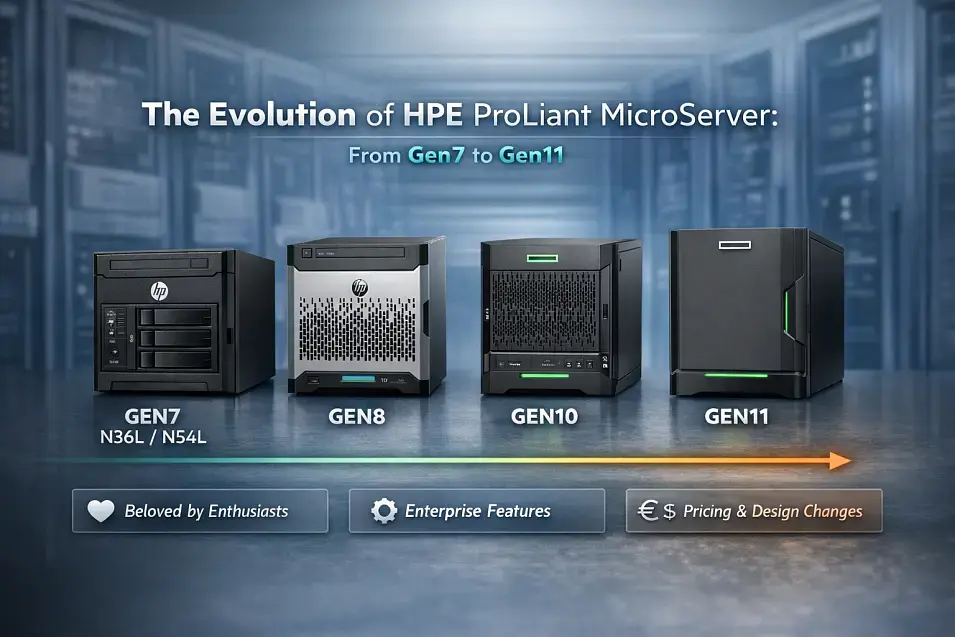
In this long read, I’m going to walk you through the once great and slightly terrifying little beauty known as the HPE ProLiant MicroServer. We’ll trace its path from a small, admin-favorite tower powered by AMD Athlon Neo to a flattened, overpriced box with an external power brick; we’ll go through every MicroServer generation (from N36L to Gen11).
By the end, you’ll understand how this little machine first won the hearts of home admins and enthusiasts — and then smashed them to pieces. And yes, there will be a traditional poll at the end
Enjoy the read.
HPE MicroServer — Explaining Its “Micro” Nature
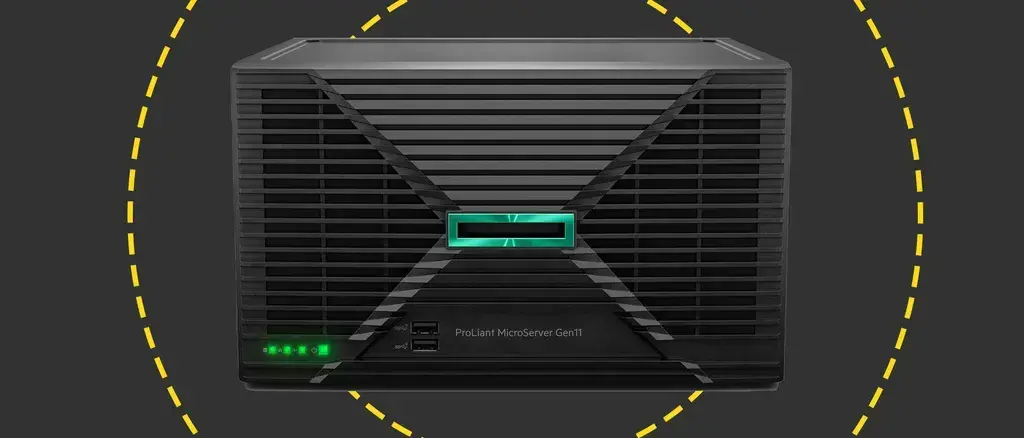
The latest model at the time of writing — HPE ProLiant MicroServer Gen11 — I’ll be criticizing that one a bit later.
Let me start with a small detour to better understand the philosophy behind the MicroServer, its origins, and its place in the ecosystem. I’ll literally explain what makes it “micro.”
As usual, we begin with terminology.
By definition, a microserver is an ultra-compact computer built around a SoC (system-on-a-chip), where a single chip integrates CPU cores, memory controllers, networking, and other interfaces. Everything lives on one piece of silicon.
This approach enables extremely dense compute deployments, lower power consumption, and easy horizontal scaling in data centers — just add more nodes and build clusters. That’s exactly why hyperscalers love them.
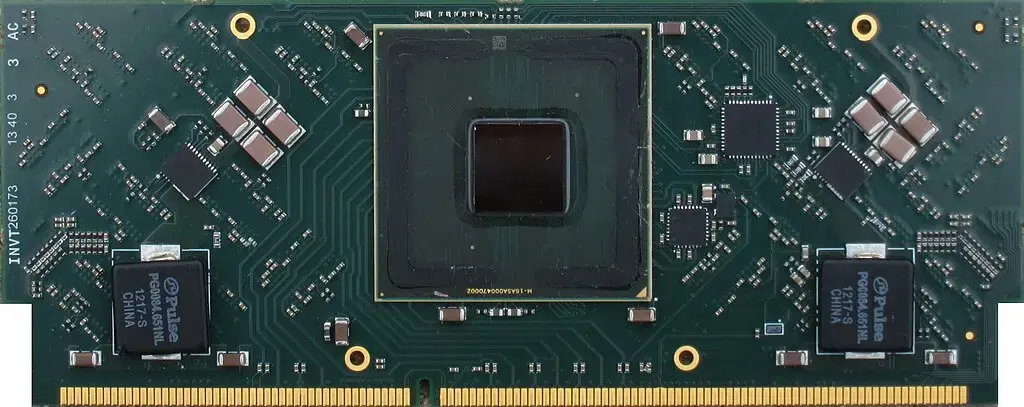
But there’s a flip side: modest single-thread performance (usually acceptable for their intended workloads), limited expansion (few or no PCIe slots), and almost no vertical scalability within a single node.
Microservers originally appeared in embedded systems — devices where a computer is built into the system it controls. Compact size and cost mattered more than raw performance. SoC architectures took root there long before entering general-purpose computing.
Over time, microservers found their way into data centers. In scalable infrastructures with specialized workloads, you don’t need massive single-core performance. What you want instead is maximum node density per rack unit.
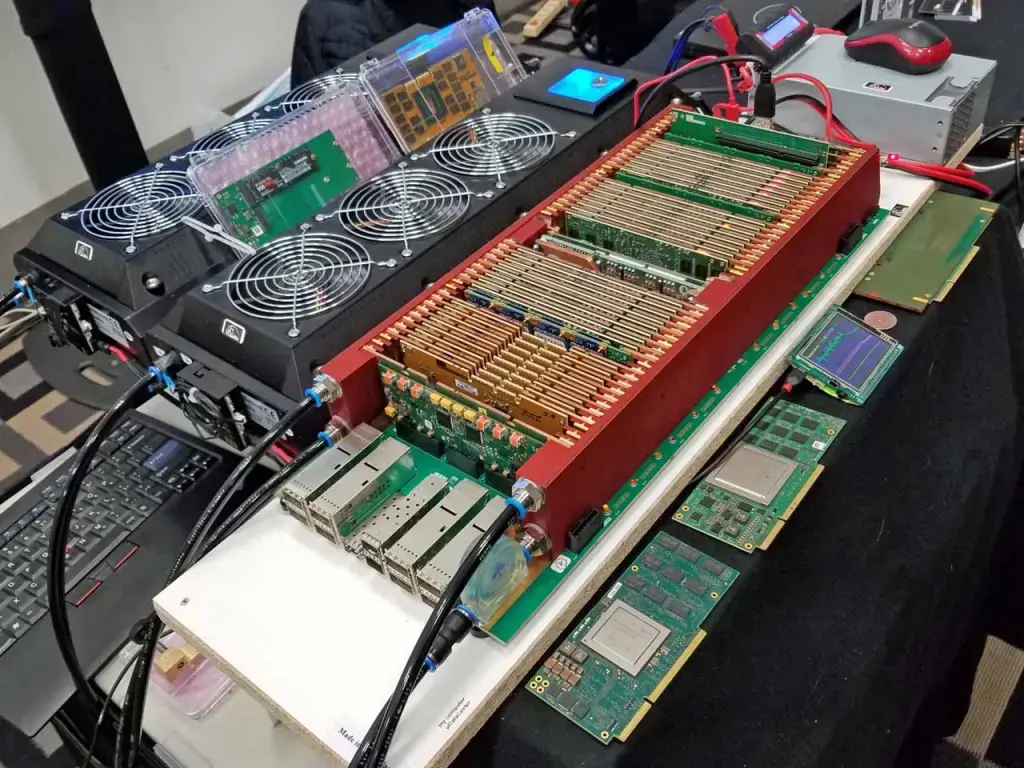
Today, in the enterprise world, a microserver typically means a compact server node that slides into a shared chassis and operates as part of a cluster.
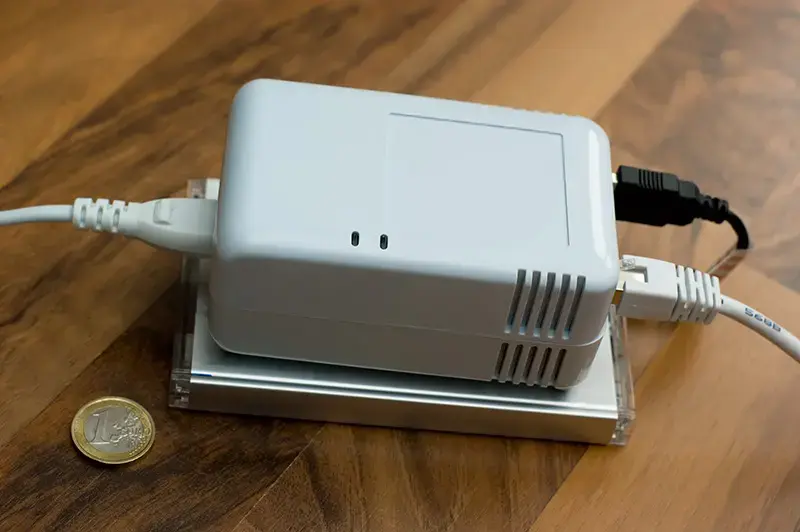
On the consumer side, single-board computers like Raspberry Pi or SheevaPlug can absolutely function as microservers in the strict architectural sense.
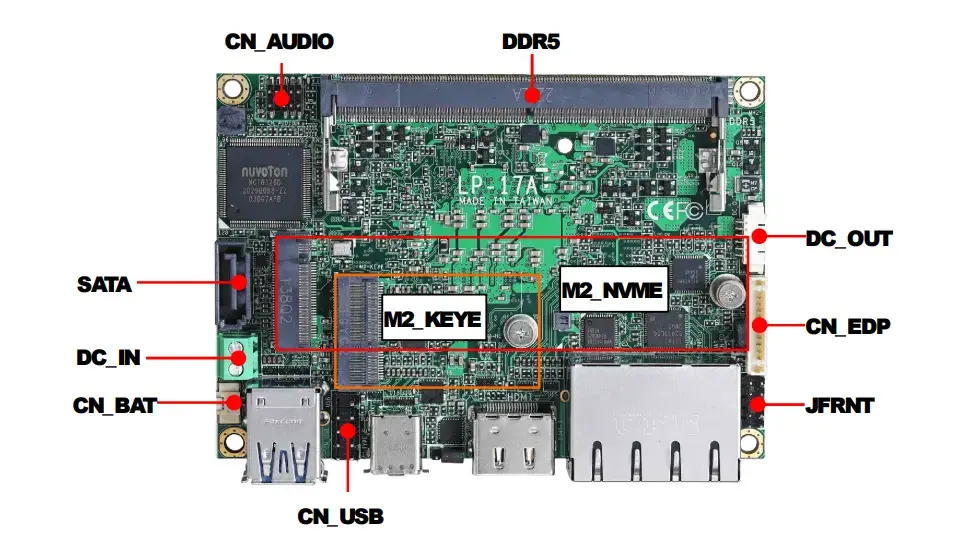
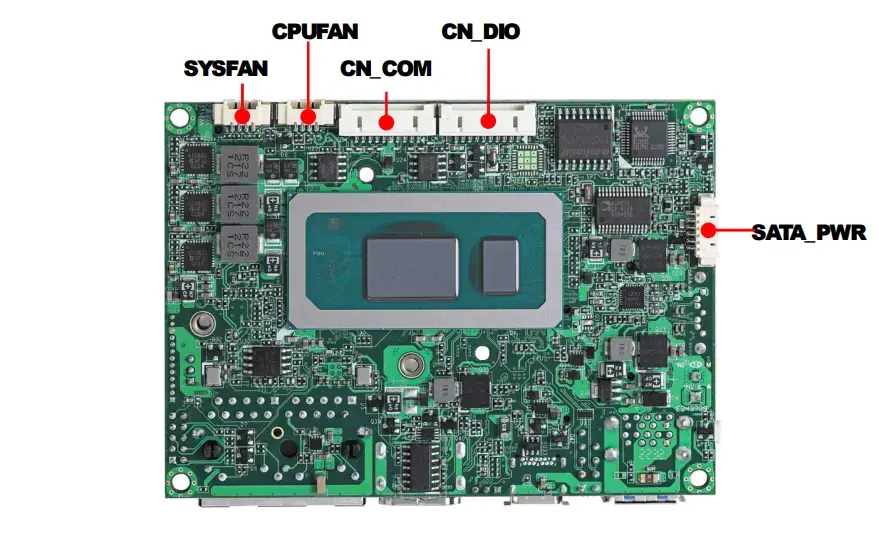
There are also other approaches to building ultra-compact systems — for example, boards with tightly integrated components in Ultra Compact Form Factor designs (UCFF), even smaller than mini-ITX.
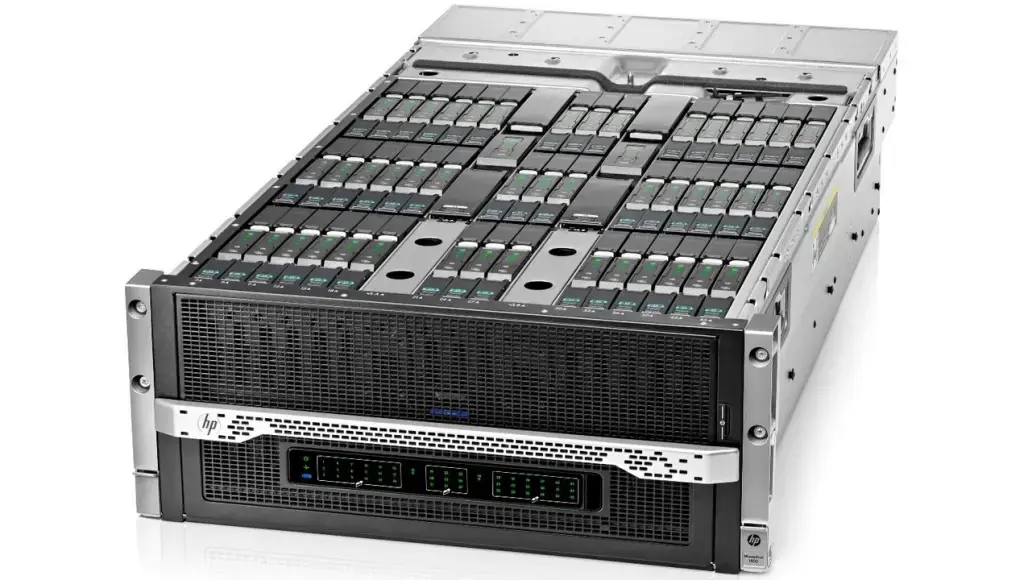
This brings us to a fascinating product: the HP Moonshot 1500, unveiled in 2013.
The chassis is 4.3U high and can hold up to 45 independent server cartridges. Each module has its own CPU, memory, storage, and networking.
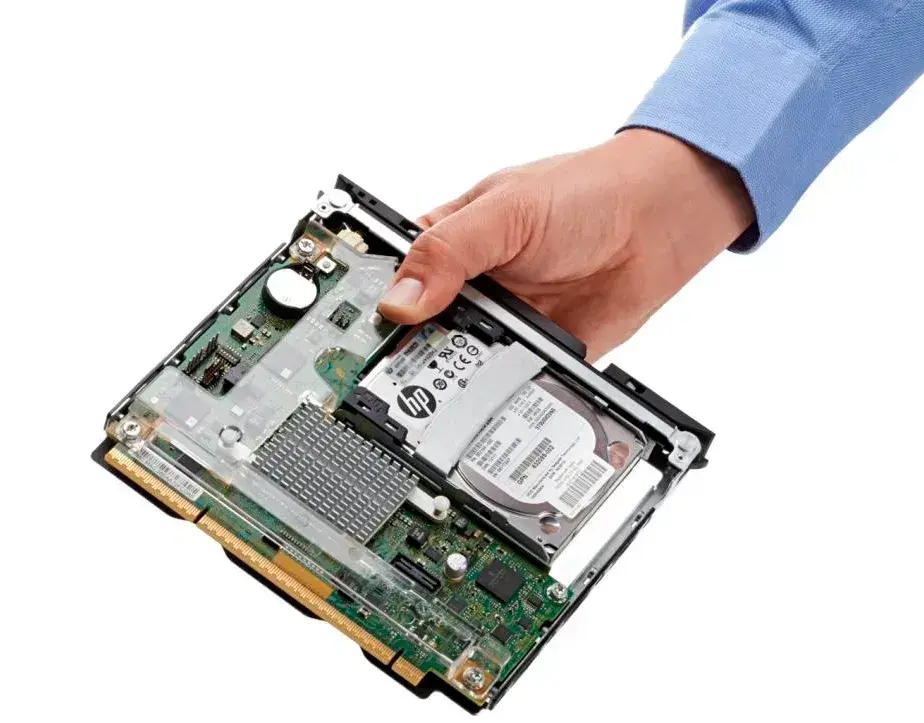
From a market perspective, that’s a textbook microserver platform: compact nodes designed for workloads like web hosting, caching, VDI, media streaming, and real-time analytics. Later revisions even offered specialized cartridges for different tasks.
Architecturally though, Moonshot cartridges were just classic server nodes shrunk down to fit the chassis. Inside you’d find x86 CPUs (Atom S1260, Xeon E3-1200 v3), later ARM variants, standard RAM modules, networking, and local storage.
And now we return to our subject: the HPE MicroServer.
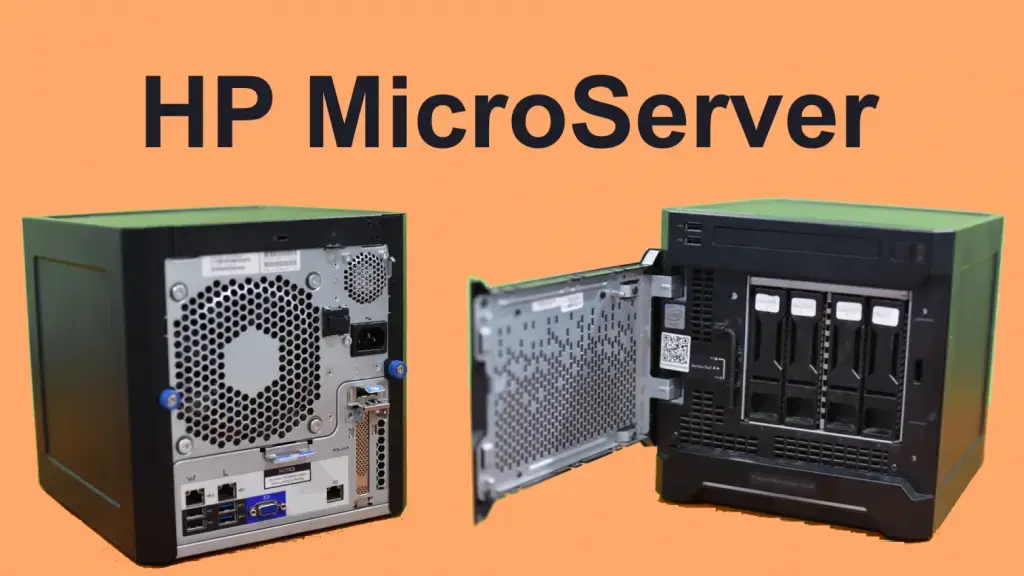
The HPE ProLiant MicroServer is a compact and once-affordable enterprise-class device. But as you’ve probably guessed, it has nothing to do — architecturally or conceptually — with true microservers.
In reality, it’s a standard x86 machine in a slightly unconventional Ultra Micro Tower form factor (the same broad category as the Intel NUC) with some interesting features. If we’re being honest, it’s closer to a PC than to a proper enterprise server.
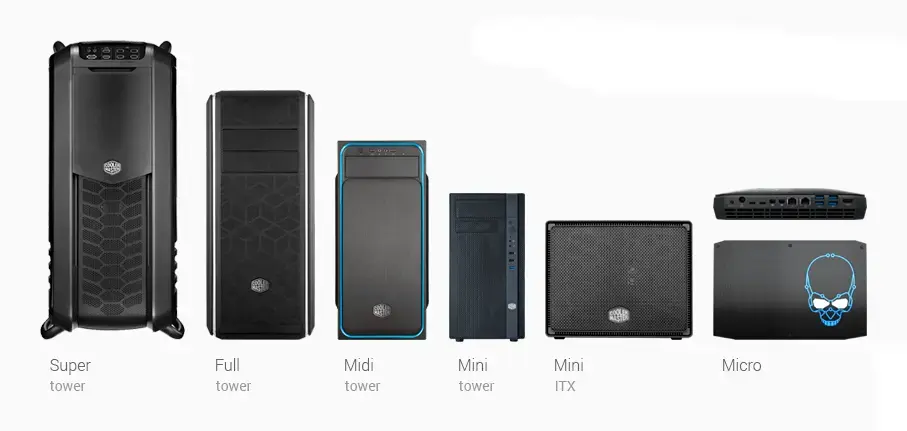
For reference, the most common enterprise server form factors are 1U/2U rack units (occasionally 4U), or 4-4.5U tower systems. The MicroServer looks like someone compressed a cube under hydraulic pressure.
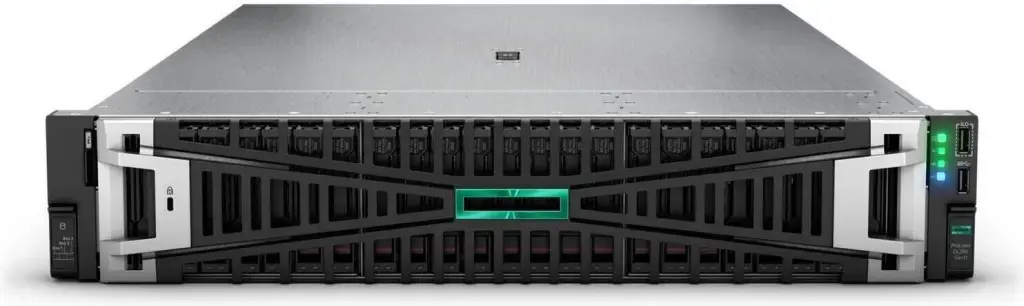
So yes — in HPE’s case, “MicroServer” is pure marketing. That didn’t stop it from becoming hugely popular among sysadmins.
HP ProLiant MicroServer Gen7: N36L, N40L, N54L — The First Wave
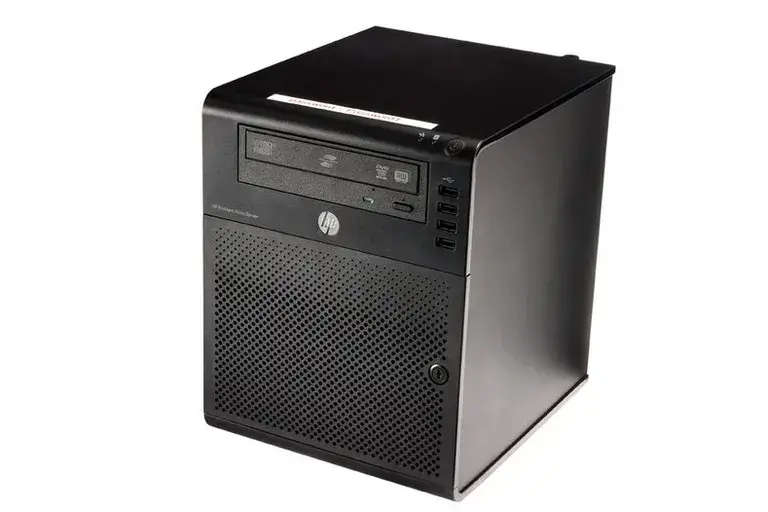
The MicroServer era began in 2010 with the HP ProLiant MicroServer N36L.
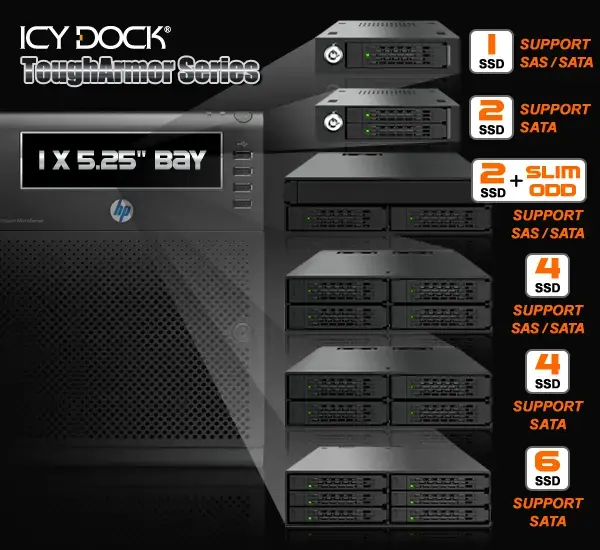
It was a compact tower — quiet, efficient, and equipped with four 3.5-inch drive bays plus a 5.25-inch optical bay.
Even back then, optical drives were fading away, so many users installed SSD cages like ICY DOCK ToughArmor instead.
The base configuration of the N36L was extremely modest (and initially the only one available):
-
Dual-core AMD Athlon II Neo (1.3 GHz, 12W TDP)
-
1 GB ECC DDR3-800 memory
-
One 250 GB SATA HDD
-
Integrated Radeon HD 4200 graphics
Choosing the Right Equipment
Our specialists will contact you and answer all your questions
Officially, it supported up to 8 GB (2×4 GB ECC unbuffered), but in practice users ran 16 GB without issues.
The launch price was €249 in Europe. Adjusted to 2026 terms, that’s roughly €330 — still absurdly cheap for what it offered.
At that price, it had no real competitors.
The front panel featured four USB 2.0 ports, a backlit power button, activity LEDs (disk and network), and the HP logo — which wasn’t just decoration. Blue meant everything was fine, amber meant warning, red meant serious trouble.
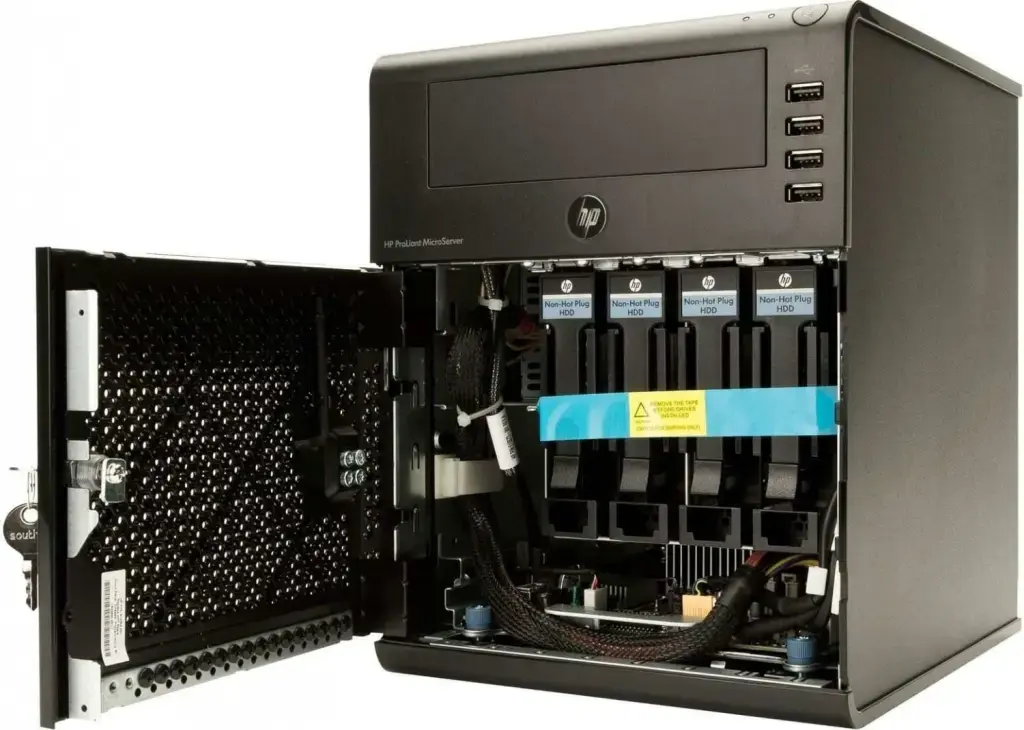
Behind the front door was the drive cage. Each disk mounted onto plastic trays with spring clips, clearly labeled 1 through 4.
The motherboard included an AMD RAID controller supporting JBOD, RAID 0, RAID 1, and RAID 10. No RAID 5 or 6. Officially, hot-swap wasn’t supported — but in practice, many users swapped drives live in RAID/AHCI mode at their own risk.
Maximum supported disk size at launch was 2 TB per drive, which at the time was more than enough.
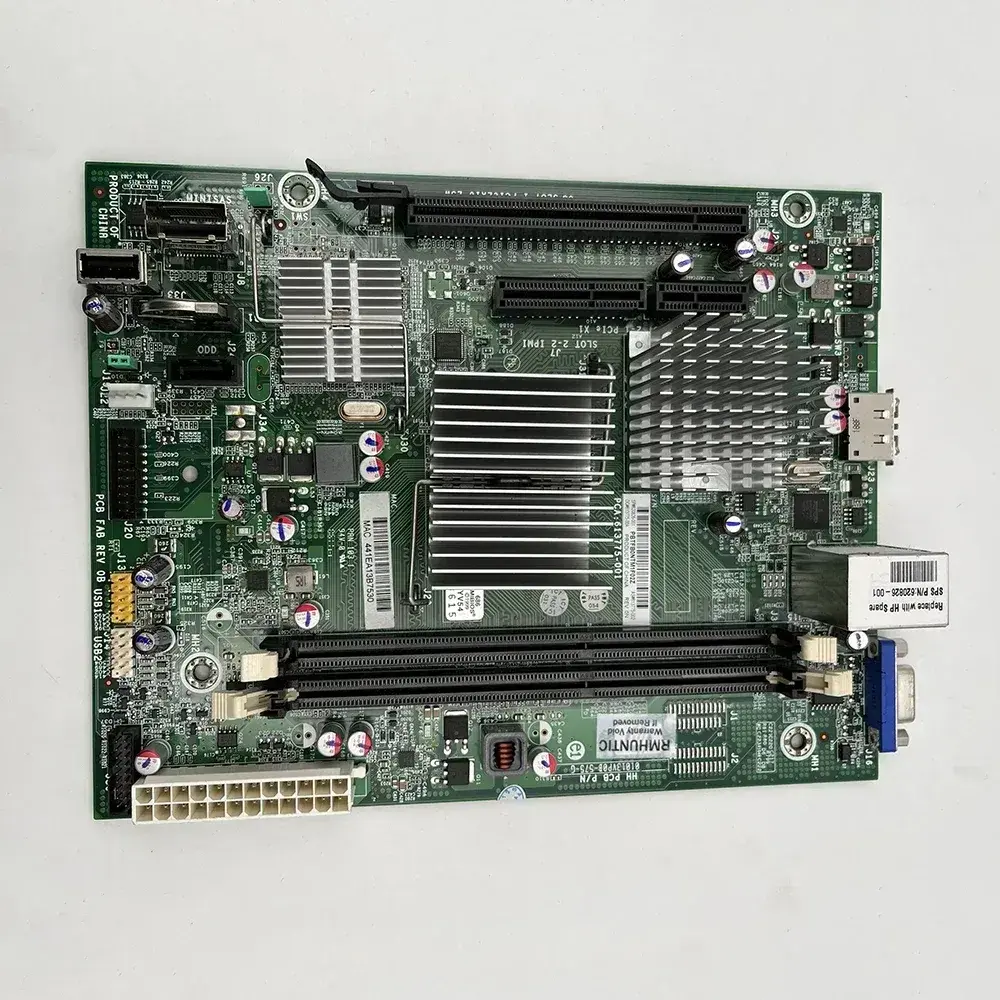
The PCIe slots were limited to about 25W, so high-power GPUs weren’t an option. But virtualization fans loved the internal USB port on the motherboard — perfect for booting ESXi from a flash drive.
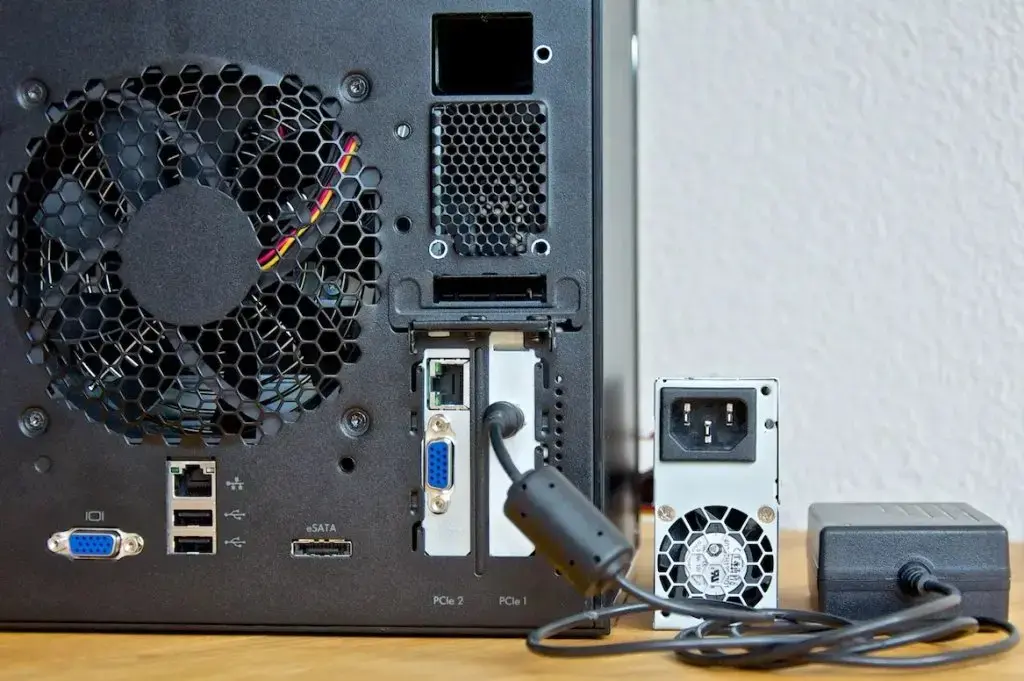
On the rear panel: two USB ports, one eSATA, a single Gigabit LAN (Broadcom), VGA output, the 150W internal PSU, a large rear fan, and two PCI slot covers.
One standout feature compared to typical PCs was the optional HP Remote Access Card (around €65 at launch). Installed in the PCIe x1 slot, it provided a dedicated management port — a simplified take on enterprise IPMI solutions like Dell iDRAC or HP iLO.
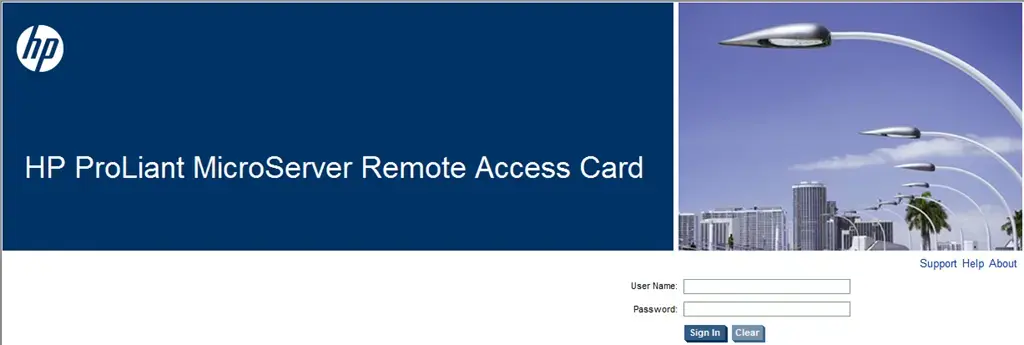
Over time, the lineup expanded with the N40L and N54L.
-
N40L: AMD Turion II Neo N40L, 1.5 GHz, 15W TDP
-
N54L: AMD Turion II Neo N54L, 2.2 GHz, 25W TDP
Both remained dual-core, low-power chips cooled passively by a simple heatsink.
Since the MicroServer debuted alongside the seventh generation of ProLiant servers, it was labeled Gen7.
Over several years, sales reached “hundreds of thousands” of units (exact figures were never disclosed) — a huge success. Small businesses and home admins genuinely loved it.
That wraps up the first generation.
In the next part, we’ll dive into the legendary MicroServer Gen8 — the model that turned a niche curiosity into a cult classic.
Choosing the Right Equipment
Our specialists will contact you and answer all your questions
Content:

Free shipping on orders over £500 in the EU, £500 in the UK, and $3,000 in the USA

Free shipping on orders over £500 in the EU, £500 in the UK, and $3,000 in the USA
Free shipping on orders over £500 in the EU, £500 in the UK, and $3,000 in the USA
Free shipping on orders over £500 in the EU, £500 in the UK, and $3,000 in the USA


Free shipping on orders over £500 in the EU, £500 in the UK, and $3,000 in the USA