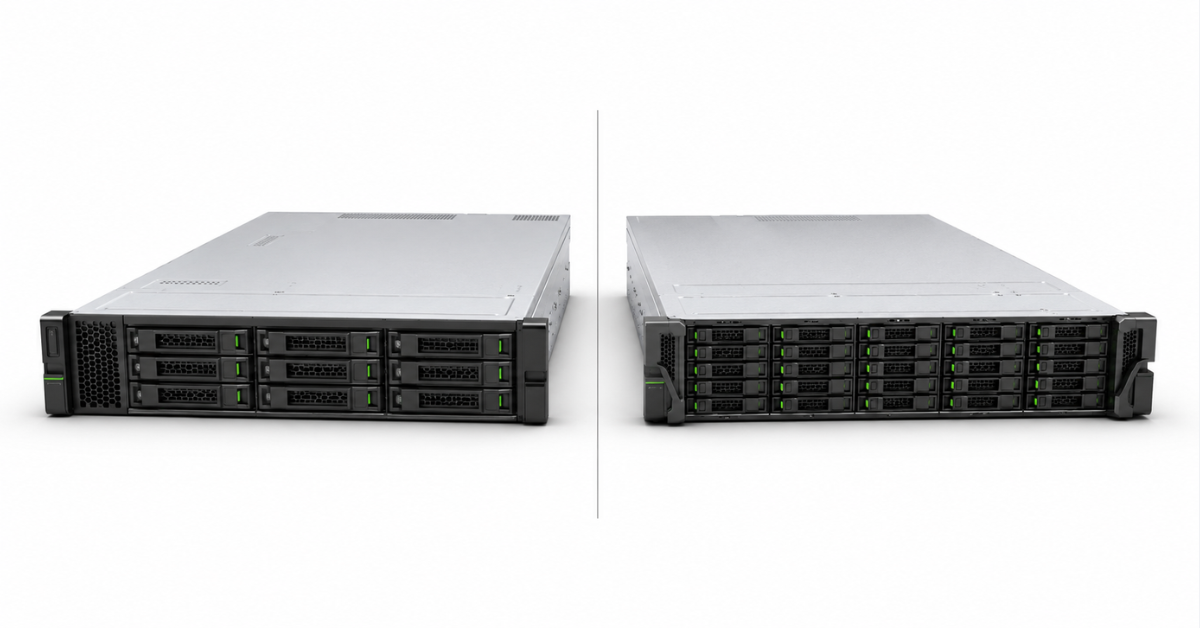
HPE ProLiant Gen12 is the better choice for new infrastructure, dense virtualization, large databases, on-premises AI services, and environments with increased hardware security requirements. A properly functioning Gen11 server does not need to be replaced simply because a new generation has arrived: if its performance is sufficient, the budget is limited, and compatibility must be preserved, it remains a rational choice. The decision depends on the configuration and migration cost, not on the generation number.
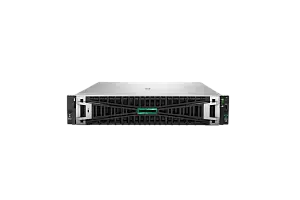
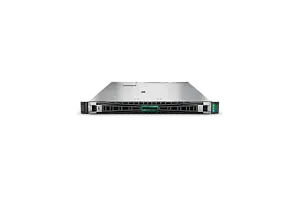
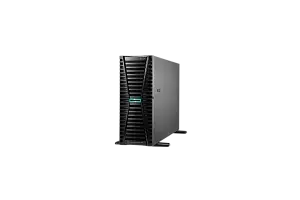
Popular HPE ProLiant Gen12 servers
Free shipping on orders over 500 € in the EU, £500 in the UK, and $3,000 in the USA
Free shipping on orders over 500 € in the EU, £500 in the UK, and $3,000 in the USA
Free shipping on orders over 500 € in the EU, £500 in the UK, and $3,000 in the USA
Free shipping on orders over 500 € in the EU, £500 in the UK, and $3,000 in the USA
Gen12 is a platform-wide update, not just a processor upgrade
The transition from Gen11 to Gen12 affects more than one specification. Along with new CPUs, the system board, remote management controller, power and cooling requirements, drive cage options, supported expansion cards, and list of certified software also change.
At the same time, HPE is updating the portfolio gradually. Gen11 and Gen12 continue to coexist, and the same model number does not guarantee an identical layout. For example, the DL380 remains a versatile two-socket 2U server, but the available processors, storage configurations, accelerators, and cooling options depend on the generation and the specific build.
Models in the same class should be compared:
- DL360 Gen11 and DL360 Gen12 — dense two-socket 1U systems;
- DL380 Gen11 and DL380 Gen12 — versatile two-socket 2U servers;
- DL325 Gen11 and DL325 Gen12 — single-socket 1U AMD systems;
- DL345 Gen11 and DL345 Gen12 — single-socket 2U AMD systems with expanded storage and acceleration capabilities.
| Parameter | HPE ProLiant Gen11 | HPE ProLiant Gen12 | What it changes |
|---|---|---|---|
| Intel | 4th and 5th Gen Xeon Scalable | Intel Xeon 6 | Higher maximum core density and more options for different workloads |
| AMD | EPYC 9004 and, in some models, EPYC 9005 | EPYC 9005 | Late-generation Gen11 systems may be close to Gen12 in processor capabilities |
| Memory | DDR5; capacity and speed depend on the model | DDR5; some models have more slots and a higher maximum capacity | The benefit is most noticeable when memory is the limiting factor |
| PCIe | PCIe 5.0 | PCIe 5.0 | The bus generation alone is not a reason to upgrade |
| Management | HPE iLO 6 | HPE iLO 7 | Gen12 receives a new hardware foundation for security |
| Cooling | Air cooling and selected direct liquid cooling options | Broader availability of liquid cooling | Makes it easier to use high-TDP processors and accelerators |
| Lifecycle | Mature, widely available platform | Foundation of a new procurement cycle | Gen12 is more logical for infrastructure intended for long-term use |
Intel processors: the clearest dividing line between generations
The transition is especially clear in Intel configurations. Gen11 uses 4th and 5th Gen Intel Xeon Scalable processors, while Gen12 has moved to Intel Xeon 6. The DL380 Gen12 specifications list support for up to two processors and up to 144 efficient cores or up to 86 performance cores per processor. The maximum DL380 Gen11 configuration with a 5th Gen Xeon Scalable processor reaches 64 cores per processor.
However, the maximum core count does not guarantee an equivalent performance gain. The Xeon 6 family includes processors with different balances of core count, frequency, and power consumption. High core density is useful for heavily parallel workloads, while applications that are sensitive to single-thread performance may depend more on the frequency and architecture of the specific processor.
Before choosing an Intel Xeon server, compare:
- single-core and overall processor performance;
- the number of cores the software can actually use;
- memory bandwidth;
- power and cooling requirements;
- licensing costs if they are calculated per core or processor;
- the ability to host the required number of virtual machines without losing failover capacity.
AMD EPYC: Gen11 cannot automatically be treated as the previous processor era
With AMD, the boundary between generations is less obvious because of the shared socket. Some Gen11 models, including the DL325, DL345, and DL385, received AMD EPYC 9005 processors, DDR5 memory at up to 6400 MT/s, and PCIe 5.0. Therefore, the presence of EPYC 9005 alone does not distinguish Gen12 from Gen11. Official HPE materials list support in the DL325 Gen11 for EPYC 9004 and 9005 processors with up to 160 cores and up to 3 TB of memory.
When choosing an AMD EPYC server, consider the processor together with the memory, storage, network, accelerator, and cooling configuration. A late Gen11 system with EPYC 9005 may outperform an early or entry-level Gen12 build and remain relevant throughout its planned service life.
Choosing the Right Equipment
Our specialists will contact you and answer all your questions
Memory: maximum capacity is only part of the picture
Both generations use DDR5. The difference depends on the number of channels, the number of slots per channel, supported modules, and population rules. A stated speed of 6400 MT/s does not mean that every fully populated configuration will operate at that speed.
When sizing memory, consider:
- balanced channel population;
- the reduction in frequency when two DIMMs per channel are installed;
- the limitations of the memory controller in the selected processor;
- the cost of high-capacity modules: maximum capacities of 6 or 8 TB may be technically possible but are not always economically reasonable.
In the single-socket DL325 and DL345 Gen12, the memory limit has increased to 6 TB across 24 slots, while comparable Gen11 systems support up to 3 TB. This matters for consolidation and applications that keep large datasets in memory, but it does not mean every application will run twice as fast; a typical configuration in 2026 ranges from 512 GB to 1 TB.
An upgrade is justified when Gen11 is genuinely limited by memory capacity or bandwidth. If a server uses only half of its installed modules and has no memory shortage, the higher Gen12 ceiling will remain unused.
PCIe 5.0, storage, and expansion cards
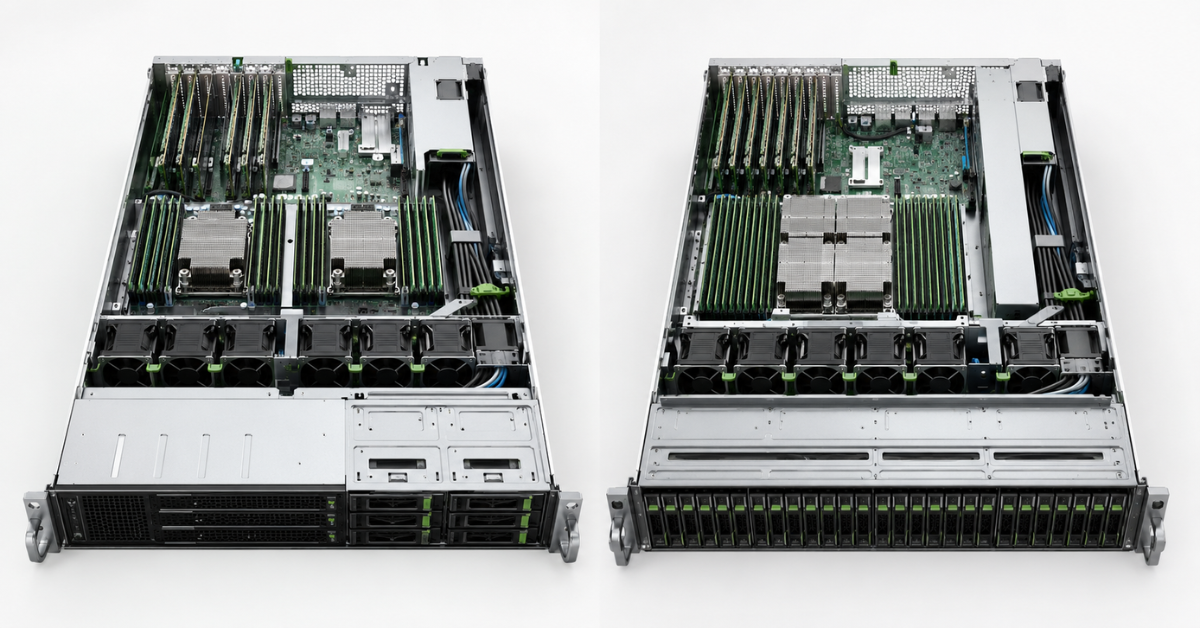
PCIe 5.0 was already available in Gen11, so it cannot be considered a unique advantage of Gen12. The DL380 Gen11 specifications list PCIe 5.0, up to 8 TB of DDR5, EDSFF drive cage options, and support for multiple GPUs. The new generation builds on this foundation, but the available lanes, risers, and restrictions of the specific configuration must be compared.
In practice, layout questions matter:
- how many slots remain after installing the RAID controller and network cards;
- whether GPUs, high-speed network adapters, and a large number of NVMe drives can be used simultaneously;
- which slots receive the full lane width;
- whether additional risers are required;
- whether the selected drive cage restricts accelerator installation;
- which processors and fans are required for the configuration.
In the DL380 Gen12, the maximum number of EDSFF drives has increased to 36, compared with 20 in the DL380 Gen11, although the actual result depends on the selected chassis and drive cages. This advantage may be irrelevant for a file server with large LFF drives but decisive for a dense storage or analytics platform.
Security: the most fundamental Gen12 change
Gen11 already provides substantial hardware-level protection. HPE Silicon Root of Trust binds the firmware to a protected hardware foundation, while the server supports Secure Boot, TPM, firmware integrity verification, and recovery to a trusted firmware version. Gen11 therefore cannot be described as an unprotected platform.
Gen12 receives HPE iLO 7 with a separate Secure Enclave processor. In the Gen12 announcement, HPE links the new architecture to protection throughout the server lifecycle and readiness for post-quantum cryptographic algorithms. This is an architectural strengthening of security, not a promise of absolute invulnerability.
The difference is particularly important for infrastructure where:
- servers are purchased for a long service life;
- strict requirements apply to equipment provenance and integrity;
- firmware must be updated according to a formal policy;
- the system processes financial, medical, or government data;
- equipment is installed at remote sites without a permanent administrator;
- the risk of compromise at the management layer is assessed separately from operating system security.
Management: iLO 7 does not mean that Gen11 cannot be managed from the cloud
HPE iLO 6 and iLO 7 provide remote console access, health monitoring, power management, logging, firmware updates, and automation through APIs. The main difference in iLO 7 lies in its hardware security architecture, not merely in the interface.
HPE Compute Ops Management is also not exclusive to Gen12. The cloud management service supports ProLiant servers starting with Gen10, although available features and subscription tiers may differ. Centralized management of distributed sites therefore does not by itself require replacing Gen11.
Power consumption and cooling: calculate the total work completed
A new server may consume more watts than an older one and still be more efficient. What matters is not the power draw of a single node but the amount of useful work per watt and the number of servers required to host the workload.
HPE claims up to 41% higher performance per watt and up to 65% energy savings for Gen12, but these figures cannot be applied to every migration from Gen11. The vendor's materials compare Gen12 with older systems, including Gen10, under specific consolidation conditions. A move from a modern Gen11 system will produce a different result.
Power consumption is affected by:
- the selected processors and their power limits;
- the number of memory modules;
- the number of NVMe drives and network adapters;
- GPUs and their level of utilization;
- the fan type;
- power supply efficiency;
- inlet air temperature;
- average rather than peak utilization.
Gen12 offers broader support for direct liquid cooling, especially in rack-mounted Intel models and high-thermal-density configurations. However, such a server requires a prepared cooling loop, distribution units, leak monitoring, and maintenance. The availability of a liquid-cooled configuration does not mean it can be connected to any server room without changes.
Popular HPE ProLiant Gen11 servers
Free shipping on orders over 500 € in the EU, £500 in the UK, and $3,000 in the USA
Free shipping on orders over 500 € in the EU, £500 in the UK, and $3,000 in the USA
Free shipping on orders over 500 € in the EU, £500 in the UK, and $3,000 in the USA
Free shipping on orders over 500 € in the EU, £500 in the UK, and $3,000 in the USA
Where Gen12 delivers a noticeable advantage
Dense virtualization
Gen12 is useful when an existing cluster is limited by core count, memory, or rack space. A more powerful single node can host more virtual machines and may allow the number of physical servers to be reduced.
However, capacity must be calculated with the failure of one node in mind. If all servers are continuously loaded close to 100%, the cluster will be unable to absorb the virtual machines from a failed host. The nominal number of virtual machines per server is therefore not the same as the cluster's safe capacity.
Gen11 with EPYC 9005 and 3 TB of memory may remain competitive if that is sufficient for the planned density. Gen12 becomes more attractive when up to 6 TB is required in a single-socket node or when a higher maximum core density is needed.
Databases and analytics
For a database, a new server is useful when the current bottleneck lies in the processor, memory, NVMe storage, or network. Simply replacing one generation with another will not accelerate a system that is waiting on external storage, application locks, or slow queries.
Licensing must be calculated separately for commercial database management systems. Additional cores can cost more than the server itself. In that case, a faster processor with a moderate core count may be more cost-effective than a maximum Gen12 configuration.
AI inference
Inference means using an already trained model, for example to answer questions in a corporate chatbot, search internal documents, recognize speech, analyze images, or generate recommendations.
Gen12 may provide advantages through new processors, greater memory capacity, additional slots, and improved cooling. However, a server's suitability for AI is determined primarily by the complete configuration:
- GPU model;
- video memory capacity;
- number of accelerators;
- power supply capacity;
- available air or liquid cooling;
- number of PCIe lanes;
- NVMe performance;
- network bandwidth;
- driver and software platform support.
Some Gen11 systems support modern GPUs and remain suitable for inference. If the model fits in video memory, the required performance is achieved, and the chassis supports the necessary accelerators, upgrading solely for the Gen12 label is unnecessary.
Hybrid infrastructure and branch offices
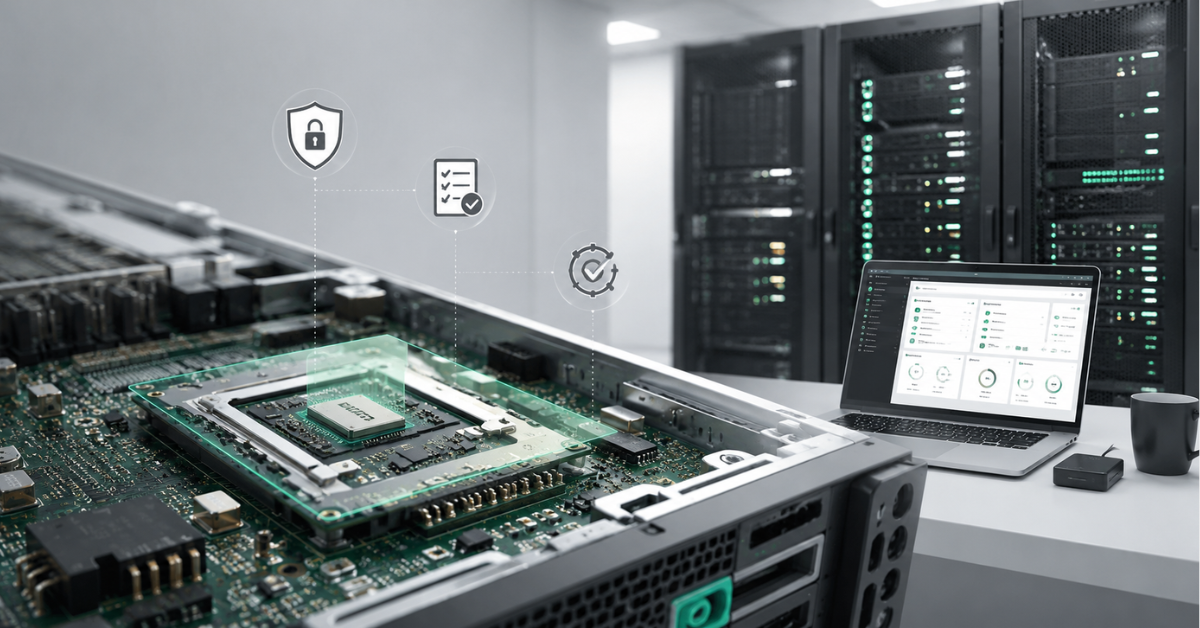
For distributed sites, the value of Gen12 is not limited to performance. The new platform is convenient when a company is building a consistent fleet, centralizing updates, monitoring server health from a single console, and seeking a longer support horizon.
High-load enterprise applications
ERP, manufacturing systems, terminal farms, large Java applications, and transaction processing systems benefit from Gen12 only when there is a clearly identified limitation.
It may be located at one of the following levels:
- insufficient cores for parallel processing;
- the application depends on single-core performance;
- the working dataset does not fit in memory;
- the drives cannot handle the required I/O volume;
- the network limits communication with storage;
- downtime caused by aging equipment creates an unacceptable risk;
- the software vendor requires a certified platform.
If the limitation is caused by the application architecture or an external storage system, replacing the server will not solve the problem.
Choosing the Right Equipment
Our specialists will contact you and answer all your questions
Compatibility and the hidden cost of migration
Gen12 is a new platform, not a set of components for upgrading Gen11. Processors cannot be transferred between generations, apart from some AMD cases. Compatibility of memory modules, risers, drive cages, RAID controllers, internal cables, fans, and power supplies must be checked by part number and against official compatibility matrices.
Before purchasing, determine whether the required hypervisor, operating system, controllers, network adapters, and GPUs are supported; whether the backup solution remains compatible; whether power, cooling, and rack depth are sufficient; whether new licenses will be required; and how rollback will be handled if the migration fails.
Fleet standardization also affects costs. If a company already operates dozens of Gen11 servers, adding several Gen12 systems creates a second set of spare parts, firmware, and procedures. Expanding the fleet with additional nodes from the existing generation may sometimes cost less, even if the new server is slightly faster.
How to calculate the return on an upgrade
The server price is only the first component of the cost. The calculation includes four groups of expenses.
Hardware:
- chassis and processors;
- memory and storage;
- network adapters and accelerators;
- controllers;
- management licenses;
- warranty and service support.
Site preparation:
- rack and mounting depth;
- power distribution units;
- additional network ports;
- cables;
- cooling;
- installation and commissioning.
Migration:
- migration of virtual machines and data;
- application testing;
- potential downtime;
- administrator labor;
- updates to monitoring and backup systems.
Operations:
- electricity and cooling;
- software licenses;
- spare parts;
- technical support;
- planned service life.
Gen12 more often pays for itself not through a small improvement in one application but through the consolidation of several nodes, the release of rack space, lower power consumption across the entire cluster, or the elimination of a memory shortage. If the new server does not reduce other costs, the payback period may be too long.
When Gen11 remains a rational choice
Buying or continuing to use Gen11 makes sense in the following situations:
- current performance is sufficient with capacity to spare;
- the server is intended for backup, test, or auxiliary workloads;
- the company is expanding an already standardized Gen11 fleet;
- compatibility with existing spare parts is important;
- a proven configuration certified by the software vendor is in use;
- budget matters more than maximum density;
- iLO 7 capabilities are not required;
- the server room is not ready for liquid cooling;
- Gen12 would not significantly reduce the number of physical nodes;
- additional cores increase licensing costs;
- a cost-effective refurbished Gen11 system with a suitable warranty is available.
Late-generation AMD systems require particular caution before replacement. Gen11 with EPYC 9005, DDR5 at up to 6400 MT/s, and PCIe 5.0 remains a modern platform. Gen12 may offer more memory, more cores, and the new iLO, but an upgrade should solve a specific problem.
When it is worth moving to Gen12
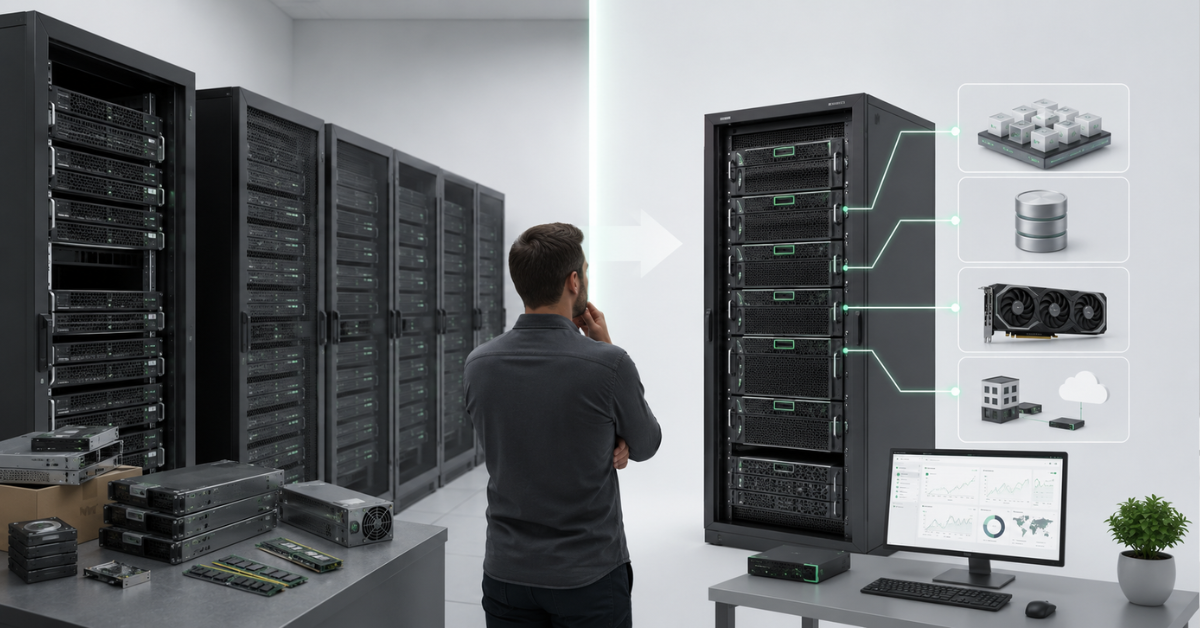
Gen12 is preferable when infrastructure is being built from scratch and is expected to operate for five years or longer. It is also justified when Intel Xeon 6, the maximum memory capacity in the selected chassis, higher virtualization density, new GPU configurations, direct liquid cooling, or the stronger hardware protection of iLO 7 is required.
Upgrading an existing Gen11 system makes sense when:
- the server regularly reaches processor or memory limits;
- expanding Gen11 is no longer possible or economically viable;
- one new node replaces several older ones;
- there are not enough slots, PCIe lanes, or NVMe bays;
- security requirements cannot be met with iLO 6;
- the current configuration does not support the required accelerator;
- the cost of downtime and the risk of failure exceed the migration cost.
| Situation | Preferred option | Why |
|---|---|---|
| New infrastructure for long-term use | Gen12 | It will remain the primary platform for new purchases for longer |
| Expansion of a standardized Gen11 fleet | Gen11 or an identical configuration | Easier to preserve compatibility and maintenance processes |
| Maximum virtualization density | Usually Gen12 | More cores and memory in selected models |
| Limited budget | Usually Gen11 | Lower entry cost and a broader range of configurations |
| Strict firmware security requirements | Gen12 | iLO 7 and a separate secure processor |
| File, backup, or small application server | Gen11 | The platform's capabilities are usually sufficient |
| New server for inference | Depends on the GPU and chassis | Accelerators, power, and cooling should be assessed first |
| Gen11 with EPYC 9005 is already installed | Do not rush to replace it | The processor platform remains modern |
| Several older nodes need to be replaced with one | Gen12 | Consolidation can justify the purchase and migration |
Is it worth upgrading?
Gen12 genuinely advances the HPE ProLiant platform: Intel models receive Xeon 6, selected AMD servers gain more cores and memory, iLO 7 strengthens hardware security, and new layout and cooling options expand the capabilities of dense systems. For a new cluster or infrastructure with a long service life, it is usually the more future-proof foundation.
However, Gen11 retains DDR5, PCIe 5.0, EDSFF, support for modern GPUs, and EPYC 9005 in AMD models. A properly functioning server does not become economically obsolete the moment the next generation is released. An upgrade is worthwhile when Gen12 removes a measurable limitation, reduces the number of nodes, lowers total costs, or meets new security requirements. In all other cases, it is more reasonable to upgrade the existing configuration or continue operating Gen11 until its planned replacement.
Choosing the Right Equipment
Our specialists will contact you and answer all your questions
Content:
Gen12 is a platform-wide update, not just a processor upgrade
Intel processors: the clearest dividing line between generations
AMD EPYC: Gen11 cannot automatically be treated as the previous processor era
Management: iLO 7 does not mean that Gen11 cannot be managed from the cloud
Power consumption and cooling: calculate the total work completed
Free shipping on orders over 500 € in the EU, £500 in the UK, and $3,000 in the USA
Free shipping on orders over 500 € in the EU, £500 in the UK, and $3,000 in the USA
Free shipping on orders over 500 € in the EU, £500 in the UK, and $3,000 in the USA
Free shipping on orders over 500 € in the EU, £500 in the UK, and $3,000 in the USA