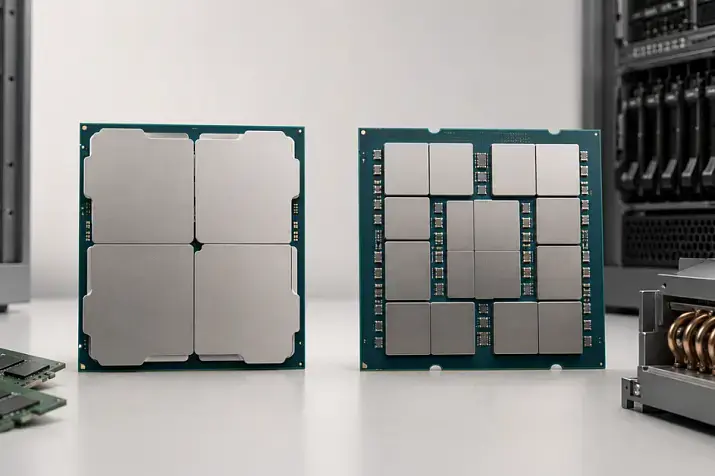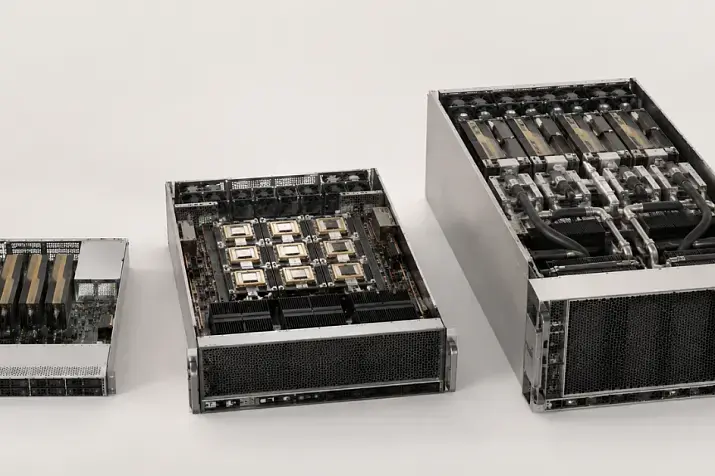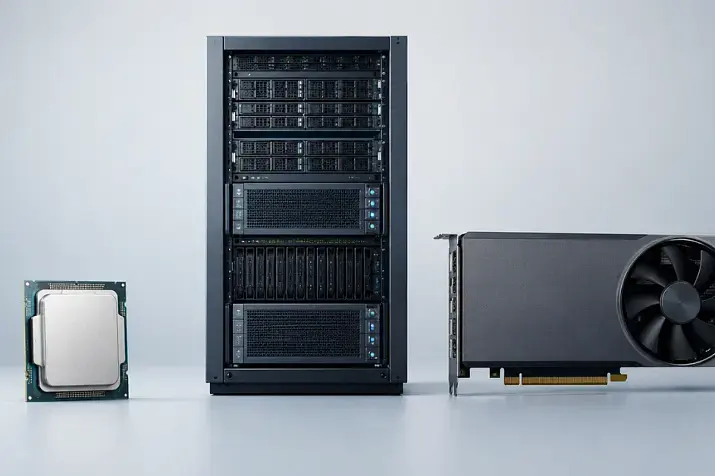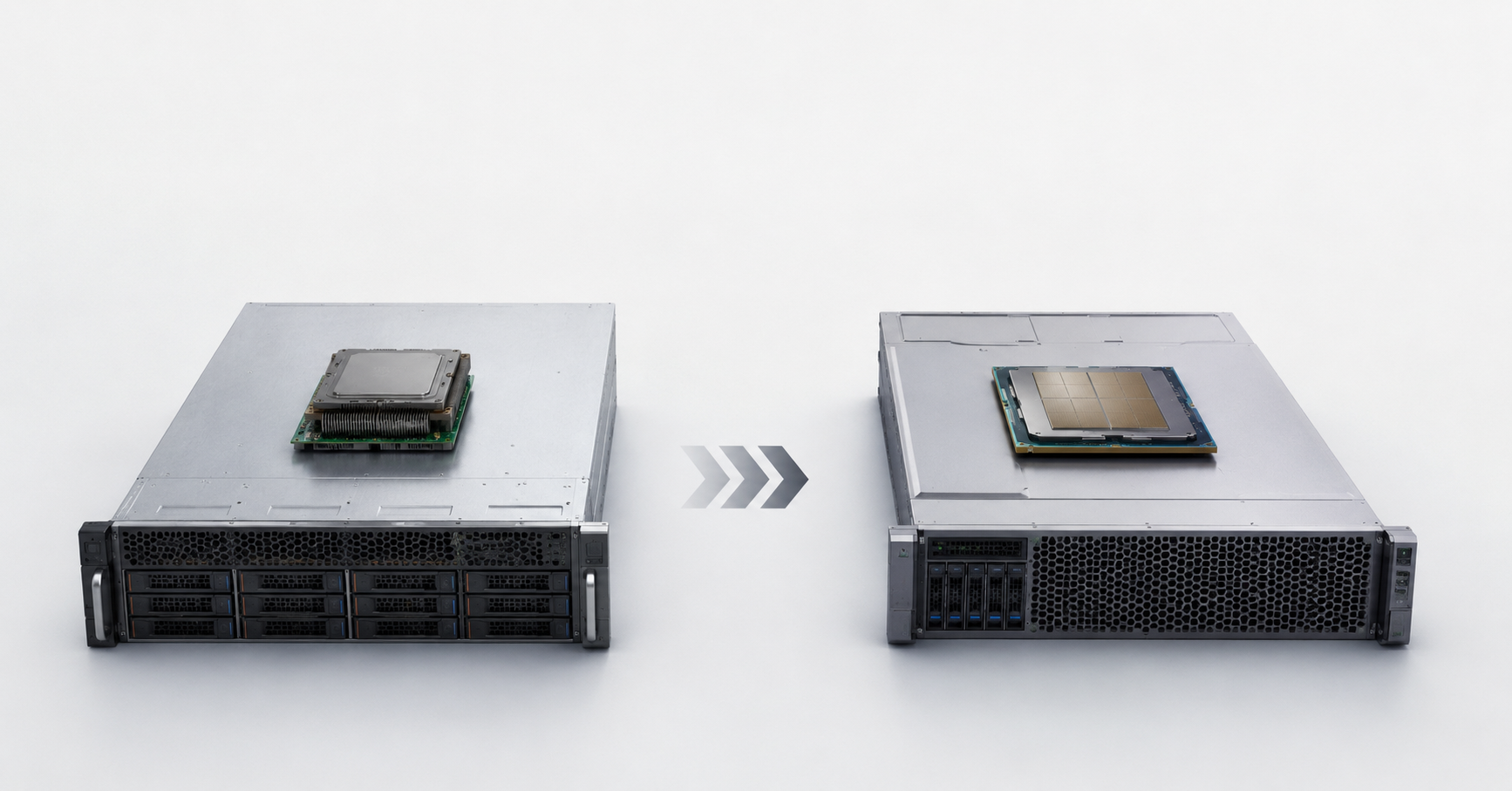
If servers are being purchased for a new project in 2026–2027 and need to run reliably for the next 4–5 years, Intel Xeon 6 should be considered first: it is a newer platform with more headroom for memory, PCIe lanes, energy efficiency, AI workloads, and compute density. But if the infrastructure is already built on 4th or 5th Gen Xeon Scalable, and the workloads are predictable and do not hit limits in memory, NVMe, GPU, or I/O, moving to Xeon 6 will not always pay off. In such cases, servers based on Xeon Scalable 4/5 remain a rational choice, especially for virtualization, databases, corporate services, and the refurbished segment.
The choice between Intel Xeon generations in 2026–2027 should not be reduced to a simple formula of “newer means better.” For some tasks, a new server based on Xeon 6 can indeed replace several older nodes, reduce power consumption per unit of work, and provide headroom for AI, fast storage, and high-speed networking. For other tasks, the difference will be visible in specifications, but it will barely change day-to-day operation.
A simple way to navigate the choice is this:
- Xeon 6 — for new projects, a long lifecycle, dense virtualization, AI inference, analytics, GPU servers, NVMe storage, and data centers with space and power constraints.
- 5th Gen Xeon Scalable — for a rational upgrade when a modern platform is needed without paying the maximum premium.
- 4th Gen Xeon Scalable — for stable workloads, refurbished servers, and scenarios where total cost of ownership matters more than the maximum capabilities of the newest generation.
When choosing Intel Xeon servers, you need to compare more than just the processor. It is important to evaluate the whole server: memory, storage subsystem, networking, PCIe lanes, cooling, licenses, future expansion options, and maintenance costs.
Our most popular servers

Free shipping on orders over 500 € in the EU, £500 in the UK, and $3,000 in the USA
Free shipping on orders over 500 € in the EU, £500 in the UK, and $3,000 in the USA
Free shipping on orders over 500 € in the EU, £500 in the UK, and $3,000 in the USA

Free shipping on orders over 500 € in the EU, £500 in the UK, and $3,000 in the USA
What exactly are we comparing?
4th Gen Xeon Scalable, 5th Gen Xeon Scalable, and Intel Xeon 6 are not just three sets of processors. Each generation represents a server platform with its own limitations and advantages. As of the current period (2026), all of them remain relevant and should not be treated as “old hardware ready for retirement.” Previous Xeon generations can certainly still be considered, but more often for narrow specialized tasks.
When comparing them, you need to consider:
- the number of cores and their type;
- memory frequency and bandwidth;
- the number of memory channels;
- PCIe 5.0 support;
- CXL capabilities;
- built-in accelerators;
- compatibility with drives, network cards, and GPUs;
- power and cooling requirements;
- BIOS, firmware, and driver maturity;
- the price of the server itself, memory, drives, and licenses.
4th Gen Xeon Scalable was an important transition for Intel servers: DDR5, PCIe 5.0, CXL, and built-in accelerators appeared in this platform already. That is why these servers should not be considered obsolete. They have less future headroom than Xeon 6, but they remain a modern foundation for many production workloads.
5th Gen Xeon Scalable continues the same direction: higher memory frequencies, more cores in high-end models, better performance, and preserved platform continuity. According to Intel, 5th Gen supports DDR5 up to 5600 MT/s with one DIMM per channel, up to 80 PCIe 5.0 lanes, and CXL 1.1.
Intel Xeon 6 is a more substantial update. In this generation, Intel separates processors into models with performance cores and models with efficient cores. The former are designed for complex computing, databases, analytics, AI, and workloads with high single-core pressure. The latter are aimed at dense parallel services, microservices, web workloads, and scenarios where performance per watt matters.
According to Intel’s official description, the Xeon 6 family supports up to 128 performance cores or up to 288 efficient cores in a single socket, up to 12 memory channels, DDR5 6400, MRDIMM up to 8800 MT/s in some configurations, up to 192 PCIe 5.0 lanes in dual-socket systems, and up to 64 CXL 2.0 lanes.
Brief comparison of the generations
| Criterion | 4th Gen Xeon Scalable | 5th Gen Xeon Scalable | Intel Xeon 6 |
|---|---|---|---|
| Role in 2026–2027 | an accessible modern foundation | a rational upgrade and strong middle ground | a new long-term platform |
| Memory | DDR5 up to 4800 MT/s with one DIMM per channel | DDR5 up to 5600 MT/s with one DIMM per channel | DDR5 6400; in some models, MRDIMM up to 8800 MT/s |
| Memory channels | up to 8 per socket | up to 8 per socket | up to 12 per socket |
| PCIe | up to 80 PCIe 5.0 lanes | up to 80 PCIe 5.0 lanes | up to 192 PCIe 5.0 lanes in dual-socket systems |
| CXL | CXL 1.1 | CXL 1.1 | CXL 2.0 |
| AI capabilities | AMX, AVX-512, built-in accelerators | AMX, AVX-512, improved performance | stronger for AI inference, but capabilities depend on the core type |
| Best suited for | virtualization, databases, corporate services | general-purpose servers, VDI, analytics, databases | new data centers, AI, HPC, dense virtualization, NVMe/GPU |
The numbers in the table should not be applied to every server automatically. The actual configuration depends on the specific processor, server model, number of sockets, memory population scheme, BIOS, cooling, drives, and power settings. For example, for 4th Gen Xeon Scalable, Intel specifies up to 80 PCIe 5.0 lanes, DDR5 up to 4800 MT/s with one DIMM per channel, and built-in AMX, QAT, DSA, and IAA accelerators.
Choosing the Right Equipment
Our specialists will contact you and answer all your questions
Where Xeon 6 will deliver a noticeable gain
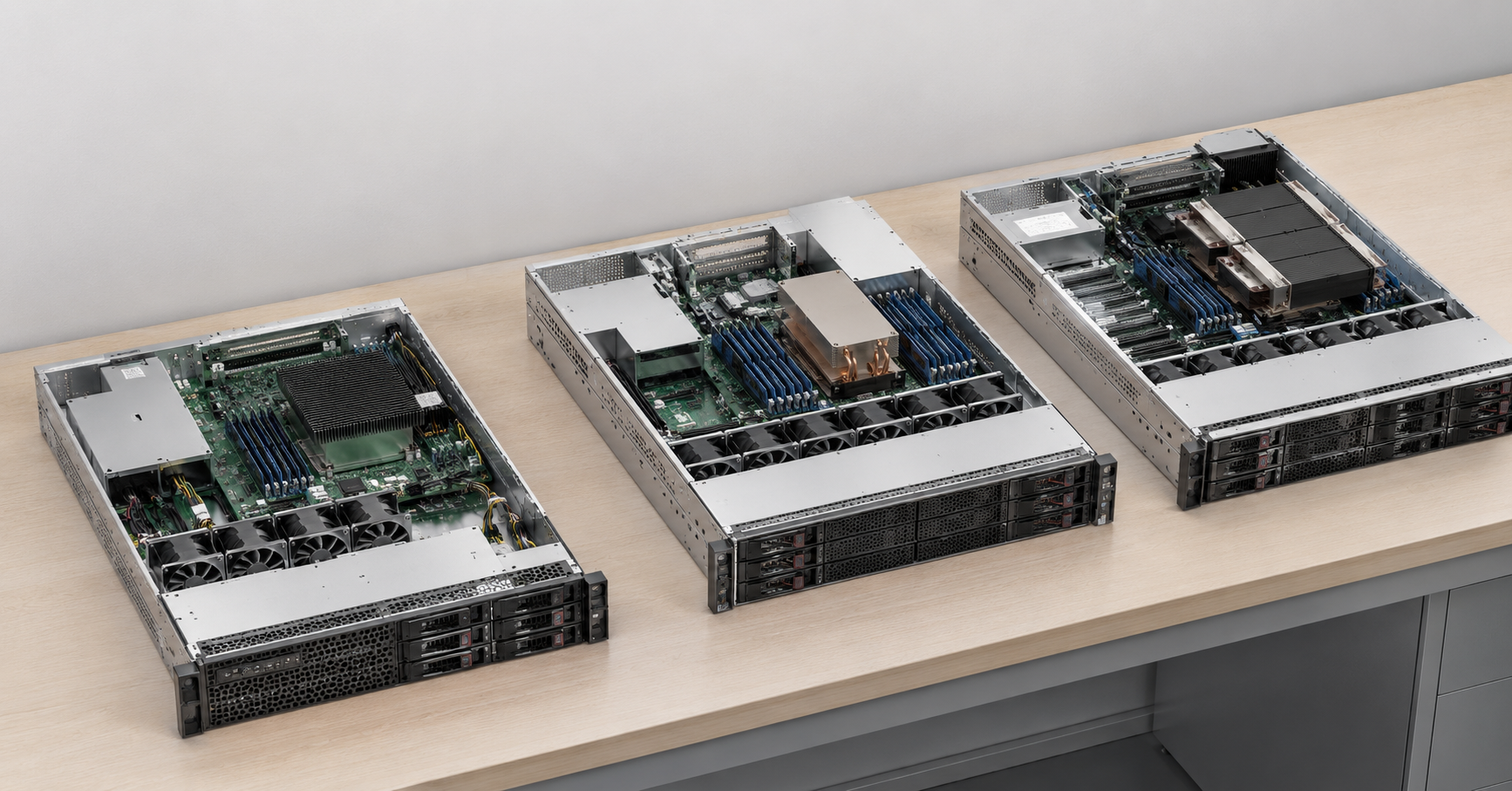
Moving to Xeon 6 is especially noticeable when the server operates not as “one large machine for one service,” but as a dense platform for many parallel workloads.
The gain is most often noticeable in the following scenarios:
- high virtual machine density;
- containers and microservices;
- databases with a large number of parallel queries;
- analytics and processing of large datasets;
- AI inference on the processor;
- vector search;
- servers with a large number of NVMe drives;
- high-speed network nodes;
- hyperconverged infrastructure;
- consolidating several older servers into a smaller number of new ones.
In these workloads, cores are not the only thing that matters. The workload may be limited by memory, I/O, networking, latency between the processor and storage, data exchange speed with GPUs, or overall compute density in the rack.
For example, if a company replaces several servers from 2018–2020 with a smaller number of new nodes, Xeon 6 may be beneficial not only because of performance. It can reduce occupied space, simplify maintenance, lower power consumption per virtual machine, and provide headroom for future workloads.
But this does not mean that everyone needs Xeon 6. If a server is used as file storage, a backup controller, a lightweight terminal server, or a node for several internal services, the new generation may not reveal its potential. In such cases, it is more reasonable to look at the cost of the whole configuration rather than the processor’s maximum specifications.
Where Xeon Scalable 4/5 remain a strong choice
4th and 5th Gen Xeon Scalable are especially interesting where a modern but more affordable platform is needed. This is an important argument for companies that upgrade their fleet gradually or buy refurbished servers.
Such servers are well suited for:
- general-purpose virtualization;
- office and corporate services;
- domain controllers;
- VDI;
- mid-range databases;
- ERP, CRM, and internal business applications;
- test environments;
- backup infrastructure;
- file services;
- monitoring systems;
- small analytics environments.
For these tasks, servers based on Xeon Scalable 4/5 often provide a better balance of price and capabilities. For example, Dell PowerEdge R760 can be a rational platform for virtualization, databases, and corporate services when the maximum capabilities of the newest generation are not required.
A separate advantage of Xeon Scalable 4/5 is platform maturity. For administrators, this means more accumulated experience, predictable configurations, known BIOS behavior, drivers, controllers, and management systems. In production infrastructure, this is sometimes more important than a small performance gain in benchmarks.
Memory: why it is one of the main arguments for Xeon 6
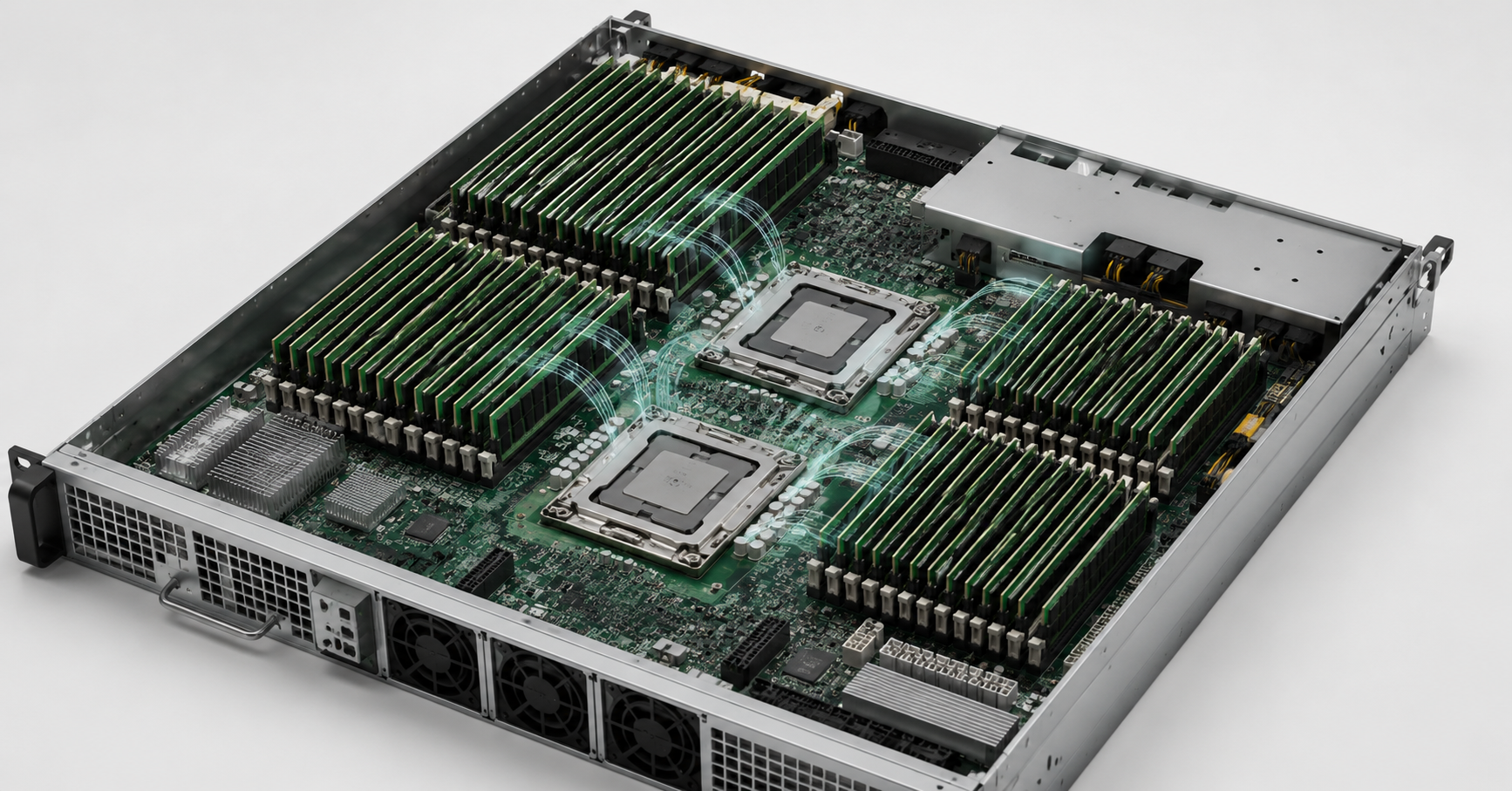
In 2026–2027, many server workloads are no longer limited only by processor cores. Memory is increasingly becoming the bottleneck: its bandwidth, latency, number of channels, and module population scheme.
This is especially visible in tasks where the processor constantly accesses large volumes of data:
- databases;
- analytics;
- virtualization with a large number of virtual machines;
- AI inference;
- log processing;
- vector databases;
- caching services;
- scientific and engineering calculations.
4th Gen Xeon Scalable already brought DDR5 to mainstream Intel server platforms. 5th Gen increased memory speed and became better suited for bandwidth-sensitive tasks. Xeon 6 goes further: more memory channels, support for DDR5 6400, and MRDIMM in some configurations.
The concept of MRDIMM and how it differs from classic memory can be explained simply: it is server memory designed for higher bandwidth. It matters where the processor often waits for data from RAM. If the workload is of this kind, the difference between generations can be visible not only in tests but also in real operation.
At the same time, a server should not be selected by RAM capacity alone. Two servers with the same 1–2 TB of memory can behave differently if:
- they have a different number of memory channels;
- modules are installed unevenly;
- a different slot population mode is used;
- frequency drops because of the number of modules per channel;
- the workload is poorly distributed between processors;
- NUMA architecture is not taken into account.
For databases, virtualization, and analytics, the correct memory configuration is often more important than buying the most expensive processor.
PCIe, NVMe, GPU, and CXL: why the platform matters more than the number of cores
The big difference in Xeon 6 is not only in cores. The new generation shows its strengths as a platform for modern servers that need fast storage, network cards, GPUs, and memory expansion at the same time.
This matters for tasks where the server needs to serve many high-bandwidth devices:
- NVMe storage;
- databases with strict latency requirements;
- GPU servers;
- high-speed network nodes;
- hyperconverged infrastructure;
- virtualization clusters with local storage;
- video processing systems;
- analytics platforms.
If a server needs several 100/200/400 Gbit/s network cards, a large NVMe pool, and one or more GPUs, PCIe lanes quickly become a valuable resource. In such scenarios, Xeon 6 can provide more freedom when designing the configuration.
CXL is important too, but it should not be treated as a mandatory technology for every project. In the coming years, CXL will be useful primarily where memory expansion, new memory usage models, and a more flexible data center architecture are needed. For a regular server running office services, this is not the main argument.
If, however, the server uses 2–4 ordinary drives, a standard network card, and does not work with GPUs, the advantages of the new platform will be less noticeable. In this case, Xeon Scalable 4/5 may turn out to be the more reasonable purchase.
AI workloads: Xeon 6 does not replace GPUs, but it changes the role of the processor
The growing interest in AI does not mean that every server now has to be purchased only with the newest processor. But the role of the CPU in AI infrastructure has indeed changed.
The processor matters not only for “ordinary” tasks. In an AI server, it is responsible for:
- data preparation;
- request handling;
- vector database operation;
- routing between services;
- inference of small and medium-sized models;
- interaction with GPUs;
- network exchange;
- storage operation;
- system and application services around the model.
4th and 5th Gen Xeon Scalable already have built-in accelerators that are useful for some AI and analytics tasks. Therefore, they should not be written off. For small models, classic analytics, and corporate services, they remain applicable.
Xeon 6 with performance cores is more interesting where the CPU really participates in computing: AI inference, data processing, vector operations, analytics, and HPC. Intel states that in MLPerf Inference, Xeon 6 with performance cores delivered on average approximately 1.9× higher AI inference performance compared with 5th Gen Xeon across a set of tests.
But it is important not to overestimate the CPU. Training large models and heavy inference of large language models still require GPUs. The processor does not replace accelerators; it helps unlock them: it prepares data faster, serves networking and storage, reduces latency, and avoids becoming a bottleneck next to GPUs.
For GPU servers on a new platform, you can look toward Dell PowerEdge 17G and specific models selected by the number of accelerators, power, cooling, and available PCIe lanes. If the task is simpler and a GPU is not required, previous-generation servers will often be more cost-effective.
Most popular servers
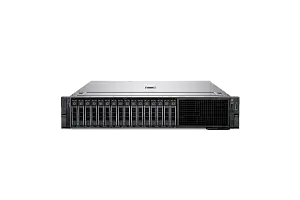
Free shipping on orders over 500 € in the EU, £500 in the UK, and $3,000 in the USA
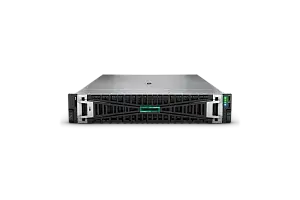
Free shipping on orders over 500 € in the EU, £500 in the UK, and $3,000 in the USA
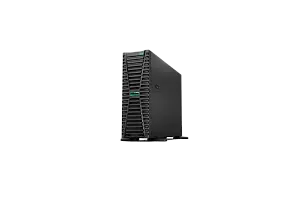
Free shipping on orders over 500 € in the EU, £500 in the UK, and $3,000 in the USA
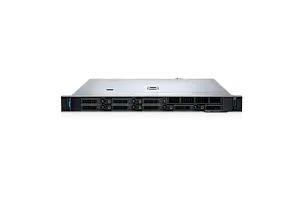
Free shipping on orders over 500 € in the EU, £500 in the UK, and $3,000 in the USA
Energy efficiency and cooling
It is wrong to compare generations only by the declared thermal design power. A newer processor may have a high TDP, but complete more work in less time or allow several older servers to be replaced by one new machine. That is why you should calculate not “watts per processor,” but “watts per task.”
For business, it is more useful to look at metrics such as:
- watts per virtual machine;
- watts per transaction;
- watts per request;
- watts per container;
- watts per terabyte of processed data;
- electricity cost per working service.
Xeon 6 with efficient cores (E-core) can be especially interesting for dense parallel workloads: web services, microservices, containers, CDN, and infrastructure services. These scenarios do not always need maximum single-core performance, but they do require many parallel threads and low power consumption.
Xeon 6 with performance cores (P-core) is better suited for heavy computing, databases, analytics, and AI. But such configurations require careful cooling selection. Some servers may need an enhanced air-cooling layout or liquid cooling. For example, the Dell technical guide for the PowerEdge R770 states support for two Intel Xeon 6 processors and optional direct liquid cooling.
Before purchasing, it is worth answering several questions:
- is there a power limit per rack;
- how much electricity costs in the specific data center;
- whether there is cooling headroom;
- how many servers can be replaced by one new server;
- whether licensing costs will change;
- whether there are noise and heat restrictions in the server room;
- how critical downtime during migration is.
Sometimes a refurbished server based on Xeon Scalable 4/5 will consume more power per unit of work, but still be more profitable because of the lower entry price. This is especially true if the workload is not round-the-clock or does not require high density.
Choosing the Right Equipment
Our specialists will contact you and answer all your questions
Platform lifecycle
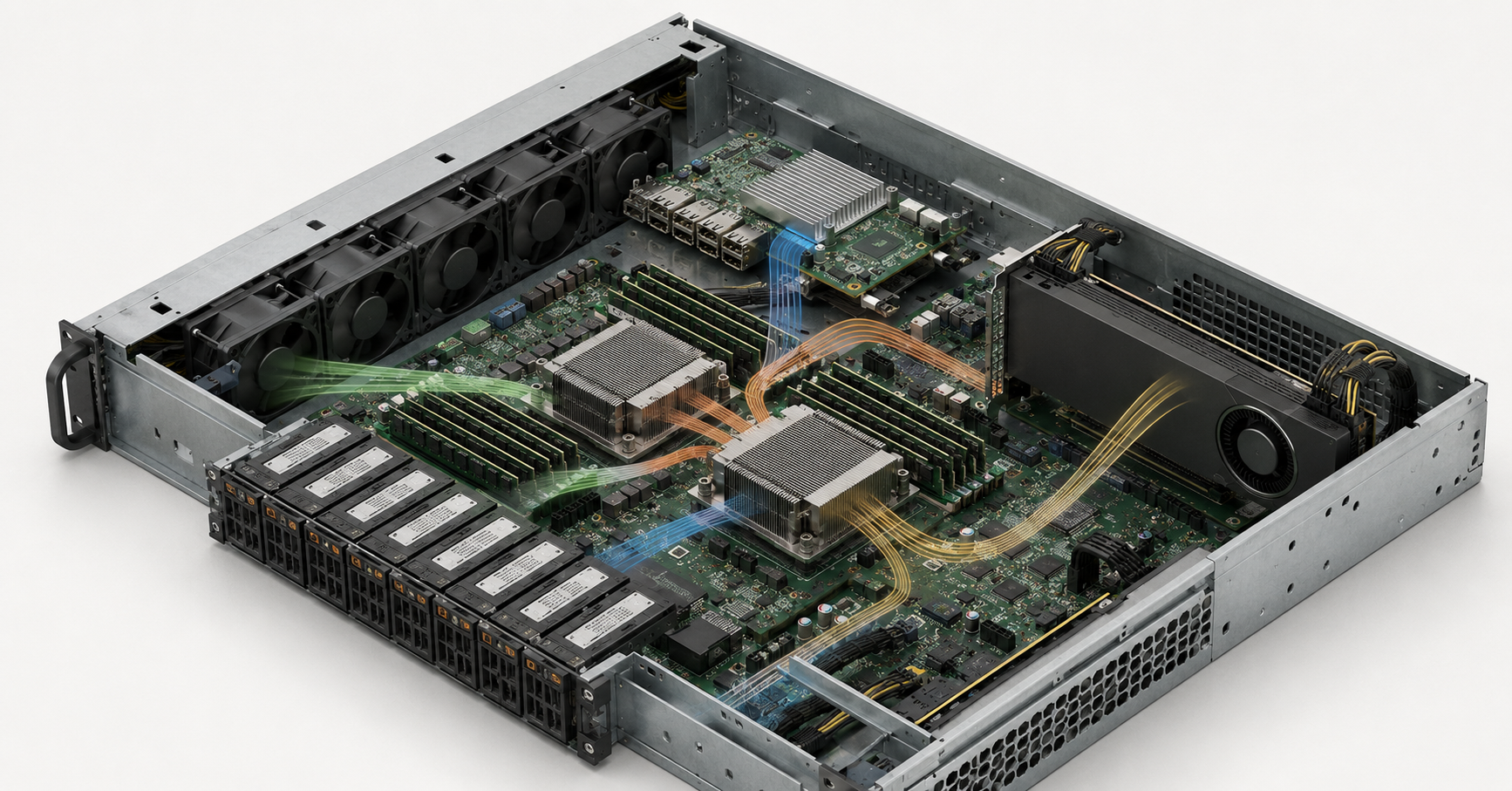
Buying a server is not only about today’s price. It is important to understand how long the platform will remain relevant, what upgrades will be available, and how easy it will be to expand the configuration in 2–3 years.
Xeon 6 is better suited when the infrastructure is being built for the long term. It has more headroom for memory, PCIe, CXL, and AI workloads. It is a good choice for new clusters, modern data centers, growing projects, and tasks where returning to another upgrade in two years is undesirable.
But the new generation also has downsides:
- a higher initial configuration price;
- more expensive memory and components;
- higher cooling requirements in top configurations;
- a new server model may be required;
- not all advantages will be useful for a simple workload.
5th Gen Xeon Scalable looks like a strong middle ground. It is a modern platform that is well suited for fleet upgrades without moving to the newest and most expensive level. For many companies, 5th Gen will be the most balanced option.
4th Gen Xeon Scalable is especially interesting in the refurbished segment. Servers on this platform already support DDR5, PCIe 5.0, and modern accelerators, but can be significantly more affordable. For many production tasks, this is sufficient.
At Servermall, these scenarios are most often associated with Dell PowerEdge 16G — a generation that is suitable for virtualization, databases, corporate applications, and gradual infrastructure upgrades.
What to choose for a specific task
| Scenario | What to choose | Why |
|---|---|---|
| New data center or cluster for 4–5 years | Xeon 6 | more headroom for memory, PCIe, AI, and lifecycle |
| General-purpose virtualization | Xeon Scalable 5 or Xeon 6 | depends on virtual machine density and budget |
| Refurbished server for predictable workloads | Xeon Scalable 4/5 | lower entry price and mature platform |
| Databases and analytics | Xeon Scalable 5 or Xeon 6 with performance cores | memory, cache, frequency, and I/O matter |
| Microservices and containers | Xeon 6 with efficient cores or Xeon Scalable 5 | density and performance per watt matter |
| AI inference without large GPUs | Xeon 6 with performance cores | stronger CPU inference and higher memory bandwidth |
| GPU server | Xeon 6 or modern Xeon Scalable 5 | depends on the number of GPUs, PCIe lanes, networking, and cooling |
| File server, backups, office services | Xeon Scalable 4/5 | the maximum capabilities of the newest generation are often unnecessary |
| Existing fleet upgrade | Xeon Scalable 5 | rational if compatibility is confirmed by the manufacturer |
| Maximum budget savings | Xeon Scalable 4 | a good option for refurbished and secondary tasks |
There is no universal answer, but there is a reliable selection order: first identify the workload bottleneck, then choose the generation. If current servers are limited by memory, NVMe, networking, or virtual machine density, Xeon 6 will look stronger. If CPU utilization rarely rises above 40–50% and the problems are related to disks or application settings, buying a new generation may not solve the main issue.
Common mistakes when choosing a generation
Comparing only the number of cores
Generations differ not only in cores. Memory, cache, PCIe, accelerators, supported instructions, frequencies, power profile, and I/O behavior also matter. A server with fewer properly selected cores can sometimes be faster and cheaper in a real workload.
Ignoring licensing costs
For software licensed by core count, a processor with many cores can sharply increase expenses. This is especially important for databases, virtualization, and some enterprise systems.
Buying Xeon 6 for tasks where Xeon Scalable 4/5 is enough
If the server will act as file storage, a backup node, or a platform for several internal services, the new processor may not reveal its potential. In such cases, it is more profitable to invest in memory, reliable drives, a controller, redundancy, or warranty.
Treating performance and efficient cores as identical
Xeon 6 includes different types of processors for different tasks. Performance cores are better for complex computing, AI, databases, and analytics. Efficient cores are better for dense parallel services where scale and energy consumption matter.
Not accounting for memory
Memory frequency, number of channels, and slot population scheme can affect the result more than the difference between neighboring CPU models. This is especially noticeable in databases, analytics, and virtualization.
Not checking power and cooling
High-end configurations require attention to the chassis, fans, power supplies, and thermal profile. A mistake at this stage can lead to lower frequencies, noise, overheating, or expansion limits.
Expecting the CPU to replace the GPU in heavy AI
The processor is important for AI infrastructure, but for training large models and heavy inference of large LLMs, GPUs still play the key role. The CPU should avoid slowing down the accelerators rather than replace them in every scenario.
Final recommendations
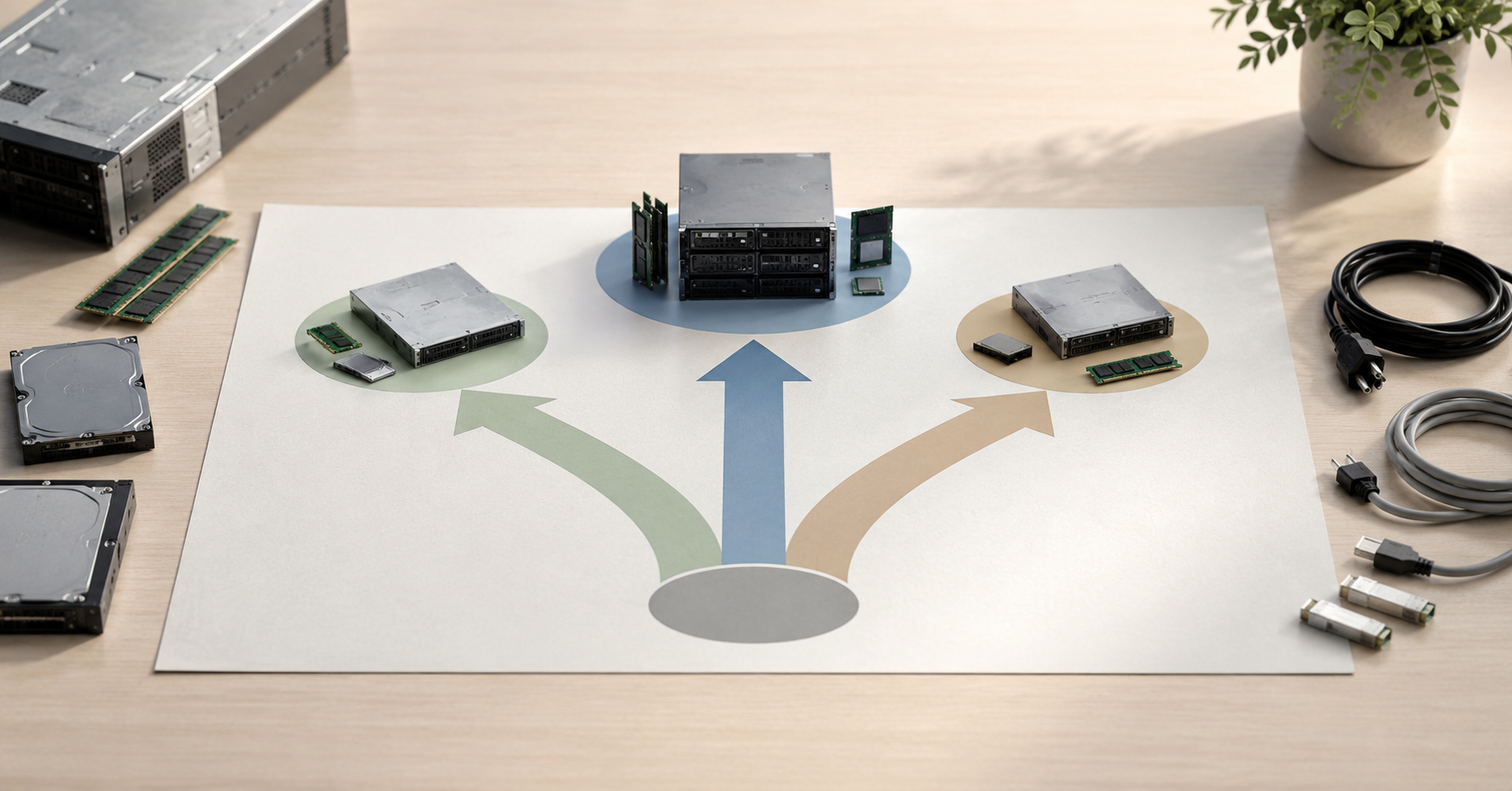
Intel Xeon 6 should be chosen for new projects where a long lifecycle, high density, fast storage, modern networking, AI workloads, GPUs, and memory headroom are important. This is a platform for infrastructure that you do not want to revisit again in two years.
5th Gen Xeon Scalable should be chosen when a modern universal server with a good balance of price, performance, and maturity is needed. For virtualization, databases, VDI, and corporate services, it is often the most pragmatic option.
4th Gen Xeon Scalable should be chosen when savings are important, a refurbished server is being considered, and the workloads do not require the maximum level of PCIe, CXL, memory, and AI capabilities. It is a good option for stable tasks where total cost of ownership matters more than novelty.
In 2026–2027, the right choice looks like this: Xeon 6 is for new and long-term projects, Xeon Scalable 5 is for a rational upgrade, and Xeon Scalable 4 is for cost-effective and predictable workloads.
Choosing the Right Equipment
Our specialists will contact you and answer all your questions
Content:
Free shipping on orders over 500 € in the EU, £500 in the UK, and $3,000 in the USA
Free shipping on orders over 500 € in the EU, £500 in the UK, and $3,000 in the USA

Free shipping on orders over 500 € in the EU, £500 in the UK, and $3,000 in the USA

Free shipping on orders over 500 € in the EU, £500 in the UK, and $3,000 in the USA

Free shipping on orders over 500 € in the EU, £500 in the UK, and $3,000 in the USA
Free shipping on orders over 500 € in the EU, £500 in the UK, and $3,000 in the USA