The HPE ProLiant DL580 is a four-socket rack server for large databases, analytics, virtual machine consolidation and applications that require a large amount of memory and an advanced I/O subsystem. For a new resource-intensive system, Gen12 is worth considering, while Gen10 is the most practical choice on the secondary market. Gen9 is suitable when the budget is limited and software compatibility has been confirmed; today, G7 and Gen8 are justified mainly for maintaining existing infrastructure and laboratory environments.
The DL580 should not be regarded as simply an enlarged two-socket server. Four processors change the memory architecture, scaling behaviour, cooling requirements and licensing costs. If an application cannot use this architecture efficiently, two smaller servers may be faster, less expensive and more resilient to failures.
Where the DL580 sits in the HPE ProLiant range
The letters DL indicate a rack-mounted system. The DL500 series comprises scalable enterprise-class systems, and the DL580 has historically occupied the role of a capacious four-socket server within this range. Older systems may be called HP ProLiant and newer ones HPE ProLiant: they belong to the same product line, following the company's rebranding.
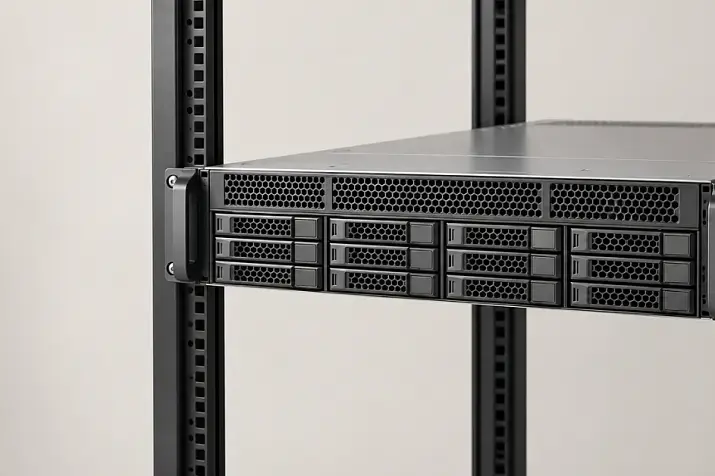
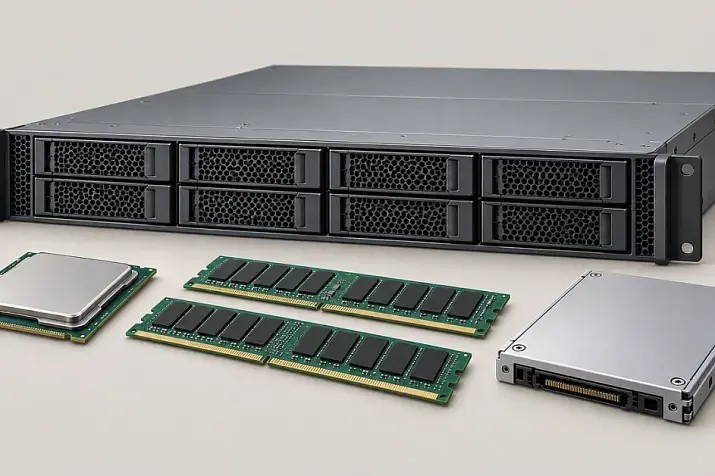
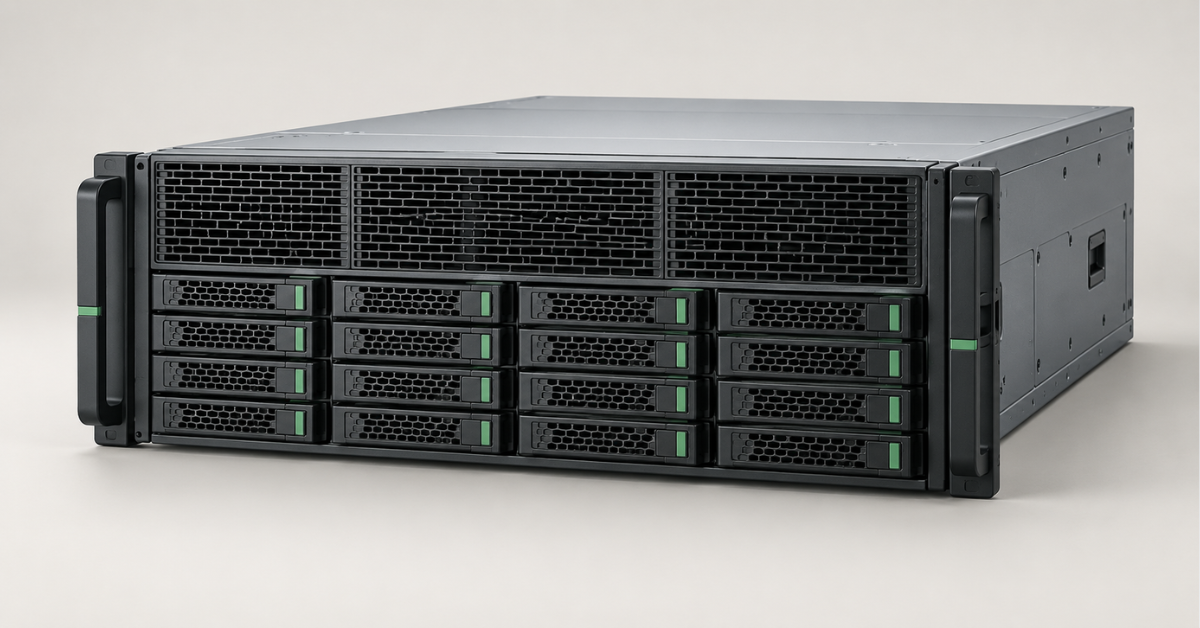
The 4U chassis accommodates four processors, their memory, an advanced cooling system, drive cages and expansion cards. A fully configured modern server can weigh almost 50 kg, so it requires a suitable rack and rails.
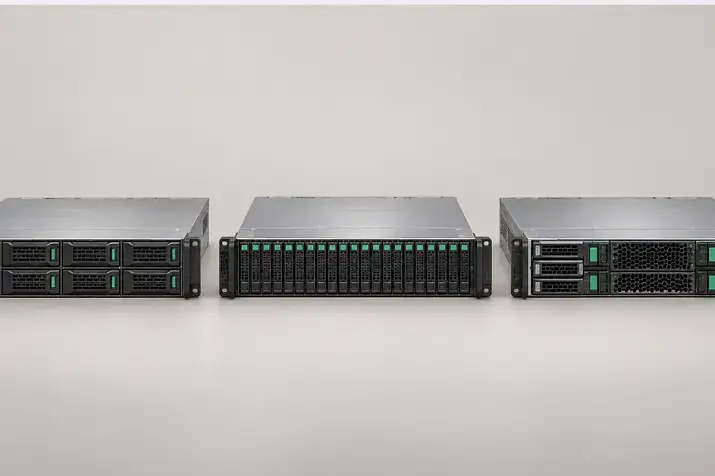
The HPE rack server range contains the currently available models. The DL580 should primarily be compared with the DL560 and with several two-socket nodes. The DL360 provides high deployment density in 1U, while the DL380 occupies 2U and offers more room for drives and expansion cards. The development of this versatile two-socket platform is examined in detail in the article “HPE ProLiant DL380 Gen12 vs. DL380 Gen11 vs. DL380 Gen10 Plus”.
What four processor sockets provide
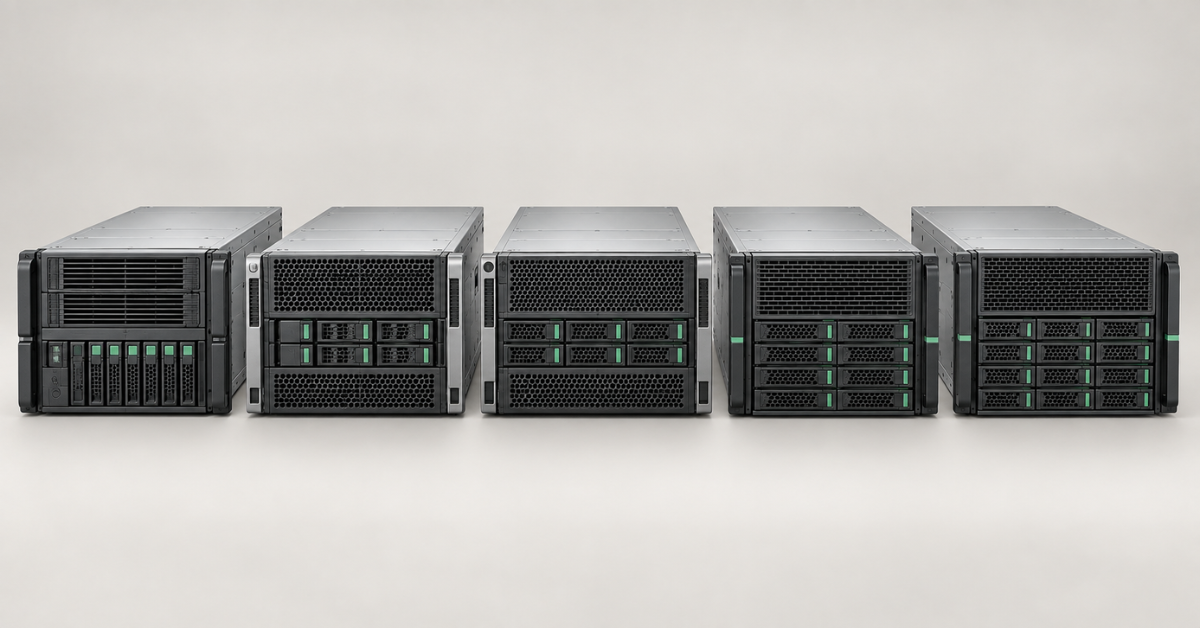
A four-socket architecture provides more cores, memory channels and I/O lanes in a single node. It is useful when a workload is difficult to divide between several servers. The DL580 is justified if:
- the application requires a single large memory address space;
- one virtual machine must be allocated a very large number of cores and a large amount of RAM;
- a large RAM capacity and several high-speed controllers are required at the same time;
- the application is certified for a scalable four-socket platform.
Why four processors do not deliver four times the performance
Like other multi-socket and some many-core platforms, the DL580 uses a NUMA architecture: non-uniform memory access. Each processor has local memory channels and accesses its own modules faster than the memory attached to another processor. If a virtual machine or application receives cores from one socket and memory from another, latency increases. The following factors are therefore important:
- symmetrical installation of memory modules across processors and channels;
- aligning virtual machine sizes with NUMA node boundaries;
- processor and memory affinity settings;
- the application's ability to parallelise work across sockets with NUMA awareness.
Software licensed by socket or core can make the maximum configuration uneconomical. For a DBMS, four processors with a high core count can sometimes cost more than faster models with fewer cores.
Comparison of HPE ProLiant DL580 generations
| Generation | Processors | Memory | Storage and expansion | Management | Reasonable use today |
|---|---|---|---|---|---|
| G7 | Up to 4 × Xeon 7500 or E7-4800/8800, up to 10 cores per processor | 64 DDR3 slots, up to 2 TB | Up to 8 SFF, PCIe 2.0 | iLO 3 | Existing systems and laboratories |
| Gen8 | Up to 4 × Xeon E7-4800/8800 v2, up to 15 cores | 96 DDR3 slots, up to 6 TB | Up to 10 SFF, 9 PCIe 3.0 slots | iLO 4 | Legacy compatible software and test environments |
| Gen9 | Up to 4 × Xeon E7-4800/8800 v3/v4, up to 24 cores | 96 DDR4 slots, up to 12 TB in later specifications | Up to 10 SFF, 9 PCIe 3.0 slots, selected NVMe configurations | iLO 4 | Cost-conscious consolidation and legacy enterprise systems |
| Gen10 | Up to 4 × 1st/2nd Generation Xeon Scalable, up to 28 cores | 48 DDR4 slots, up to 6 TB; up to 12 TB with Optane persistent memory | Up to 48 SFF or up to 20 NVMe in selected configurations, up to 16 PCIe 3.0 slots | iLO 5 | Virtualisation, databases and large DDR4-based systems |
| Gen12 | Up to 4 × Xeon 6 with Performance-cores, up to 86 cores | 64 DDR5 slots, up to 16 TB | Up to 32 SFF or EDSFF E3.S drives, up to 12 PCIe 5.0 and 2 OCP 3.0 slots | iLO 7 | New databases, analytics, SAP HANA and consolidation |
The table shows platform limits rather than the specifications of every available configuration. Maximum drive options are alternatives: the numbers of SFF, EDSFF and NVMe drives cannot be added together. The available cages, controllers, cables and expansion slots depend on one another, and some resources are active only when the required number of processors is installed.
The maximum memory capacity also requires clarification. It is achieved with the highest-capacity modules, which may have appeared later in the server's lifecycle and are rarely found in typical configurations. Memory speed depends on its type, the number of modules per channel and the selected processor. A server with less RAM that is distributed correctly can therefore sometimes provide more memory bandwidth than a formally maximum-capacity configuration.
Choosing the Right Equipment
Our specialists will contact you and answer all your questions
HP ProLiant DL580 G7
The DL580 G7 uses Xeon 7500 and first-generation Xeon E7 processors. Four processors provided up to 40 physical cores, while 64 DDR3 slots supported up to 2 TB of memory. The server offered eight SFF bays, PCIe 2.0 and iLO 3. Memory population rules are provided in the official G7 specification.
The platform supported memory error correction, redundant power supplies and fans, hot-swappable drives and hardware diagnostics. Today, it is limited not only by slow interfaces but also by component age, spare-parts availability, high power consumption and software support. For a new production system, G7 makes sense only when a legacy application that depends on it cannot be migrated.
HPE ProLiant DL580 Gen8
Gen8 introduced Xeon E7-4800/8800 v2 processors with up to 15 cores per processor. Eight removable memory cartridges accommodated 96 DDR3 modules, with a maximum capacity of 6 TB. The cartridges and modules had to be distributed symmetrically; otherwise, some memory channels remained unused.
The platform moved to PCIe 3.0 and 12 Gbit/s SAS and received nine full-height slots, ten SFF bays, a Smart Array P830i and iLO 4. The system configuration is described in the DL580 Gen8 QuickSpecs.
Gen8 is useful as an inexpensive environment for studying NUMA and four-socket virtualisation. For a continuous workload, its purchase price matters less than the availability of reliable components, firmware and a compatible operating system.
HPE ProLiant DL580 Gen9
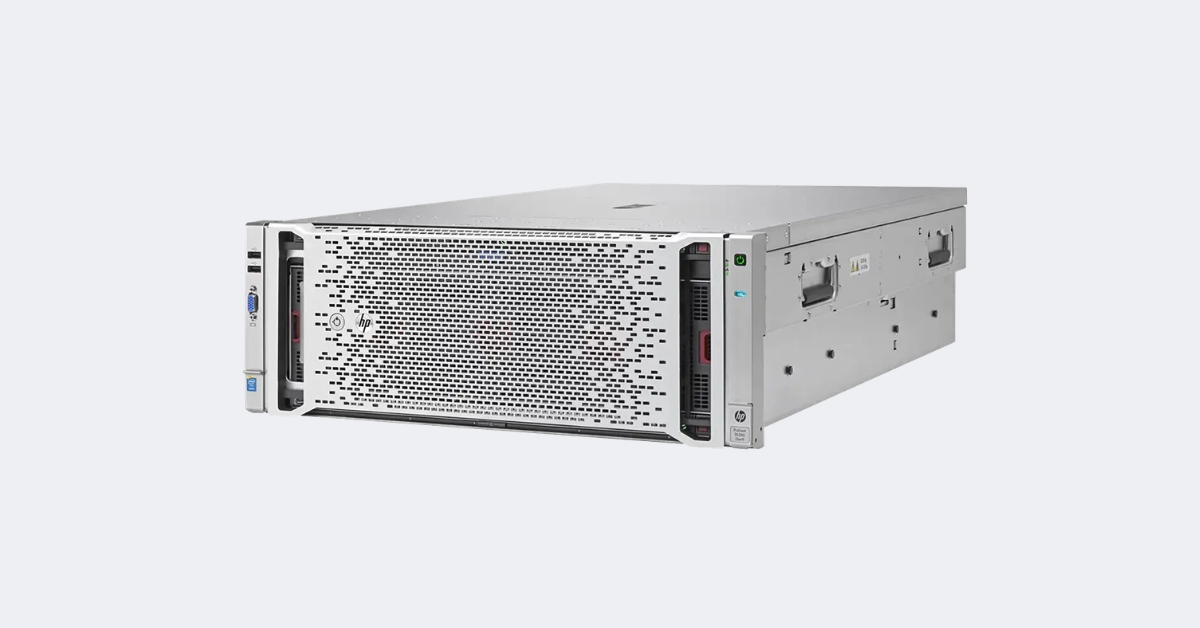
HPE ProLiant DL580 Gen9.
Image source: Servermall
HPE ProLiant DL580 Gen9 10SFF moved to Xeon E7 v3/v4 processors and DDR4. The highest-end processors have up to 24 cores, while the server offers 96 memory slots and nine full-height PCIe 3.0 slots.
Early HPE documentation specified a limit of 6 TB with 64 GB modules. A later edition of the DL580 Gen9 QuickSpecs allows 12 TB with 96 × 128 GB LRDIMMs. These figures represent different stages in the platform's development; maximum-capacity configurations are rare even on the secondary market.
The primary drive configuration includes ten SFF bays. Support for up to five NVMe drives requires dedicated cages, cables and cards, so simply replacing SAS drives with NVMe models is not enough.
Gen9 is suitable for enterprise software designed for Xeon E7, cost-conscious virtualisation and expansion of an existing fleet. For a new critical project, hypervisor, driver and microcode support must be confirmed in advance.
HPE ProLiant DL580 Gen10
Within the HPE ProLiant Gen10 range, the DL580 moved from Xeon E7 to first- and second-generation Intel Xeon Scalable processors. Four processors provided up to 112 cores, while the number of expansion slots increased to 16. Special configurations support up to 48 SFF or 20 NVMe drives; the exact layout depends on the cages, controllers and occupied slots.
The 48 slots support up to 6 TB of conventional DDR4. The 12 TB figure refers to a combination of RAM and Intel Optane persistent memory, which retains data without power and requires support from the processor, firmware, operating system and application.
Intel discontinued Optane development, so DDR4 and persistent memory capacities should be stated separately. The generation's configuration baseline is documented in the DL580 Gen10 QuickSpecs.
Gen10 received iLO 5 and hardware-based firmware integrity validation. Its broad choice of Xeon Scalable processors and DDR4 makes it the most balanced option in the DL580 range on the refurbished market. It is suitable for virtualisation, databases and analytics.
Why there was no DL580 Gen10 Plus or Gen11
HPE offers other Gen10 Plus and Gen11 servers, but in the public DL580 range, Gen12 follows Gen10. The manufacturer did not release production DL580 Gen10 Plus or DL580 Gen11 systems with their own QuickSpecs.
Seller pages labelled DL580 Gen11 often list first- and second-generation Xeon Scalable processors, DDR4 and iLO 5—which are Gen10 specifications—or mix the specifications of the DL560 and DL380 Gen11. A server should be identified by its part number, serial number and official specification.
In Gen11, the four-socket class was represented by the denser 2U DL560 Gen11. The full-size DL580 returned in the twelfth generation.
HPE ProLiant Compute DL580 Gen12
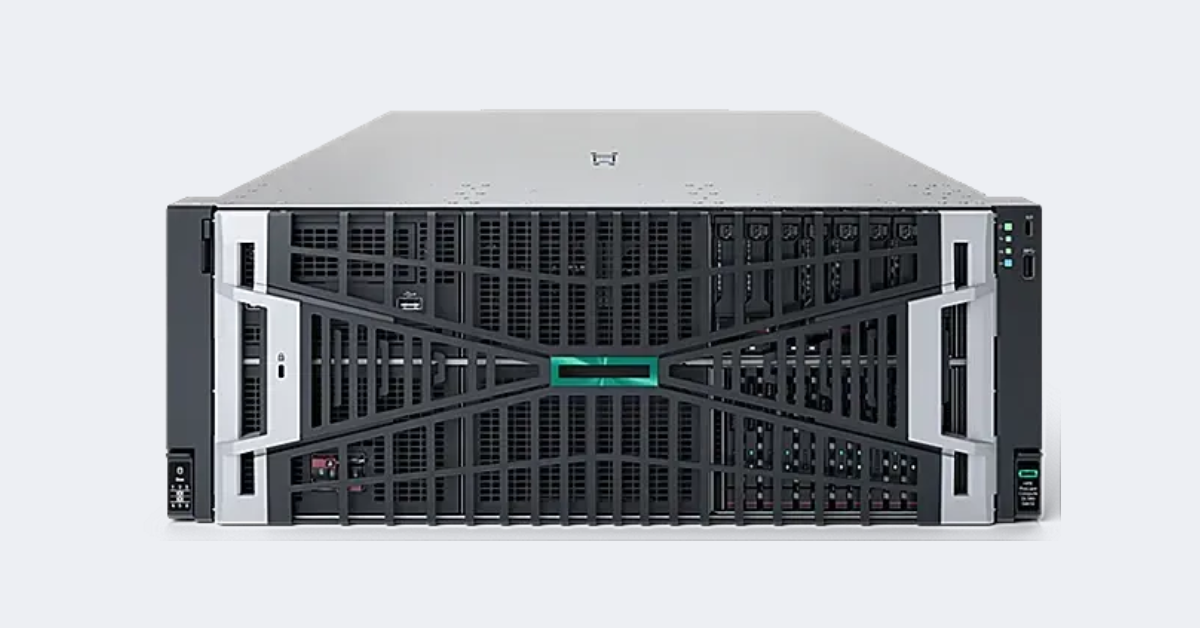
HPE ProLiant Compute DL580 Gen12.
Image source: Servermall
HPE ProLiant Compute DL580 Gen12 is designed for data management, analytics and in-memory computing. Four Intel Xeon 6 processors provide up to 86 physical cores per socket, or up to 344 per server, as confirmed by the official QuickSpecs. The figure 1344 shown on an HPE page is the result of the number being merged with a footnote marker.
The 64 DDR5 slots accommodate up to 16 TB of total memory. A speed of 6400 MT/s is achieved with one module per channel; with two modules, the maximum speed drops to 5200 MT/s. Maximum memory capacity and maximum memory speed cannot be achieved simultaneously.
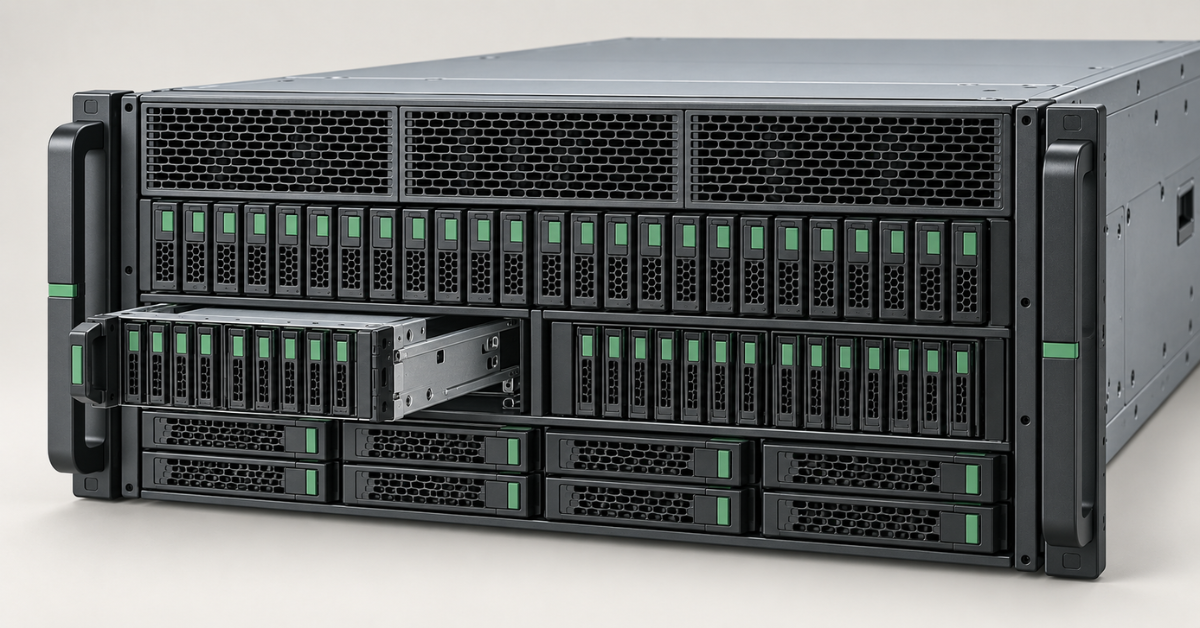
Four front drive zones accommodate up to 32 SFF or EDSFF E3.S drives; some cages can be mixed. A separate NVMe boot device is available for the system. The exact layout depends on the cables and controllers.
Up to twelve PCIe 5.0 x16 slots and two OCP 3.0 slots are available. They increase bandwidth for networking and storage; the network adapter is selected for the workload and is not installed by default.
iLO 7 adds secure key storage and modern firmware-signing mechanisms. Direct liquid cooling is available. However, GPUs are not specified for the standard DL580 Gen12: specialised servers are required for model training and dense accelerator configurations.
How the DL580 architecture has evolved
Processors and memory
G7–Gen9 used Xeon E7 processors, Gen10 uses Xeon Scalable, and Gen12 uses Xeon 6. The number of cores per socket increased from 10 to 86, but application performance also depends on clock speed, memory and scaling across sockets. Memory progressed from DDR3 to DDR5; the number of slots changed non-linearly, so it cannot be equated with capacity or bandwidth.
Storage and expansion cards
The expansion interface progressed from PCIe 2.0 in G7 to PCIe 5.0 in Gen12, while storage moved from SAS/SATA to NVMe and EDSFF E3.S. Nevertheless, the DL580 remains a compute platform. A large database that requires shared access and high availability often needs external storage; fast drives cannot compensate for a weak controller or network.
Administration
iLO has evolved from basic remote management to secure boot, firmware validation and a Redfish interface, although some functions require a licence. For older generations, the availability of update packages becomes a problem. Hypervisor compatibility should be assessed together with the microcode, controller and network adapters.
Which workloads suit the HPE ProLiant DL580
Large databases
The DL580 is useful when a database needs hundreds of cores, terabytes of memory and fast access to storage in a single node. A large amount of RAM increases the cache, but the maximum core count is not always economical: a DBMS may be licensed by core, and some queries perform better with a higher single-core clock speed.
Analytics and in-memory computing
SAP HANA and large analytics platforms are sensitive to memory capacity and bandwidth. Gen12 has dedicated SAP HANA configurations. For older generations, application certification must be considered rather than RAM capacity alone.
Virtualisation and consolidation
Four sockets make it possible to reduce the number of physical hosts and accommodate demanding virtual machines. The configuration should retain spare RAM and processor capacity for system processes and emergency workload redistribution.
The failure of a single DL580 affects many services. Redundant components do not protect against a system board fault, hypervisor error or rack power failure, so critical systems require a cluster and backups.
Demanding enterprise applications
ERP systems and computational platforms can benefit from high resource density and a unified management environment. The configuration should be selected according to processor frequency, the number of licensed cores, the volume of active data, storage latency and network requirements.
Choosing the Right Equipment
Our specialists will contact you and answer all your questions
When another server is the better choice
The DL580 is rarely justified for a file server, small office, ordinary web application or moderate virtual environment. Its resources will remain underused, while power, cooling and licensing costs will remain.
Two two-socket nodes often provide a more flexible infrastructure:
- one server can be serviced without shutting down the entire system;
- virtual machines are easier to distribute between nodes;
- the consequences of a hardware failure are limited to a smaller portion of the workload;
- more processor options and ready-made configurations are available;
- upgrades can be carried out in stages.
A single DL580 has an advantage when a unified memory space or a very large virtual machine is required. Several general-purpose two-socket servers are better when the workload scales horizontally and resilience to the loss of a node is important.
For AI, the DL580 Gen12 should not be selected merely because of its number of PCIe slots: GPUs are not included in its official configuration. Specialised servers provide different power delivery and accelerator cooling.
How to select a generation and configuration
| Workload | Suitable generation | Why | What limits the choice |
|---|---|---|---|
| Supporting a legacy application | G7 or Gen8 | The familiar hardware platform is retained | Age, power consumption, and operating system and firmware support |
| Laboratory and training | Gen8 or Gen9 | Inexpensive access to four sockets and a large amount of RAM | Noise, weight and power consumption |
| Cost-conscious consolidation | Gen9 or Gen10 | DDR4 and a broad choice of components | Hypervisor compatibility and licence costs |
| Large DDR4-based database | Gen10 | Up to 6 TB of conventional RAM, numerous PCIe slots and drive options | PCIe 3.0 and the end of Optane development |
| New project requiring a large amount of memory | Gen12 | Up to 16 TB of DDR5 and a modern I/O platform | High hardware and licensing costs |
| Analytics or SAP HANA | Gen12 | Certified configurations and high memory bandwidth | Power and cooling requirements |
| Several modern GPUs | Specialised server | Appropriate power delivery, cooling and accelerator placement | The standard DL580 Gen12 does not officially support GPUs |
If an application scales horizontally, several two-socket or even single-socket nodes may be more rational. For a single large memory space, first assess the required RAM capacity and acceptable latency between NUMA nodes, then select processors by core count, frequency, thermal design power and licensing model.
For a write-intensive database, latency, SSD endurance, the controller and the protection mode are important. For virtualisation, consider network bandwidth and redundancy as well as connectivity to shared storage. Cards, cages and cables must form a supported configuration.
A server with two processors cannot always be expanded to four inexpensively: compatible processors, memory, cooling, power supplies and cables will be required. The cost of the complete configuration should be considered from the outset.
Operation and total cost of ownership
The price of the server itself accounts for only part of the expense. Four processors, memory and drives create a high thermal load. Sufficient cold airflow, hot-air exhaust and power for the selected power supplies are required; ordinary office ventilation is not enough.
DL580 fans are designed for a server room and may operate at high speeds. In addition to noise, consider chassis depth and weight, rack load and space for cabling.
The total cost of ownership of a refurbished server depends on component condition and the quality of preparation. Important factors include:
- identical and compatible processors;
- a balanced memory configuration without accumulated errors;
- functioning fans and power supplies;
- the condition of drive cages, backplanes and cables;
- drive endurance and protection of the RAID controller cache;
- the availability of rails, an iLO licence and the required firmware.
The low price of an old DL580 is partly offset by its power consumption. Generations should be compared by the cost of hardware, licences, electricity, cooling, maintenance and potential downtime across the entire service life.
Which HPE ProLiant DL580 generation to choose
Gen12 is intended for new projects that need four Xeon 6 processors, DDR5, PCIe 5.0 and up to 16 TB of memory. It is a platform for large databases and analytics, not a universal replacement for any server.
Gen10 is the most balanced refurbished option, with Xeon Scalable processors, up to 6 TB of DDR4 and extensive expansion capabilities. Gen9 makes sense with a smaller budget or when compatibility with Xeon E7 must be maintained.
G7 and Gen8 are suitable for extending the life of an existing system and for laboratory environments. In a new critical infrastructure, their low price does not compensate for their age and software limitations.
DL580 should be selected according to the application's ability to use four sockets. When NUMA, licensing, storage and fault tolerance have been taken into account, it provides high resource density. In other cases, two smaller nodes are usually the more reasonable choice.
Choosing the Right Equipment
Our specialists will contact you and answer all your questions