
Blog

Dell PowerEdge vs HPE ProLiant vs Lenovo ThinkSystem
⚙️ Dell PowerEdge, HPE ProLiant, or Lenovo ThinkSystem? Here is how to choose a server platform in 2026 based on operations, management, storage, and support.
May 5, 2026
29 min to read
ARM vs. x86 Servers: Which to Choose for Different Tasks?
ARM is no longer just an experiment, and x86 is still the safest choice for many mixed environments. This article explains how to match the architecture to real workloads, compatibility requirements, and total cost of ownership.
May 4, 2026
32 min to read
Air or Liquid Server Cooling: Which to Choose in 2026?
Air cooling still fits most standard servers, while dense GPU racks and HPC environments increasingly push teams toward liquid cooling. This guide explains how to choose the right approach in 2026.
April 30, 2026
26 min to read
InfiniBand vs. Ethernet: Which Network to Choose for AI Servers and HPC
InfiniBand or Ethernet for your AI cluster? This guide explains how to choose the right network for training, HPC workloads and mixed data center infrastructure in 2026.
April 29, 2026
28 min to read
RDMA and RoCE: What are they and when does a server need them?
⚡ RDMA and RoCE can reduce latency and CPU overhead, but they are not universal server accelerators. This article explains when they make sense, what infrastructure they require, and which deployment mistakes to avoid.
April 28, 2026
31 min to read
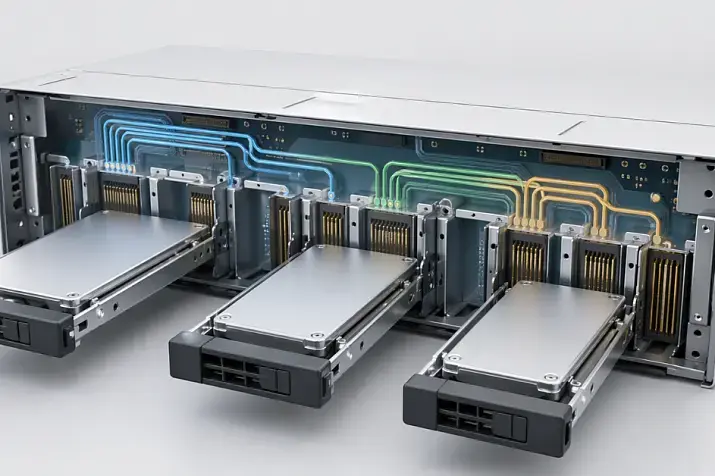
What is a backplane in a server and how does it affect SAS, SATA, and NVMe?
A server backplane is more than a drive bay connector: it defines storage compatibility, RAID options, hot-swap support and NVMe upgrade paths.
April 27, 2026
36 min to read
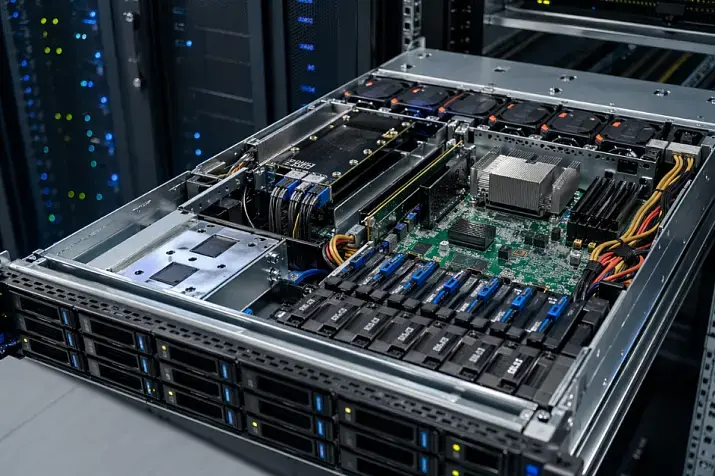
Tri-Mode RAID and HBA: What is it and is it needed in a server with NVMe?
Tri-Mode is often treated as a must-have for NVMe servers, but that is not always true. This article shows where it helps and where it can add cost and complexity.
April 24, 2026
19 min to read
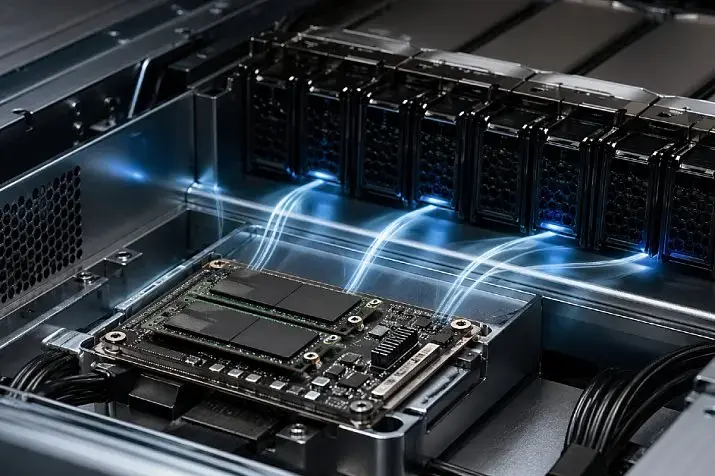
M.2, BOSS, and SATA DOM: Which is Better for a Server Boot Drive?
Which boot drive is the right choice for a modern server: a standard M.2 SSD, a dedicated BOSS module, or SATA DOM? This article explains the practical differences in reliability, mirroring, maintenance, and platform support.
April 23, 2026
24 min to read
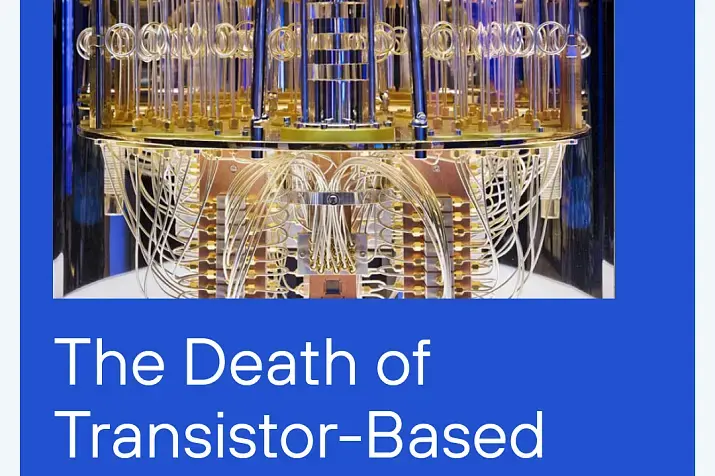
The Death of Transistor-Based GPUs/CPUs. P. 1
As classical computing hits physical limits, quantum computing introduces a new model based on superposition and entanglement.
April 22, 2026
10 min to read