Choosing the right server for MySQL database deployments is crucial for achieving optimal performance, reliability, and scalability. The best MySQL servers combine powerful multi-core processors, abundant RAM capacity, fast storage subsystems with RAID controllers, and redundant components to ensure 24/7 database availability. Whether you're running a small business application or managing enterprise-level data warehouses processing millions of transactions daily, selecting appropriate hardware directly impacts query response times, concurrent user capacity, and overall database efficiency.
MySQL workloads benefit from servers with high memory bandwidth, fast storage I/O, and sufficient CPU cores to handle parallel query execution. Modern database servers must support growing data volumes while maintaining consistent performance under heavy transaction loads. Key considerations include processor architecture optimized for database operations, memory capacity for caching frequently accessed data, storage configuration with proper RAID levels for data protection, and network connectivity for distributed database architectures.
In this comprehensive guide, we'll examine the top server configurations specifically optimized for MySQL deployments. We've selected models from DELL PowerEdge Gen15/Gen16 and HPE ProLiant Gen11 series that offer the ideal combination of processing power, memory capacity, storage flexibility, and reliability features required for demanding database workloads. Each recommendation includes detailed specifications, use case scenarios, and guidance to help you select the perfect MySQL server for your specific requirements.
MySQL Server Comparison Table
| Model | Processor | RAM | Storage | Best For |
|---|---|---|---|---|
| DELL PowerEdge R650 | Up to 2x Intel Xeon Scalable (40 cores) | Up to 4 TB DDR4 | 10x 2.5" SAS/SATA/NVMe | High-performance OLTP databases |
| DELL PowerEdge R750 | Up to 2x Intel Xeon Scalable (40 cores) | Up to 4 TB DDR4 | 24x 2.5" SAS/SATA/NVMe | Large-scale data warehouses |
| HPE ProLiant DL380 Gen11 | Up to 2x Intel Xeon Scalable (60 cores) | Up to 8 TB DDR5 | 24x 2.5" SAS/SATA/NVMe | Enterprise mission-critical databases |
| DELL PowerEdge R450 | Up to 2x Intel Xeon Scalable (24 cores) | Up to 1 TB DDR4 | 8x 2.5" SAS/SATA | Small to medium databases |
| HPE ProLiant DL360 Gen11 | Up to 2x Intel Xeon Scalable (64 cores) | Up to 4 TB DDR5 | 10x 2.5" SAS/SATA/NVMe | High-density database clusters |
DELL PowerEdge R650

The DELL PowerEdge R650 represents an excellent choice for high-performance MySQL deployments requiring optimal balance between processing power and space efficiency. This 1U rack server delivers enterprise-class capabilities in a compact form factor, making it ideal for data centers with limited rack space but demanding performance requirements.
Key Specifications
- Processors: Up to two 3rd Generation Intel Xeon Scalable processors with up to 40 cores per processor
- Memory: 32 DDR4 DIMM slots supporting up to 4 TB maximum capacity at speeds up to 3200 MT/s
- Storage: Up to 10x 2.5-inch SAS/SATA/NVMe drives with maximum capacity of 153 TB, plus optional 2x 2.5-inch rear drives
- RAID Controllers: Support for PERC H745, H755, H755N, HBA355I, and S150 controllers
- Network: 2x 1 GbE LOM with optional OCP 3.0 adapter for enhanced connectivity
- Management: iDRAC9 with Quick Sync 2 wireless module for remote administration
- Power Supply: 800W to 1600W Platinum efficiency hot-plug redundant PSUs
- Form Factor: 1U rack server (42.8mm height)
Ideal For
The R650 excels in OLTP (Online Transaction Processing) MySQL environments where consistent low-latency performance is critical. Its support for NVMe storage delivers exceptional I/O performance for transaction-heavy workloads, while the high memory capacity allows extensive database caching to minimize disk access. Organizations running e-commerce platforms, financial applications, or real-time analytics systems will appreciate the R650's ability to handle thousands of concurrent database connections with minimal latency.
DELL PowerEdge R750

For organizations requiring maximum storage capacity and processing power for MySQL deployments, the DELL PowerEdge R750 stands as a flagship solution. This 2U server provides extensive drive bay configurations and supports the most demanding data warehouse and analytics workloads.
Key Specifications
- Processors: Up to two 3rd Generation Intel Xeon Scalable processors with up to 40 cores per processor
- Memory: 32 DDR4 DIMM slots supporting RDIMM up to 2 TB or LRDIMM up to 4 TB, speeds up to 3200 MT/s, plus support for Intel Persistent Memory
- Storage: Front bays support up to 24x 2.5-inch SAS/SATA/NVMe drives (max 368.84 TB) or 12x 3.5-inch drives (max 192 TB), rear bays up to 4x 2.5-inch drives
- RAID Controllers: PERC H745, H755, H755N, HBA355I, S150, H345 with extensive caching options
- Network: 2x 1 GbE LOM with OCP 3.0 slot for high-speed networking options
- Expansion: Up to 8x PCIe Gen4 slots for network, storage, or GPU acceleration
- Management: iDRAC9 with Lifecycle Controller and Quick Sync 2 wireless module
- Power Supply: 800W to 1400W hot-plug redundant power supplies
Ideal For
The R750 is the perfect foundation for large-scale MySQL data warehouses, business intelligence platforms, and analytics environments. Its massive storage capacity accommodates growing databases spanning multiple terabytes, while the flexible drive bay configuration allows optimization for either capacity (3.5-inch drives) or performance (2.5-inch NVMe SSDs). Organizations consolidating multiple MySQL instances or implementing sharded database architectures will benefit from the R750's extensive I/O capabilities and expansion options.
HPE ProLiant DL380 Gen11
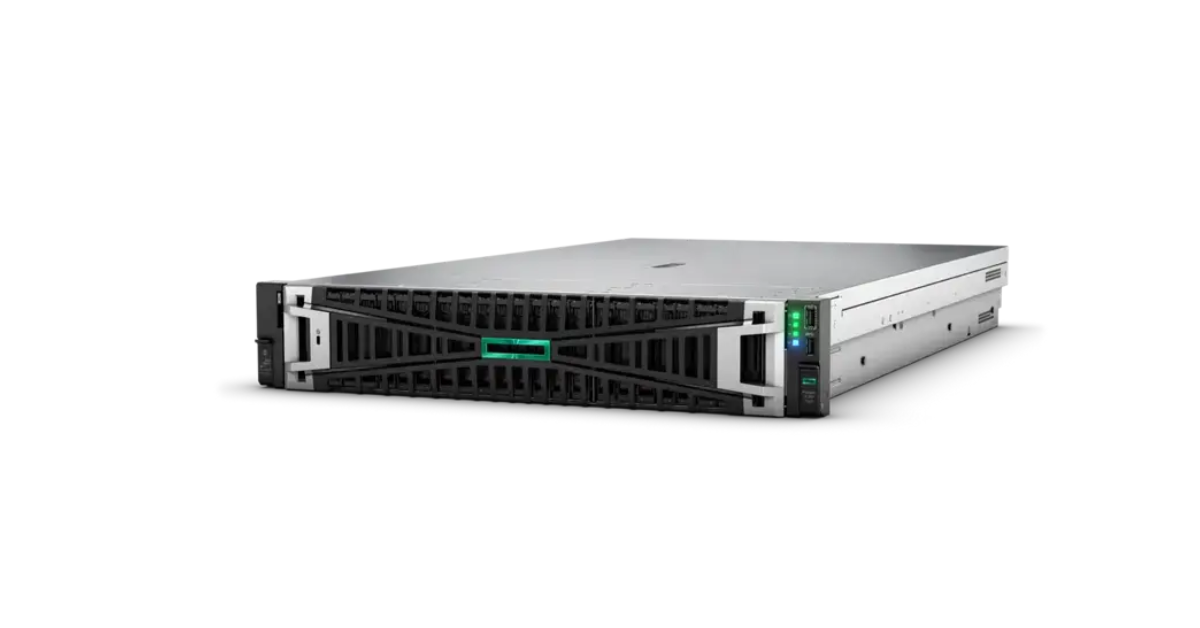
The HPE ProLiant DL380 Gen11 represents the pinnacle of enterprise MySQL server technology, incorporating the latest 5th Generation Intel Xeon Scalable processors and DDR5 memory for unparalleled database performance. This server is engineered for organizations with the most stringent reliability and performance requirements.
Key Specifications
- Processors: Up to two 5th Gen Intel Xeon Scalable processors with up to 60 cores per processor
- Memory: 32 DDR5 DIMM slots supporting up to 8 TB maximum capacity with advanced ECC and memory protection features
- Storage: Supports 8 to 24 SFF SAS/SATA/NVMe drives or 8 to 12 LFF configurations, optional 6 SFF rear drives or 2 SFF rear drives
- RAID Controllers: HPE SR932i-p, MR216i-o, MR416i-o, MR216i-p, MR416i-p, MR408i-o with comprehensive RAID support
- Network: Flexible networking from 1 GbE to 200 GbE in PCIe adapter or OCP 3.0 form factor
- Expansion: Up to 8 PCIe Gen5 slots plus 2 OCP 3.0 slots for maximum flexibility
- Management: HPE iLO 6 with intelligent provisioning and advanced security features
- Power Supply: 800W to 1600W hot-plug redundant power supplies
Ideal For
The DL380 Gen11 is designed for mission-critical MySQL environments where downtime is not an option. Financial institutions, healthcare organizations, and large enterprises running core business applications on MySQL will appreciate the advanced RAS (Reliability, Availability, Serviceability) features, including HPE Fast Fault Tolerant Memory and advanced memory protection. The DDR5 memory architecture provides significantly higher bandwidth than DDR4, accelerating complex queries and large table joins common in analytical MySQL workloads.
DELL PowerEdge R450

For small to medium-sized MySQL deployments, the DELL PowerEdge R450 delivers enterprise-class features in a cost-effective 1U platform. This server provides an excellent entry point for organizations building their first dedicated MySQL infrastructure or expanding existing database capacity.
Key Specifications
- Processors: Up to two 3rd Generation Intel Xeon Scalable processors with up to 24 cores per processor
- Memory: 16 DDR4 DIMM slots supporting RDIMM up to 1 TB maximum at speeds up to 2933 MT/s
- Storage: Front bays support up to 8x 2.5-inch SAS/SATA drives (max 61.4 TB) or 4x 3.5-inch drives (max 64 TB)
- RAID Controllers: PERC H345, H355, H745, H755, HBA355i, S150 with various performance levels
- Network: 2x 1 GbE LOM with optional OCP 3.0 for network expansion
- Management: iDRAC9 with remote management and Quick Sync 2 wireless module
- Power Supply: 600W or 800W Platinum efficiency hot-plug redundant power supplies
- Form Factor: 1U rack server with compact 42.8mm height
Ideal For
The R450 is perfectly suited for departmental MySQL databases, development and test environments, or small business applications requiring dedicated database infrastructure. Its compact 1U design maximizes rack space efficiency while still providing dual processor capability for adequate performance. Organizations implementing MySQL replication architectures will find the R450 an economical choice for replica servers, while its full enterprise management features ensure consistent administration across the infrastructure.
HPE ProLiant DL360 Gen11
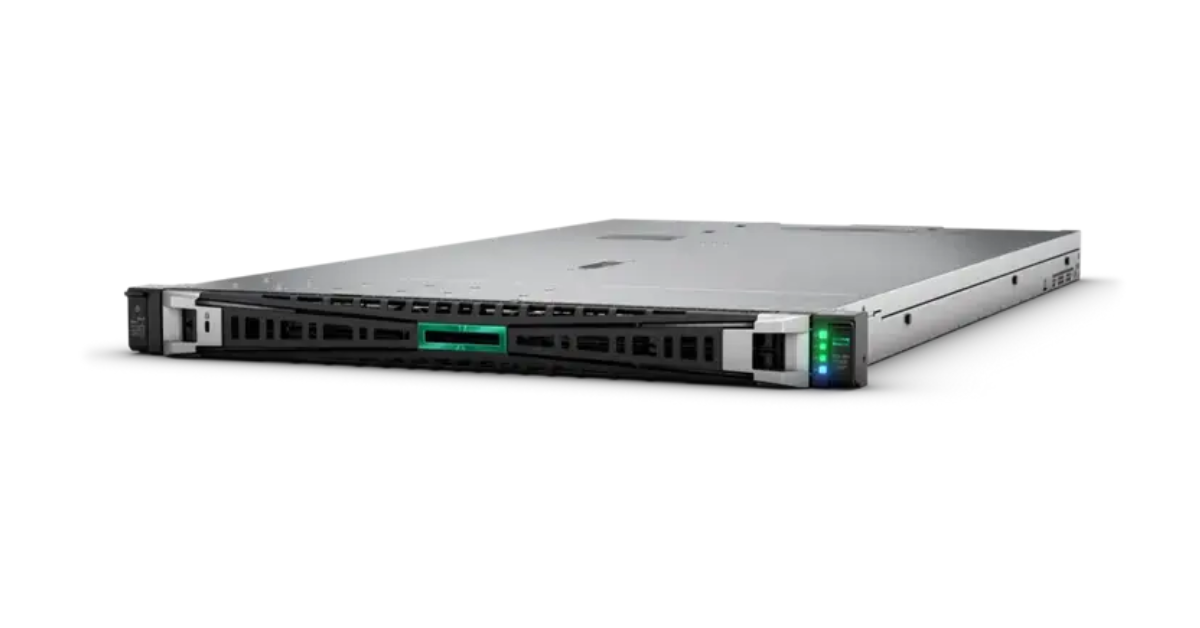
The HPE ProLiant DL360 Gen11 combines cutting-edge processor technology with maximum rack density, making it ideal for high-density MySQL cluster deployments. This 1U server incorporates the latest 5th Generation Intel Xeon Scalable processors with support for up to 64 cores per processor.
Key Specifications
- Processors: Up to two 5th Gen Intel Xeon Scalable processors with up to 64 cores per processor
- Memory: 16 DDR5 DIMM slots per socket supporting up to 4 TB total capacity with advanced memory protection
- Storage: Up to 10x 2.5-inch SAS/SATA/NVMe drives or 20x EDSFF E3.s NVMe SSDs, optional 2x rear M.2 boot drives
- RAID Controllers: HPE Smart Array Gen11 controllers including SR and MR series with comprehensive RAID support
- Network: Wide range from 1 GbE to 200 GbE in PCIe stand-up or OCP 3.0 form factors
- Expansion: Maximum 3 PCIe Gen5 slots and 2 OCP 3.0 slots for networking and storage expansion
- Management: HPE iLO 6 Standard with intelligent provisioning and optional Advanced features
- Power Supply: 500W to 2200W hot-plug power supplies with Titanium efficiency options
Ideal For
The DL360 Gen11 excels in MySQL cluster architectures where rack space is premium but high aggregate performance is required. Its support for up to 64 cores per processor enables massive parallel query processing, while the DDR5 memory subsystem delivers the bandwidth necessary for in-memory database operations. Cloud service providers and large enterprises building scale-out MySQL infrastructures will appreciate the DL360 Gen11's ability to pack tremendous processing power into a single rack unit, maximizing database capacity per square foot of data center space.
Recommendations for Selecting Your MySQL Server
Assess Your Database Workload Profile
Understanding your MySQL workload characteristics is fundamental to server selection. OLTP workloads with frequent small transactions benefit from servers with fast storage subsystems, particularly NVMe SSDs, and adequate CPU cores for handling concurrent connections. The DELL PowerEdge R650 or HPE ProLiant DL360 Gen11 excel in these scenarios. Conversely, OLAP (Online Analytical Processing) and data warehouse workloads performing complex queries on large datasets require maximum memory capacity and storage throughput, making the DELL PowerEdge R750 or HPE ProLiant DL380 Gen11 more appropriate choices.
Memory Capacity Planning
MySQL performance heavily depends on available memory for caching database tables and indexes in the InnoDB buffer pool. As a general guideline, your server should have sufficient RAM to cache your entire working set of data. For databases under 500 GB, servers like the DELL PowerEdge R450 with up to 1 TB RAM capacity provide adequate headroom. Larger databases spanning multiple terabytes benefit from the massive memory capacity of the HPE ProLiant DL380 Gen11 with its 8 TB DDR5 support, enabling extensive in-memory operations that dramatically accelerate query performance.
Storage Architecture Considerations
Your MySQL storage requirements dictate both capacity and performance specifications. Transaction-heavy databases benefit from NVMe SSD storage's low latency and high IOPS capability. The DELL PowerEdge R650 supports up to 10 NVMe drives delivering exceptional performance for demanding OLTP applications. Data warehouses and archives requiring massive capacity should consider the DELL PowerEdge R750's support for up to 24 drives in various configurations. Implement RAID 10 for maximum performance or RAID 6 for capacity-optimized deployments with adequate protection. Always configure dedicated drives for MySQL binary logs separate from data files to prevent I/O contention.
Processor Core Count vs. Clock Speed
MySQL's threading model influences processor selection strategy. Workloads with many concurrent connections benefit from higher core counts, as MySQL can distribute queries across available cores. The HPE ProLiant DL360 Gen11 with up to 64 cores per processor maximizes concurrent query handling. Single-threaded queries or applications with limited parallelism benefit more from higher clock speeds than core counts. Balance your selection based on whether your workload is characterized by many simultaneous simple queries (favor more cores) or fewer complex analytical queries (favor higher clock speeds).
Network Infrastructure Requirements
Database server network connectivity impacts application performance, replication speed, and backup operations. For most MySQL deployments, 10 GbE networking provides adequate bandwidth for application traffic and replication. High-traffic environments or those implementing MySQL clustering solutions like Galera or Group Replication should consider 25 GbE or higher connectivity to prevent network bottlenecks. All recommended servers support flexible network expansion through OCP 3.0 or PCIe adapters, allowing you to scale network capacity as requirements grow.
High Availability and Redundancy
Enterprise MySQL deployments demand maximum uptime through redundant components. All recommended servers include hot-plug redundant power supplies, redundant fans, and support for RAID storage protection. For mission-critical applications, implement MySQL replication across multiple physical servers for application-level redundancy. The HPE ProLiant DL380 Gen11 and DELL PowerEdge R750 offer the most comprehensive RAS features, including advanced memory protection and extensive management capabilities through iLO 6 and iDRAC9 respectively.
Budget Optimization Strategies
Balance initial acquisition cost against total cost of ownership over the server's lifespan. Entry-level configurations like the DELL PowerEdge R450 provide excellent starting points with upgrade paths for future growth. Consider starting with adequate but not excessive specifications, then expanding memory and storage as database requirements increase. All recommended servers support non-disruptive upgrades for memory, storage, and network components. Prioritize investment in areas that directly impact MySQL performance: memory first, then storage performance, followed by CPU capacity.
Virtualization Considerations
While MySQL can run in virtualized environments, dedicated physical servers deliver optimal and predictable performance. If virtualization is required, ensure adequate resource allocation and avoid oversubscription of CPU and memory. The DELL PowerEdge R750 and HPE ProLiant DL380 Gen11 provide sufficient resources to comfortably host multiple MySQL instances in virtual machines while maintaining performance isolation through proper resource management.
Conclusion
Selecting the optimal server for MySQL deployments requires careful consideration of workload characteristics, performance requirements, capacity needs, and budget constraints. The servers recommended in this guide represent proven platforms that deliver reliable, high-performance MySQL hosting across various deployment scales and requirements.
For high-performance OLTP databases with stringent latency requirements, the DELL PowerEdge R650 and HPE ProLiant DL360 Gen11 provide excellent 1U solutions combining processing power, memory capacity, and fast NVMe storage. Organizations building large-scale data warehouses or consolidating multiple database instances should consider the DELL PowerEdge R750 or HPE ProLiant DL380 Gen11, which offer maximum storage capacity, expansion flexibility, and enterprise-grade reliability features. Small to medium deployments benefit from the cost-effective DELL PowerEdge R450, which provides enterprise capabilities at an accessible price point.
All recommended configurations include the essential components for successful MySQL deployments: powerful multi-core processors for query parallelization, abundant memory for database caching, flexible storage options supporting both capacity and performance requirements, and comprehensive management tools for simplified administration. Remember that proper server sizing and configuration directly impact not only current performance but also your ability to scale as database requirements grow.
Ready to deploy your MySQL server infrastructure? Explore our complete catalog of server configurations and contact our technical team for personalized recommendations based on your specific database workload requirements. Our experts can help you design and implement the optimal MySQL server solution for your organization's needs.