Best Servers for Docker in 2025
Docker has become the de facto standard for application containerization, enabling developers and DevOps engineers to package, distribute, and run applications in isolated environments. For effective Docker infrastructure operation, choosing the right server hardware is critically important. The best servers for Docker must provide high processor performance for handling multiple containers, sufficient RAM for process isolation, and fast storage for container images.
An optimal server platform for Docker includes processors with high core counts, hardware-level virtualization support, a minimum of 32 GB RAM, and fast SSD storage. Modern servers based on Intel Xeon Scalable or AMD EPYC provide the necessary computing power, while management technologies like iDRAC or iLO simplify container cluster administration.
In this guide, we'll examine five best server solutions for Docker infrastructure of various scales—from small development environments to enterprise-level production clusters. Each model is verified for compatibility with Docker Engine, Docker Swarm, and Kubernetes, guaranteeing stable operation of your containerized applications.
Docker Server Comparison Table
| Model | Processor | RAM | Storage | Use Case |
|---|---|---|---|---|
| DELL PowerEdge R650 | Up to 2× Intel Xeon Scalable 3rd Gen (up to 40 cores) | Up to 2 TB DDR4 | Up to 10× 2.5" SAS/SATA/NVMe | Medium to large Docker clusters |
| DELL PowerEdge R450 | Up to 2× Intel Xeon Scalable 3rd Gen (up to 24 cores) | Up to 1 TB DDR4 | Up to 8× 2.5" SAS/SATA | Development, testing, small projects |
| HPE DL360 Gen11 | Up to 2× Intel Xeon Scalable 4th/5th Gen (up to 64 cores) | Up to 8 TB DDR5 | Up to 20× EDSFF NVMe | High-load containerized environments |
| DELL PowerEdge R750 | Up to 2× Intel Xeon Scalable 3rd Gen (up to 40 cores) | Up to 4 TB DDR4 | Up to 24× 2.5" SAS/SATA/NVMe | Enterprise Docker Swarm/Kubernetes |
| HPE DL380 Gen11 | Up to 2× Intel Xeon Scalable 4th/5th Gen (up to 60 cores) | Up to 8 TB DDR5 | Up to 24× SFF SAS/SATA/NVMe | Maximum scalability and flexibility |
DELL PowerEdge R650 — Universal Docker Solution

The DELL PowerEdge R650 server represents an optimal balance of performance and density for containerized workloads. This 1U form factor single-processor server is ideal for creating compact Docker clusters with high rack density.
Technical Specifications
- Processors: up to two Intel Xeon Scalable 3rd Generation supporting up to 40 cores per processor
- Memory: 16 DDR4 DIMM slots, maximum 2 TB with RDIMM/LRDIMM support at speeds up to 3200 MT/s
- Storage: up to 10× 2.5" drives with SAS/SATA/NVMe support, maximum capacity 153 TB
- Storage controllers: PERC H745, H755, HBA355i, hardware RAID support
- Network interfaces: embedded 2× 1GbE LOM, optional OCP 3.0
- Management: iDRAC9 with remote management and monitoring support
- Power supplies: 800W-1600W Platinum/Titanium with redundancy
- Expansion slots: up to 3× PCIe Gen4, all x16
Who It's For
The DELL PowerEdge R650 is excellent for companies deploying microservices architecture on Docker. High processor core density ensures efficient resource distribution between containers, while NVMe drive support guarantees fast image loading and minimal application response time. The built-in iDRAC9 management system simplifies container state monitoring and enables quick response to load changes. The server is ideal for CI/CD pipelines where rapid creation and destruction of test environments is required.
DELL PowerEdge R450 — Compact Power for Docker

The single-processor DELL PowerEdge R450 server in 1U form factor provides an optimal price-to-performance ratio for small to medium Docker infrastructures. This solution allows you to begin the containerization journey with reasonable investment.
Technical Specifications
- Processors: up to two Intel Xeon Scalable 3rd Generation supporting up to 24 cores per processor
- Memory: 16 DDR4 DIMM slots, maximum 1 TB with RDIMM at speeds up to 2933 MT/s
- Storage: up to 8× 2.5" SAS/SATA drives, maximum capacity 61.4 TB
- Storage controllers: PERC H345, H355, H745, H755, HBA355i
- Network interfaces: 2× 1GbE embedded, optional OCP 3.0
- Management: iDRAC9 with remote access features
- Power supplies: 600W-1100W hot-swap
- Expansion slots: 2× PCIe Gen4
Who It's For
The PowerEdge R450 is an excellent choice for development teams implementing Docker in their workflow. Sufficient computing power allows running dozens of containers simultaneously for testing various application configurations. The compact 1U form factor makes the server ideal for small server rooms and edge locations. Support for up to 24 cores ensures comfortable operation of Docker Compose and lightweight orchestrators like Portainer or Rancher. The server handles continuous integration tasks excellently, running parallel builds in isolated containers.
HPE DL360 Gen11 — Next-Generation Performance
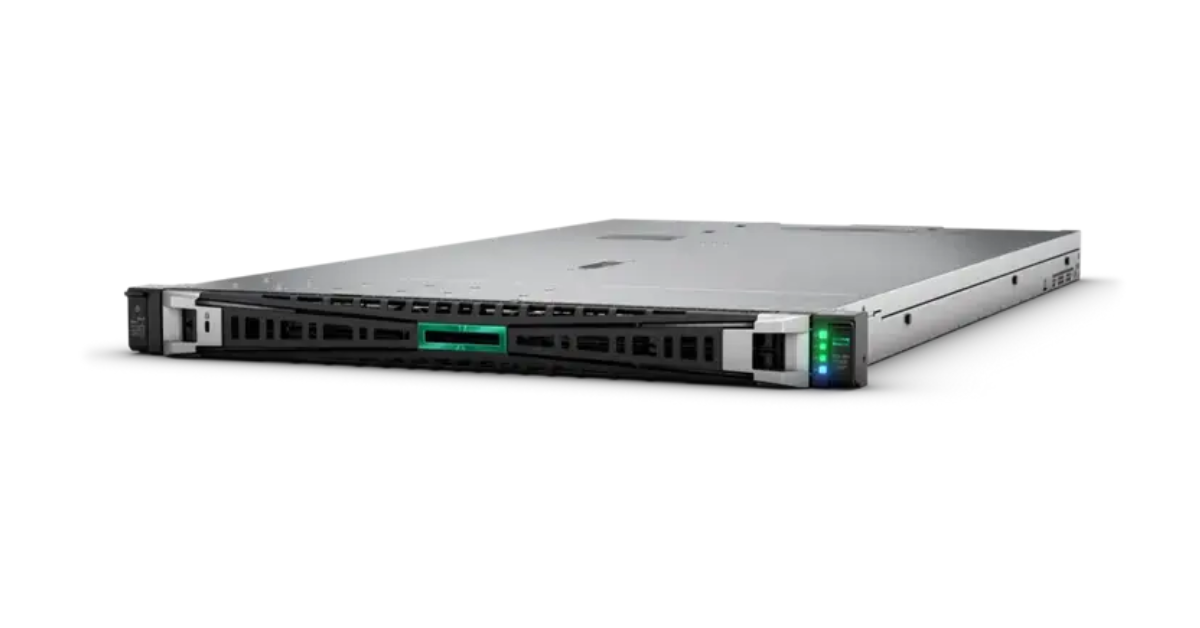
The HPE DL360 Gen11 server represents the latest generation of server technologies with support for 5th generation Intel Xeon processors and DDR5 memory. This platform provides maximum performance per watt for demanding Docker environments.
Technical Specifications
- Processors: up to two Intel Xeon Scalable 4th/5th Generation supporting up to 64 cores per processor
- Memory: 32 DDR5 slots, maximum 8 TB with RDIMM support at speeds up to 4800 MT/s
- Storage: up to 20× EDSFF E3.S NVMe SSDs or 10× 2.5" SAS/SATA/NVMe
- Storage controllers: HPE Smart Array with NVMe support
- Network interfaces: from 1GbE to 200GbE in various configurations
- Management: HPE iLO 6 with advanced automation capabilities
- Power supplies: 800W-2200W with highest Titanium efficiency
- Expansion slots: up to 3× PCIe Gen5 and 2× OCP 3.0
Who It's For
The HPE DL360 Gen11 is designed for organizations requiring maximum containerized application performance. 5th generation processors provide significant performance gains in multi-threaded tasks typical for Docker environments. DDR5 memory increases bandwidth by 50% compared to DDR4, which is critical for containers with intensive data exchange. Support for up to 20 NVMe drives in EDSFF format provides unprecedented speed for working with container images. The server is ideal for large Kubernetes clusters where rapid pod scaling and minimal response time are required. HPE iLO 6 integrates with popular container monitoring systems.
DELL PowerEdge R750 — Container Scalability

The dual-processor DELL PowerEdge R750 server in 2U form factor provides maximum flexibility for deploying scalable Docker infrastructures. Increased space allows installation of more drives and expansion cards.
Technical Specifications
- Processors: up to two Intel Xeon Scalable 3rd Generation supporting up to 40 cores per processor
- Memory: 32 DDR4 DIMM slots, maximum 4 TB with RDIMM/LRDIMM support at speeds up to 3200 MT/s
- Storage: up to 24× 2.5" SAS/SATA/NVMe drives, maximum capacity 368 TB
- Storage controllers: PERC H745, H755, H755N, hardware RAID support
- Network interfaces: embedded 2× 1GbE LOM, optional OCP 3.0
- Management: iDRAC9 with Quick Sync 2 module
- Power supplies: 800W-1400W Platinum/Titanium
- Expansion slots: up to 8× PCIe Gen4, up to 6× x16
- Accelerators: support for up to 6× GPUs for ML containers
Who It's For
The PowerEdge R750 is a flagship solution for enterprise Docker infrastructures. The ability to install up to 80 processor cores ensures parallel execution of hundreds of containers without performance degradation. Up to 4 TB of RAM allows allocating sufficient resources to each container, avoiding swap and application slowdowns. Support for up to 24 drives enables creation of high-performance storage pools for Docker volumes. Eight PCIe Gen4 slots allow installation of high-speed network adapters for inter-container communication. The server is excellent for Docker Swarm with hundreds of nodes or large Kubernetes clusters with multiple namespaces. Optional GPU support makes the platform ideal for ML pipelines in containers.
HPE DL380 Gen11 — Maximum Flexibility
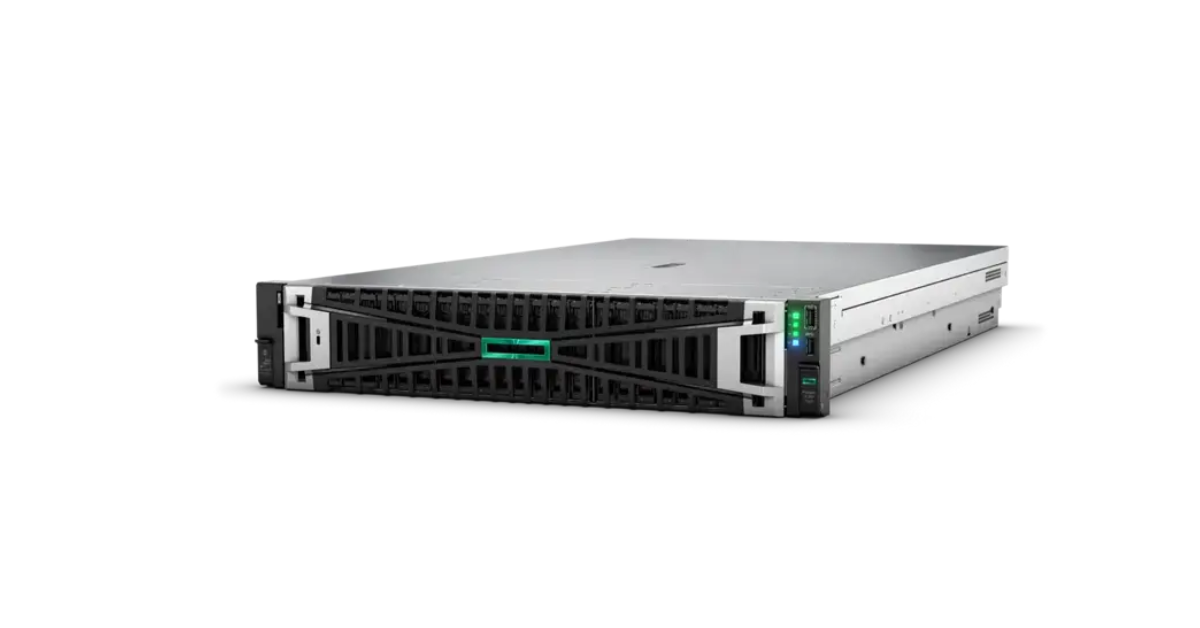
The HPE DL380 Gen11 server in 2U form factor is an enterprise-class platform with maximum expansion capabilities for the most demanding containerized applications. Support for the latest technologies makes it an investment in the future.
Technical Specifications
- Processors: up to two Intel Xeon Scalable 4th/5th Generation supporting up to 60 cores per processor
- Memory: 32 DDR5 slots, maximum 8 TB with RDIMM support at speeds up to 4800 MT/s
- Storage: up to 24× 2.5" SAS/SATA/NVMe or 12× 3.5" drives, up to 20× NVMe optional
- Storage controllers: HPE Smart Array with tri-mode support
- Network interfaces: from 1GbE to 200GbE, PCIe and OCP 3.0
- Management: HPE iLO 6 Standard with upgrade option to Advanced
- Power supplies: 800W-1600W hot-swap with redundancy
- Expansion slots: up to 8× PCIe Gen5 and 2× OCP 3.0
- Cooling systems: hot-plug fans with N+1 redundancy
Who It's For
The HPE DL380 Gen11 is the choice for organizations building mission-critical container infrastructure. Up to 120 processor cores and 8 TB of DDR5 memory provide resources for thousands of simultaneously running containers. DDR5 memory with bandwidth up to 4800 MT/s is critical for microservices with active inter-process communication. Eight PCIe Gen5 slots allow installation of multiple high-speed network adapters, creating separate networks for management, data, and replication. Support for up to 24 NVMe drives provides exceptional performance for stateful containers and databases. The server is ideal for hybrid cloud scenarios where containers migrate between on-premise and cloud. HPE InfoSight integrates with Kubernetes for predictive analytics and pod placement optimization.
Server Selection Recommendations for Docker
Server Hardware Selection Criteria
Processor Core Count: Docker containers actively use multi-threading, so preference should be given to processors with high core counts. For development environments, 16-24 cores are sufficient; for production environments, 40+ cores are recommended. Modern Intel Xeon Scalable 3rd, 4th, and 5th generation processors provide optimal per-core performance.
RAM Capacity: Each container consumes memory, so total RAM directly affects the number of parallel running containers. Minimum configuration is 32 GB for test environments, 64-128 GB for small production installations, 256+ GB for enterprise clusters. DDR5 memory is preferable due to higher bandwidth.
Storage Type: SSD drives are mandatory for Docker due to frequent read/write operations of container images. NVMe drives provide the best performance, especially for CI/CD pipelines with frequent container recreation. A minimum of 500 GB is recommended for storing base images and volumes.
Network Subsystem: Microservices architecture requires intensive network communication between containers. Built-in 1GbE adapters are sufficient for small installations, but 10GbE or 25GbE adapters are recommended for production environments. For large clusters, consider separating networks into management, data, and storage planes.
Which Server for Which Tasks
Development and Testing: The DELL PowerEdge R450 provides sufficient resources for a team of 5-10 developers running local copies of microservices. A configuration with 64 GB RAM and 2 TB NVMe will allow comfortable work with Docker Compose and running dozens of containers for integration testing.
Small Production Installations: The DELL PowerEdge R650 with 128 GB RAM and 24-core processors will handle the load of a small web project or SaaS application with several services. NVMe support will ensure fast loading when scaling containers in response to load changes.
Medium Production Clusters: The HPE DL360 Gen11 with latest 5th generation processors and 256-512 GB DDR5 memory is suitable for companies migrating monolithic applications to microservices. High compute density in 1U will efficiently use rack space.
Enterprise Installations: The DELL PowerEdge R750 in maximum configuration (80 cores, 4 TB RAM) will ensure operation of hundreds of microservices with guaranteed quality of service. A large number of expansion slots will allow installation of additional network adapters for traffic segmentation and HBAs for connecting external storage systems.
Mission-Critical Infrastructure: The HPE DL380 Gen11 with 120 cores and 8 TB DDR5 memory is the choice for fintech, telecom, and other industries where downtime is unacceptable. Built-in HPE InfoSight features will provide predictive analytics, and the ability to live migrate containers between nodes guarantees service continuity during hardware maintenance.
ML/AI Pipelines in Containers: The DELL PowerEdge R750 with GPU support allows running machine learning model training in isolated containers, guaranteeing result reproducibility and simplifying trained model deployment to production.
Conclusion
Choosing the right server for Docker infrastructure is an investment in the performance, scalability, and reliability of your containerized applications. Each of the presented models—DELL PowerEdge R450, R650, R750, and HPE DL360 Gen11, DL380 Gen11—has its advantages and optimal use scenarios.
For development teams beginning the containerization journey, the DELL PowerEdge R450 offers an accessible entry point with subsequent scaling capability. Companies building production infrastructure will find in the DELL PowerEdge R650 and HPE DL360 Gen11 an optimal balance of performance and deployment density. For enterprise installations, the DELL PowerEdge R750 and HPE DL380 Gen11 provide maximum flexibility, performance, and expansion capabilities.
All reviewed servers have been tested for compatibility with Docker Engine, Docker Swarm, and Kubernetes, guaranteeing stable operation of your container infrastructure. Professional management systems iDRAC9 and HPE iLO integrate with popular container monitoring tools, simplifying administration and providing deep system visibility.
Ready to build a reliable Docker infrastructure? Explore the complete server catalog at ServerMall and get consultation from our specialists to select the optimal configuration for your tasks.