When choosing between the DELL PowerEdge R740xd and DELL PowerEdge R740xd2, it's essential to understand the key differences between these servers. Both solutions belong to DELL's 14th generation and are 2U platforms optimized for high storage density workloads. The primary difference of the R740xd2 from the base R740xd model lies in expanded storage scalability capabilities — the R740xd2 supports up to 32 drive bays in 2.5" format versus 24 in the standard version, making it an ideal choice for enterprise-class storage systems.
The DELL R740xd is suitable for organizations requiring a balance between computing power and storage capacity. The server supports up to two second-generation Intel Xeon Scalable processors with a maximum of 28 cores each, up to 3 TB of DDR4 memory, and offers flexible storage configurations. The R740xd2 extends these capabilities by adding support for more drives and enhanced scalability for growing data needs.
In this article, we'll thoroughly examine the technical specifications of both models, analyze their advantages for various use cases, and help determine which server best meets your business requirements. We'll also compare them with alternative solutions from DELL's 15th and 16th generation lineups to provide a complete picture of available options in the server equipment market.
DELL Server Comparison Table
| Model | Processor | RAM | Storage | Use Cases |
|---|---|---|---|---|
| DELL PowerEdge R740xd | Up to 2x Intel Xeon Scalable (up to 28 cores) | Up to 3 TB DDR4 | Up to 24x 2.5" or 12x 3.5" + rear bays | Data storage, virtualization, databases |
| DELL PowerEdge R740xd2 | Up to 2x Intel Xeon Scalable (up to 28 cores) | Up to 3 TB DDR4 | Up to 32x 2.5" with extended options | Scalable storage, big data, archives |
| DELL PowerEdge R750 | Up to 2x 3rd Gen Intel Xeon Scalable (up to 40 cores) | Up to 4 TB DDR4 | Up to 24x 2.5" or 12x 3.5" | Virtualization, cloud computing, HPC |
| DELL PowerEdge R750xs | Up to 2x 3rd Gen Intel Xeon Scalable (up to 32 cores) | Up to 1 TB DDR4 | Up to 16x 2.5" + 8x 2.5" NVMe | Software-defined storage, hyperconverged |
| DELL PowerEdge R760 | Up to 2x 4th Gen Intel Xeon Scalable (up to 40 cores) | Up to 8 TB DDR5 | Up to 24x 2.5" SAS/SATA/NVMe | Modern enterprise applications, AI/ML |
DELL PowerEdge R740xd
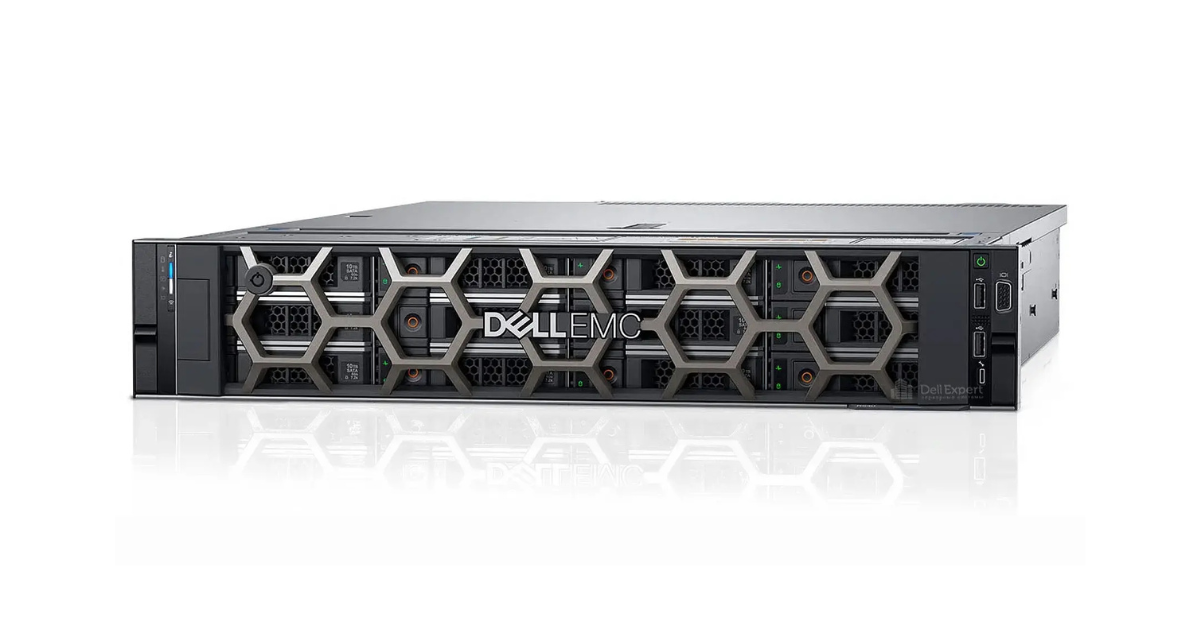
The DELL PowerEdge R740xd server is a versatile solution for organizations requiring high storage density in a compact 2U form factor. This server is optimized for working with large data volumes and supports a wide range of disk system configurations, making it an ideal choice for virtualization tasks, databases, and software-defined storage systems.
DELL R740xd Technical Specifications
- Processors: Up to two second-generation Intel Xeon Scalable processors, up to 28 cores per processor
- Memory: 24 DDR4 DIMM slots, supports RDIMM/LRDIMM, speeds up to 2666 MT/s, maximum 3 TB; up to 12 NVDIMM modules, maximum 192 GB
- Internal storage controllers: PERC H730P, H740P, software RAID S140
- Boot Optimized Storage Subsystem: BOSS with hardware RAID, 2x M.2 SSDs 120 GB or 240 GB
- Front bays: Up to 24x 2.5" SAS/SATA (HDD/SSD), NVMe SSD maximum 153 TB or up to 12x 3.5" SAS/SATA HDD maximum 144 TB
- Mid bays: Up to 4x 2.5" SAS/SATA (HDD/SSD), NVMe SSD maximum 25 TB or up to 4x 3.5" maximum 48 TB
- Rear bays: Up to 4x 2.5" SAS/SATA (HDD/SSD), NVMe SSD maximum 25 TB or up to 2x 3.5" SAS/SATA HDD maximum 24 TB
- Power supplies: Titanium 750W, Platinum 495W/750W/1100W/1600W/2000W; 48VDC 1100W, 380HVDC 1100W, 240HVDC 750W options
- Cooling: Up to 6 hot-plug fans with full redundancy
- Embedded management: iDRAC9 with Lifecycle Controller, Quick Sync 2 wireless module (optional)
- Network adapter: 4x 1GE or 2x 10GE + 2x 1GE, or 4x 10GE, or 2x 25GE
- PCIe expansion slots: Up to 8 PCIe Gen 3 slots, maximum 4 x16 slots
- GPU/accelerators: GPU and FPGA options available only on 24x 2.5" drive chassis
- Dimensions: 2U rack form factor, maximum depth 715.5 mm
Who Should Choose DELL R740xd
The DELL PowerEdge R740xd is optimally suited for medium and large enterprises requiring a reliable storage solution with scalability options. The server excels at virtualization tasks thanks to support for large memory capacity and powerful processors. Organizations working with SQL, Oracle, or MongoDB databases will appreciate the storage configuration flexibility and high performance of RAID controllers.
The server is also suitable for deploying software-defined storage (SDS) systems such as VMware vSAN or Microsoft Storage Spaces Direct. The flexibility in choosing between a large number of small drives (2.5") and fewer large drives (3.5") allows optimization of the configuration for specific performance and capacity requirements.
DELL PowerEdge R740xd2
The DELL PowerEdge R740xd2 represents an enhanced version of the R740xd with improved storage scalability capabilities. This model is specifically designed for organizations with critical storage density requirements, offering up to 32 drive bays in 2.5" format in the front chassis. The R740xd2 maintains all the computing capabilities of the base model but provides significantly more flexibility for building enterprise-class scalable storage systems.
DELL R740xd2 Technical Specifications
- Processors: Up to two second-generation Intel Xeon Scalable processors, up to 28 cores per processor
- Memory: 24 DDR4 DIMM slots, supports RDIMM/LRDIMM, speeds up to 2933 MT/s, maximum 3 TB; Intel Optane DC Persistent Memory support
- Internal storage controllers: PERC H730P, H740P, H750, software RAID S140
- Boot Optimized Storage Subsystem: BOSS-S2 with hardware RAID, 2x M.2 SSDs 240 GB or 480 GB
- Front bays: Up to 32x 2.5" SAS/SATA/NVMe (HDD/SSD) for maximum storage density; alternatively up to 12x 3.5" with extended options
- Mid bays: Up to 4x 2.5" or 4x 3.5" for additional capacity
- Rear bays: Up to 4x 2.5" or 2x 3.5" for system drives or hot spares
- Total storage capacity: Up to 400+ TB depending on configuration and drives used
- Power supplies: Platinum 750W/1100W/1600W/2400W with hot-swap and 1+1 or N+1 redundancy
- Cooling: Up to 6 hot-plug fans with improved airflow
- Embedded management: iDRAC9 Enterprise with advanced monitoring and management features
- Network adapter: Flexible options from 1GbE to 100GbE via OCP 3.0 or PCIe adapters
- PCIe expansion slots: Up to 8 PCIe Gen 3 slots with support for various accelerators
- GPU/accelerators: Support for up to 3 double-width GPUs or 6 single-width accelerators
- Dimensions: 2U rack form factor, optimized design for maximum density
Who Should Choose DELL R740xd2
The DELL PowerEdge R740xd2 is ideally suited for organizations working with Big Data, large-scale analytics, and enterprise storage systems. The increased number of drive bays makes this server an excellent choice for building scalable storage clusters, media servers with high capacity requirements, and archival systems.
The server is particularly in demand in sectors where storage density is critical: healthcare facilities with large image volumes (PACS systems), video production and post-production companies, research organizations working with large scientific data arrays. NVMe support allows creating hybrid configurations with high-performance SSDs for hot data and capacious HDDs for cold storage.
Alternative Solutions from New DELL Generations
DELL PowerEdge R750

The DELL PowerEdge R750 server belongs to the 15th generation and represents the next evolutionary step after the R740xd. The platform is built on third-generation Intel Xeon Scalable processors, delivering up to 40 cores per processor and significant performance gains compared to the previous generation.
R750 Key Features
- Processors: Up to 2x 3rd Gen Intel Xeon Scalable, up to 40 cores per processor
- Memory: 32 DDR4 DIMM slots, support for up to 4 TB RDIMM or 8 TB Intel Persistent Memory
- Storage: Up to 24x 2.5" SAS/SATA/NVMe or 12x 3.5", rear bays up to 4x 2.5"
- PCIe: Up to 8 PCIe Gen4 slots for modern adapters and accelerators
- GPU: Support for up to 2 double-width 300W, 4 single-width 150W, or 6 single-width 75W accelerators
- Power supplies: 800W/1100W/1400W Platinum, optional processor liquid cooling
The R750 is suitable for modern virtualized environments, cloud applications, and HPC tasks requiring maximum performance and support for the latest technologies.
DELL PowerEdge R750xs

The DELL PowerEdge R750xs model is optimized for software-defined storage systems and hyperconverged infrastructure. The server offers a balance between computing power and storage flexibility.
R750xs Key Features
- Processors: Up to 2x 3rd Gen Intel Xeon Scalable, up to 32 cores
- Memory: 16 DDR4 slots, up to 1 TB maximum
- Storage: Up to 16x 2.5" SAS/SATA + 8x 2.5" NVMe for hybrid configurations
- PCIe: Up to 5 PCIe Gen4 slots + 1 Gen3 slot
- Cooling: Up to 6 hot-plug fans
The R750xs is ideally suited for VMware vSAN, Microsoft Storage Spaces Direct, and other SDS solutions where NVMe performance combined with traditional drive capacity is important.
DELL PowerEdge R760

The most modern solution in this segment is the DELL PowerEdge R760 16th generation. The server is built on the latest fourth-generation Intel Xeon Scalable processors and supports DDR5 memory, providing maximum performance for demanding enterprise applications.
R760 Key Features
- Processors: Up to 2x 4th Gen Intel Xeon Scalable, up to 40 cores per processor
- Memory: 32 DDR5 slots, up to 8 TB maximum, speeds up to 4800 MT/s
- Storage: Up to 24x 2.5" SAS/SATA/NVMe with support for the latest standards
- PCIe: PCIe Gen5 slots for maximum bandwidth
- Energy efficiency: Improved power supplies up to 2800W Titanium
- Management: iDRAC9 with AI features and predictive analytics
The R760 is recommended for AI/ML workloads, modern databases, high-performance virtualization, and mission-critical enterprise applications.
Server Selection Recommendations
Selection Criteria Between R740xd and R740xd2
Choose DELL R740xd if:
- You need up to 24 drives in 2.5" format or standard configuration with 12 x 3.5" drives
- Budget is limited and you're looking for optimal price-to-storage ratio
- You plan to use the server for virtualization with moderate storage requirements
- Working with medium-sized databases (up to 150 TB)
- Need a time-tested platform with broad OS and application support
Choose DELL R740xd2 if:
- Maximum storage density is required with support for up to 32 x 2.5" drives
- Working with Big Data, analytics, or media content requiring hundreds of terabytes of storage
- Planning to build a scalable storage cluster with growth capability
- Need flexibility for creating multi-tiered storage systems (hot/warm/cold)
- Maximum capacity in a compact 2U form factor is critical
Comparison with New Generation Servers
When to choose R750 instead of R740xd/R740xd2:
- Maximum processor performance is required (up to 40 cores vs 28)
- Planning to use GPU accelerators for AI/ML tasks
- Need PCIe Gen4 support for modern NVMe SSDs and network adapters
- Working with applications optimized for Ice Lake architecture
- Optional liquid cooling required for dense configurations
R750xs is optimal for:
- Hyperconverged infrastructure (HCI) based on VMware vSAN or Nutanix
- Software-defined storage requiring NVMe performance
- Configurations needing balance between performance and capacity
- Scenarios with active use of virtualization and containers
R760 — the choice for:
- Mission-critical enterprise applications of the latest generation
- AI/ML workloads requiring DDR5 memory and PCIe Gen5
- Organizations planning long-term investments (5-7 years)
- Environments with high energy efficiency requirements
- Tasks requiring maximum memory and I/O bandwidth
Practical Configuration Recommendations
For file servers and NAS: R740xd2 with configuration of 12x 3.5" high-capacity HDDs (12-18 TB each) in front bays plus 2x SSDs in rear bays for caching.
For OLTP databases: R740xd with 8-16x 2.5" NVMe SSDs for maximum transaction performance, supplemented by traditional SSDs for less critical data.
For video surveillance systems: R740xd2 maximum configuration with 32x 2.5" HDDs for parallel recording of multiple streams and fast archive access.
For virtualization: R750 with balance between processor power, memory, and local storage, especially if vSAN or similar SDS solution is planned.
For AI/ML development: R760 with maximum DDR5 memory configuration, NVMe SSDs for datasets, and optional GPU accelerators.
Conclusion
The choice between DELL PowerEdge R740xd and R740xd2 is primarily determined by storage density and scalability requirements. The base R740xd model provides an excellent balance of capabilities for most enterprise applications, while the R740xd2 becomes an indispensable solution when maximum storage capacity in a compact form factor is critical.
When considering server infrastructure investments, it's also important to evaluate more modern 15th and 16th generation platforms. The DELL R750 and R760 offer significant performance gains, support for the latest technologies, and better energy efficiency, which can provide longer service life and better total cost of ownership (TCO) in the long term.
For organizations with limited budgets, 14th generation servers remain an excellent choice, offering proven reliability and broad software support. Refurbished R740xd systems are available at attractive prices and can be an optimal solution for non-critical workloads or expanding existing infrastructure.
Regardless of choice, all reviewed models support modern iDRAC management systems, integrate with OpenManage Enterprise, and are compatible with major operating systems and hypervisors, ensuring deployment flexibility and ease of management.
Ready to choose the optimal server for your business? Explore the complete catalog of DELL PowerEdge servers at ServerMall or contact our specialists for consultation and selection of the optimal configuration for your tasks.