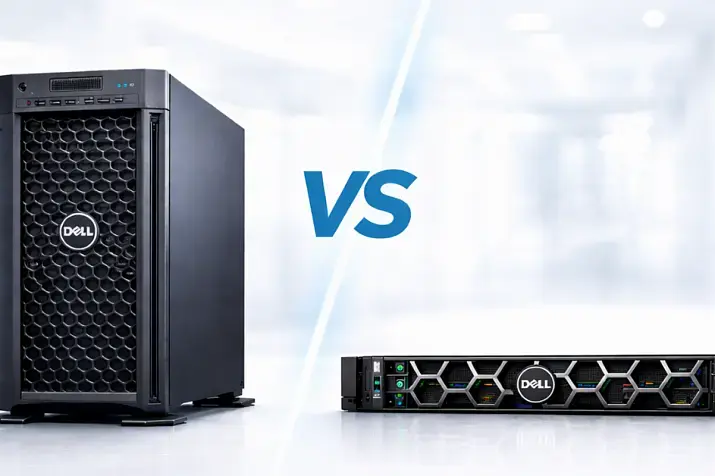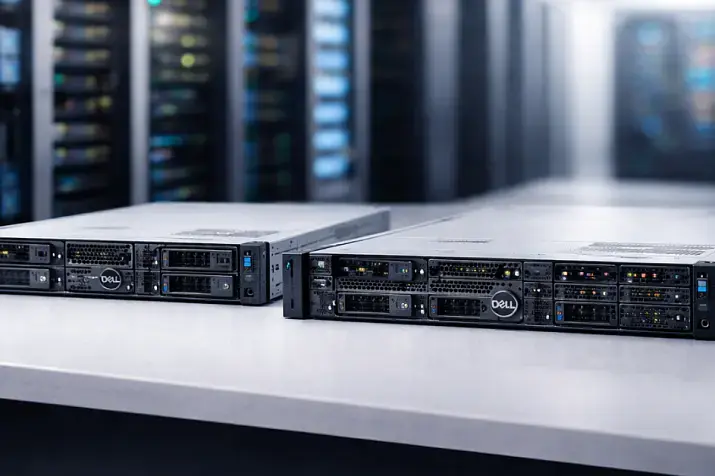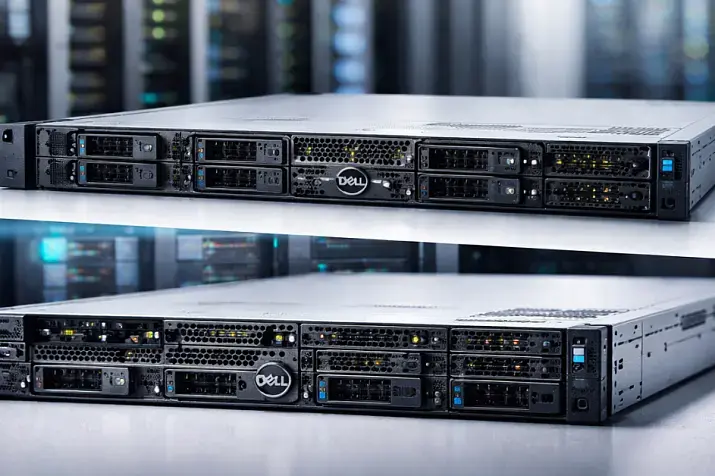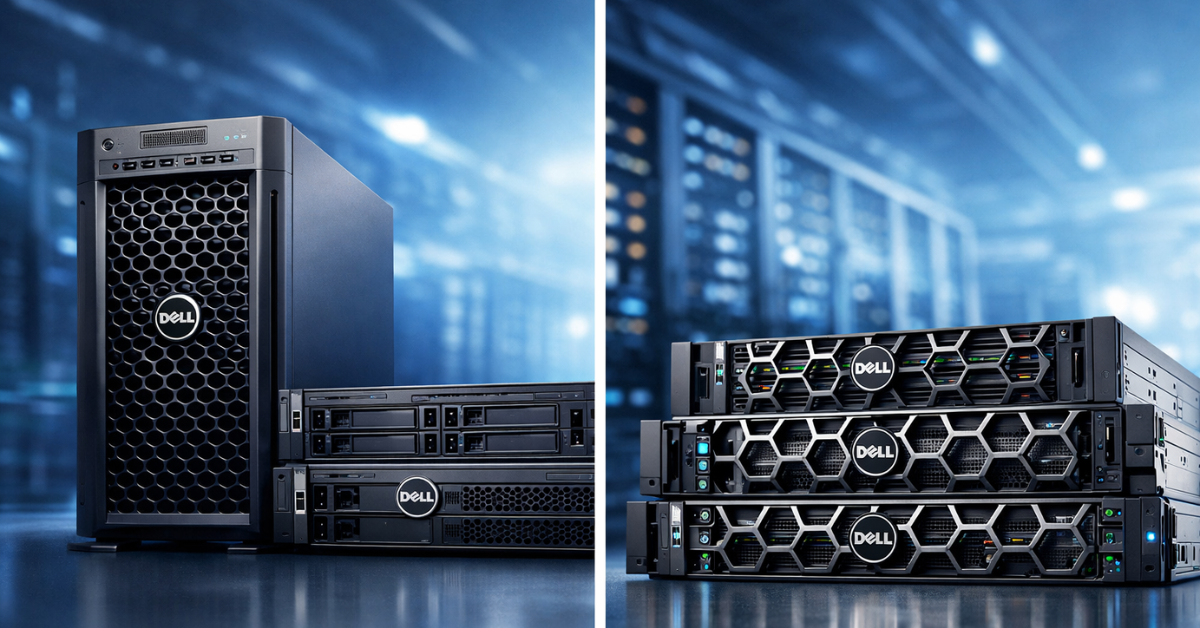
When choosing between the DELL PowerEdge R450 and R550, organizations face an important decision regarding their server infrastructure. Both servers belong to the 15th generation PowerEdge family and are built on 3rd Generation Intel Xeon Scalable processors, but they have fundamental differences in architecture and capabilities. The R450 represents a compact one-unit solution for medium-intensity tasks, while the R550 offers a two-unit platform with extended storage and scaling capabilities.
The key difference between these models lies in their form factor and internal architecture. The DELL PowerEdge R450 occupies only 1U of rack space with a depth of 734.95mm, making it an ideal choice for dense rack configurations and data centers with limited space. The R550, being a 2U server with a depth of 721.69mm with bezel, provides significantly more internal volume for installing additional components, drives, and expansion cards. This difference in form factor directly affects configuration possibilities, cooling, and future system upgrades.
In this material, we will examine in detail the technical specifications of both models, analyze their performance in various usage scenarios, compare scalability options, and help determine which server best meets your business needs. Special attention will be paid to data storage, computing power, management systems, and the economic efficiency of each solution.
Comparison Table: DELL PowerEdge R450 vs R550
| Specification | DELL PowerEdge R450 | DELL PowerEdge R550 |
|---|---|---|
| Form Factor | 1U rack server | 2U rack server |
| Processors | Up to two 3rd Gen Intel Xeon Scalable, up to 24 cores per processor | Up to two 3rd Gen Intel Xeon Scalable, up to 24 cores per processor |
| Memory | 16 DIMM slots, RDIMM up to 1 TB, speeds up to 2933 MT/s | 16 DIMM slots, RDIMM up to 1 TB, speeds up to 2933 MT/s |
| Storage (Front Bays) | Up to 4x 3.5" or 8x 2.5" SAS/SATA (max 64 TB or 61.4 TB) | Up to 16x 2.5" or 8x 3.5" SAS/SATA (max 122.88 TB or 128 TB) |
| Storage Controllers | PERC H345, H355, H745, H755, HBA355i, S150 | PERC H345, H355, H745, H755, HBA355i, S150 |
| PCIe Slots | 2 PCIe Gen4 slots + 1 PCIe Gen3 slot | 3 PCIe Gen4 slots + 1 PCIe Gen3 slot |
| Power Supplies | 600W/800W Platinum, 1100W -48Vdc | 600W/800W Platinum, 1100W -48Vdc |
| Cooling System | Up to seven cold swap fans | Up to five cabled fans |
| Management | iDRAC9, Quick Sync 2 | iDRAC9, Quick Sync 2 |
| Network Adapters | 2x 1GbE LOM, 1x OCP 3.0 | 2x 1GbE LOM, 1x OCP 3.0 |
| Dimensions (HxWxD) | 42.8 x 482 x 734.95 mm (without bezel) | 86.8 x 482 x 685.78 mm (without bezel) |
| Ideal For | Web servers, applications, medium-load virtualization | Data storage, databases, intensive virtualization |
| Link | Buy R450 | Buy R550 |
DELL PowerEdge R450: Compact Power in 1U

The DELL PowerEdge R450 server represents an optimal solution for organizations that require a performant computing platform in a compact form factor. This one-unit rack server is specifically designed for tasks where equipment placement density is critical, but serious computing power and enterprise-level reliability are still necessary. The R450 successfully combines modern 3rd Generation Intel Xeon processor technology with a well-designed cooling and management system.
Processing Power and Memory
The R450 supports the installation of up to two 3rd Generation Intel Xeon Scalable processors with a maximum of up to 24 cores per processor. In ServerMall's base configuration, the server is equipped with an Intel Xeon Silver 4310 processor with 12 cores, 18 MB cache, and 2.1 GHz clock speed, providing an excellent balance between performance and energy efficiency. The 3rd Generation Xeon Scalable processor architecture includes built-in acceleration technologies for cryptography, data compression, and artificial intelligence.
The R450's memory system is built on 16 DDR4 DIMM slots supporting RDIMM modules up to 1 TB at maximum speeds up to 2933 MT/s. The base configuration includes 16 GB DDR4 RDIMM 3200 MHz, which is sufficient for most typical tasks, but the system easily scales as requirements grow. The memory supports ECC registration technology for error detection and correction, which is critical for enterprise applications and databases.
Data Storage Subsystem
Despite its compact form factor, the R450 offers flexible options for storage system configuration. The server can be equipped with up to four 3.5" SAS/SATA drives with a maximum capacity of up to 64 TB or up to eight 2.5" SAS/SATA drives with a total capacity of up to 61.4 TB. A wide range of RAID controllers is available for storage management, from the basic software S150 to advanced hardware solutions like PERC H745 and H755 with cache and data loss protection.
In ServerMall's standard configuration, the server comes with a DELL S150 RAID controller, which supports only SATA disks and can work with a maximum of eight drives. For more demanding scenarios, upgrading to PERC H745 or H755 is recommended, which support SAS drives, provide hardware RAID acceleration, and include cache memory to improve write operation performance.
Expandability and Connectivity
The R450 is equipped with two PCIe Gen4 slots (x16 low profile, half length and x4 low profile, half length) plus one PCIe Gen3 slot for installing additional cards. Despite card height limitations (low profile), this allows adding high-performance network adapters, storage controllers, or specialized acceleration cards. The OCP 3.0 slot provides the ability to install modern network adapters without occupying standard PCIe slots.
Network capabilities include a built-in network adapter with two 1GbE LOM ports, which is sufficient for most office applications. The ports are located on the rear panel along with USB 3.0, serial port, and VGA connectors for console access. The front panel features an iDRAC Direct micro-USB port, USB 3.0, and VGA for maintenance convenience and initial setup.
Management and Monitoring
The management system is built on the iDRAC9 (integrated Dell Remote Access Controller) platform, which provides complete remote access to the server regardless of the operating system state. iDRAC9 allows remote mounting of virtual media, power management, component status monitoring, and receiving alerts about potential issues before they develop critically. The Quick Sync 2 wireless module provides the ability for quick initial setup through a mobile device.
- Up to two 3rd Gen Intel Xeon Scalable processors (up to 24 cores each)
- 16 DDR4 DIMM slots, up to 1 TB memory, speeds up to 2933 MT/s
- Up to 8x 2.5" or 4x 3.5" SAS/SATA/SSD drives
- RAID controllers: H345, H355, H745, H755, HBA355i, S150
- Boot options: Internal Dual SD Module, BOSS-S1 (2x M.2 SSD), USB
- 2 PCIe Gen4 slots + 1 PCIe Gen3 slot (low profile)
- Power supplies: 600W, 800W Platinum or 1100W -48Vdc (hot swap)
- Embedded 2x 1GbE LOM + OCP 3.0 slot
- iDRAC9 Express with Intelligent Provisioning support
- Up to seven fans (Standard or High Performance SLVR)
- Dimensions: 42.8 x 482 x 734.95 mm (1U, without bezel)
- Operating systems: Ubuntu Server LTS, Citrix Hypervisor, Windows Server, RHEL, SLES, VMware ESXi
Who Should Choose R450
The DELL PowerEdge R450 is ideally suited for organizations that require high server rack density while maintaining enterprise-level performance. Typical usage scenarios include web servers and application servers for small and medium businesses, edge computing for distributed offices, medium-intensity virtualization platforms with a small number of virtual machines, database servers with moderate loads, and e-commerce systems.
The server is particularly attractive for companies with limited rack space or high data center floor space rental costs. The compact 1U form factor allows placing more servers in a single rack, which reduces space costs and simplifies infrastructure scaling. At the same time, the R450 doesn't sacrifice performance for compactness, offering a full dual-processor configuration and sufficient memory for most business applications.
DELL PowerEdge R550: Scalable Platform in 2U
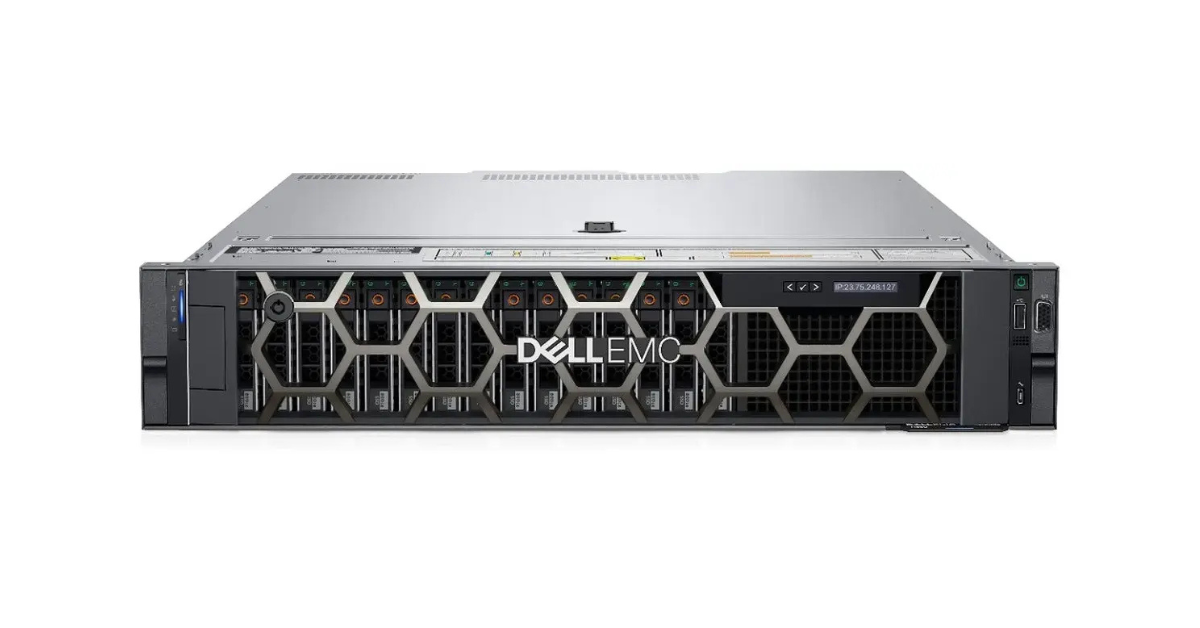
The DELL PowerEdge R550 server is positioned as a universal platform for tasks requiring greater storage capacity and extended scaling capabilities. The two-unit form factor provides significantly more internal space for installing additional components, making the R550 the preferred choice for database servers, storage systems, and applications with intensive input/output operations. The increased space also promotes more efficient component cooling and noise reduction.
Computing Resources
Like the R450, the R550 model is built on 3rd Generation Intel Xeon Scalable processors and supports the installation of up to two processors with a maximum of 24 cores each. ServerMall's base configuration also includes Intel Xeon Silver 4310 (12 cores, 18 MB cache, 2.1 GHz) and 16 GB DDR4 RDIMM 3200 MHz. However, the 2U form factor provides better cooling conditions for processors, which can positively affect their performance under prolonged high loads due to less thermal throttling.
The R550's memory system is identical to the R450 in specifications: 16 DDR4 DIMM slots supporting RDIMM up to 1 TB and speeds up to 2933 MT/s. The location of memory slots in the 2U chassis provides better access for maintenance and upgrades, as well as more efficient cooling of memory modules. This can be an important factor for configurations with maximum slot population or when using high-frequency memory modules.
Extended Storage Capabilities
The main advantage of the R550 over the R450 lies in the storage subsystem. The server can be equipped with up to 16 2.5" SAS/SATA drives with a maximum total capacity of up to 122.88 TB or up to eight 3.5" drives with a capacity of up to 128 TB. This is twice as much as the R450, making the R550 an ideal choice for applications critical to local storage volume: file servers, database servers, backup systems, and media content storage.
The R550 supports the same RAID controllers as the R450, including software S150 and hardware PERC H345, H355, H745, H755, and HBA355i. The base configuration includes S150, but for configurations with a large number of disks, using hardware controllers with caching is strongly recommended. Additionally, boot options are available through Internal Dual SD Module, BOSS-S2 (two M.2 SSDs in RAID), or USB, allowing all front bays to be reserved for data storage.
Enhanced PCIe Flexibility
The R550 offers superior expansion capabilities compared to the R450: three PCIe Gen4 low profile slots plus one PCIe Gen3 slot (x8, x4 lane). The additional PCIe Gen4 slot opens up more possibilities for simultaneously installing multiple expansion cards: for example, a high-performance network adapter, an additional storage controller, and a card for specialized tasks. The OCP 3.0 slot is also present for installing modern network solutions.
The larger internal space of the 2U chassis facilitates cable routing and reduces the risk of accidental component damage during maintenance. Improved air circulation around expansion cards promotes their stable operation even under maximum load. This is especially important for high-performance 25GbE/100GbE network adapters, which can generate significant heat.
Cooling and Power Systems
The R550 uses up to five cabled fans, which is fewer than the R450, but the larger fan size in the 2U chassis provides better cooling efficiency with lower noise levels. The system can be equipped with standard (STD) fans for normal operating conditions. The increased airflow and larger internal chassis volume contribute to more uniform temperature distribution inside the server.
Power supply options are identical to the R450: 600W or 800W Platinum Mixed Mode (100-240Vac or 240Vdc) with hot swap and redundancy support, as well as 1100W -48Vdc for telecommunications applications. ServerMall's base configuration includes two DELL 800W hot-swap power supplies, providing complete power redundancy. Power supply redundancy is critical for systems requiring continuous operation.
- Up to two 3rd Gen Intel Xeon Scalable processors (up to 24 cores each)
- 16 DDR4 DIMM slots, up to 1 TB RDIMM memory, speeds up to 2933 MT/s
- Up to 16x 2.5" or 8x 3.5" SAS/SATA/SSD drives
- Maximum storage capacity: 122.88 TB (2.5") or 128 TB (3.5")
- RAID controllers: H345, H355, H745, H755, HBA355i, S150
- Boot options: Internal Dual SD Module, BOSS-S2, USB
- 3 PCIe Gen4 slots + 1 PCIe Gen3 slot (low profile)
- Power supplies: 600W, 800W Platinum or 1100W -48Vdc (hot swap)
- Embedded 2x 1GbE LOM + OCP 3.0 slot
- iDRAC9, Quick Sync 2 wireless module
- Up to five cabled fans (Standard)
- Dimensions: 86.8 x 482 x 685.78 mm (2U, without bezel)
- Operating systems: Ubuntu Server LTS, Citrix Hypervisor, Windows Server, RHEL, SLES, VMware ESXi
Who Should Choose R550
The DELL PowerEdge R550 is the optimal choice for organizations that require a balance between computing power and storage capacity. Typical usage scenarios include SQL/NoSQL database servers with large data volumes, file servers and network storage systems, virtualization platforms with intensive input/output operations, media content processing and storage servers, backup and archival systems, and enterprise applications with local storage requirements.
The increased disk capacity makes the R550 preferable for scenarios where local storage is critical and centralized SAN/NAS infrastructure is absent or impractical. The server is also suitable for consolidating multiple servers into a single virtualization platform with sufficient storage resources for all virtual machines. The additional PCIe slot provides flexibility when building specialized configurations with multiple high-performance cards.
Selection Recommendations: R450 vs R550
When to Choose DELL PowerEdge R450
The R450 model will be the right choice if high server rack density is critical for your organization, and local storage requirements are moderate (up to 8 drives). The server is ideally suited for scenarios where most data is stored in a centralized storage system (SAN/NAS), and local disks are used primarily for the operating system and applications. The R450 is also preferable with a limited budget for rack space or when building distributed infrastructure with a large number of identical servers.
The compact form factor of the R450 makes it an excellent choice for edge computing, where servers are placed in small telecommunications cabinets or mini data centers with limited space. The server is suitable for web hosting, where a typical configuration includes several high-speed SSDs for the operating system and cache, while the main content is stored on specialized storage systems. The R450 is also effective for microservice architecture, where each server is responsible for a specific service and doesn't require large volumes of local storage.
When to Choose DELL PowerEdge R550
The R550 model becomes the preferred option when applications require significant local storage volume (more than 8 drives) or intensive data work on local disks is planned. The server is ideal for databases with large data volumes, where performance is critical and using network storage can create a bottleneck. The R550 is also suitable for consolidation scenarios, where multiple virtual machines are deployed on one physical server, each requiring substantial storage volumes.
The increased internal space of the R550 simplifies maintenance and upgrades, which is important for systems with frequent configuration changes. The additional PCIe slot can be critical for specialized applications requiring the installation of multiple expansion cards simultaneously. Better cooling makes the R550 suitable for high-load scenarios with constant intensive processor and disk subsystem operation.
Selection Criteria: Comparative Analysis
When choosing between R450 and R550, the following factors should be evaluated. Rack Space: if you have a limited number of units in the rack or high cost of renting space in a data center, the R450 will provide twice the placement density. With sufficient space and the need for greater storage capacity, choose the R550.
Storage Requirements: determine current and future local storage needs. If 4-8 drives are sufficient, the R450 will handle the task. When 12-16 drives are needed or expansion plans exist, the choice is obvious — R550. Also consider the type of drives: for arrays with large numbers of HDDs, the R550 with its better cooling is preferable.
Expandability: assess the need for additional expansion cards. If only a network adapter installation is planned, the R450's capabilities are sufficient. When multiple cards are needed (network, storage, specialized accelerators), the additional PCIe slot in the R550 will be an advantage. Also consider future upgrade possibilities: the 2U form factor of the R550 simplifies adding components.
Operating Costs: the R450 consumes less cooling power due to smaller chassis volume but may be noisier due to high-speed small fans. The R550 with its larger fans operates more quietly, which is important for placement in office spaces. Also evaluate maintenance costs: the more spacious R550 chassis simplifies work with components and reduces the risk of accidental damage.
Performance: with comparable processor and memory configurations, the computing performance of the R450 and R550 will be identical. However, the R550 may show an advantage in tasks with intensive disk subsystem use due to the ability to install more disks and build more performant RAID arrays. The better cooling of the R550 can also reduce the likelihood of thermal throttling during prolonged maximum loads.
Usage Scenarios: Practical Examples
Small Business (10-50 employees): for deploying basic IT infrastructure with a file server, domain controller, and business applications, the R450 is suitable. A single configuration with 8 SSD drives in RAID10 will be sufficient for storing corporate data, user profiles, and medium-sized databases. The compact form factor will allow placing the server even in a small server room.
Medium Business (50-200 employees): for more demanding tasks with large data volumes, the R550 is recommended. A configuration with 12-16 drives will allow building a fault-tolerant array for storing files, 1C databases, document management systems, and backups. Additional PCIe slots will provide the ability to install a high-performance network adapter and an additional storage controller.
Web Hosting and SaaS: for deploying a hosting platform with a large number of virtual servers, the R450 is optimal. High placement density will reduce costs for rack space, and using fast NVMe SSDs will provide high performance for virtual machines. Centralized storage of client data on separate SAN eliminates the need for large numbers of local disks.
Databases and Analytics: for database servers with intensive read/write operations, the R550 is preferable. A configuration with 16 SAS SSD drives in RAID10 will provide maximum performance and reliability. Additional memory (up to 1 TB) will allow caching large volumes of data in RAM, reducing load on the disk subsystem. Two Xeon Gold processors with high clock frequency will accelerate execution of complex queries.
Virtualization: for a medium-scale virtualization platform (10-20 virtual machines), the R450 with centralized storage is suitable. For consolidating more virtual machines or using local storage, the R550 is recommended. A configuration with maximum memory and a large number of fast disks will allow placing dozens of virtual servers on one physical platform.
Conclusion
The choice between DELL PowerEdge R450 and R550 is determined by the specific requirements of your IT infrastructure and business tasks. The R450 model represents a compact and efficient solution for organizations where equipment placement density is critical, and local storage requirements are moderate. The one-unit form factor, support for up to two powerful 3rd Generation Intel Xeon Scalable processors, and sufficient capacity for eight drives make the R450 a universal choice for web servers, medium-scale applications, edge computing, and distributed infrastructures.
The R550 model, occupying twice as much rack space, offers significantly expanded data storage capabilities — up to 16 2.5" format drives or eight 3.5" format drives with a total capacity of up to 128 TB. The additional PCIe Gen4 slot and improved cooling system make the R550 the preferred choice for database servers, file systems, virtualization platforms with local storage, and any applications requiring both high computing power and significant local storage volume.
Both models are built on the same processor platform, support identical amounts of RAM, and are equipped with modern iDRAC9 management systems. This ensures similar computing performance and an equally high level of manageability and monitoring. Differences manifest in storage capacity, number of expansion slots, cooling system, and of course, occupied rack space. All other things being equal, the R450 will provide higher placement density and space savings, while the R550 offers better scalability, greater storage capacity, and maintenance convenience.
ServerMall offers both models in various configurations with flexible options for processors, memory, storage systems, and additional components. Our specialists will help select the optimal configuration for your tasks and budget, ensuring a balance between performance, scalability, and total cost of ownership. Visit our catalog of DELL PowerEdge R450 and R550 servers for detailed information about available configurations and prices.