

Selecting a quiet rack server for home use is one of the most critical decisions when building a home lab or personal data center. Unlike industrial server rooms where noise levels are less of a concern, home environments demand special attention to acoustic comfort. Servers running 24/7 in residential spaces must not create discomfort for household members or neighbors.
Modern rack servers can generate noise ranging from 35 to 70+ decibels. For comparison: a quiet library measures around 40 dB, normal conversation is about 50 dB, and a vacuum cleaner reaches approximately 70 dB. The optimal noise level for home use is considered to be up to 40-45 dB at idle, which is comparable to typical household background noise. Key factors affecting server noise levels include: the number and type of fans, processors used (their TDP - thermal design power), storage drive types (SSDs are significantly quieter than HDDs), power supply quality, and overall chassis construction.
In 2025, server manufacturers pay particular attention to reducing acoustic characteristics. DELL PowerEdge series Gen14-Gen16 and HPE ProLiant Gen10-Gen11 offer models with improved cooling systems, intelligent fan management, and energy-efficient components that significantly reduce noise levels while maintaining high performance. In this comprehensive guide, we'll examine the best rack server models suitable for home use, focusing on the balance between quiet operation, performance, and value.
Comparison Table of Quiet Rack Servers
| Model | Form Factor | Processor | Max RAM | Drive Bays | Best Use Case |
|---|---|---|---|---|---|
| DELL PowerEdge R250 | 1U | Intel Xeon E-2300 (up to 8 cores) | 128 GB | Up to 4 × 3.5" or 4 × 2.5" | Entry home lab, file server |
| DELL PowerEdge R350 | 1U | Intel Xeon E-2300 (up to 8 cores) | 128 GB | Up to 8 × 2.5" | Virtualization, testing |
| HPE DL20 Gen11 | 1U | Intel Xeon E-2400 (up to 8 cores) | 128 GB | Up to 4 × LFF or 4+2 SFF | Compact home lab, web server |
| DELL PowerEdge R450 | 1U | Intel Xeon Scalable 3rd Gen (up to 24 cores) | 1 TB | Up to 8 × 2.5" | Medium workloads, containerization |
| HPE DL360 Gen11 | 1U | Intel Xeon Scalable 4th/5th Gen (up to 64 cores) | 4 TB | Up to 10 SFF or 20 EDSFF | High performance, virtualization |
| DELL PowerEdge R550 | 2U | Intel Xeon Scalable 3rd Gen (up to 24 cores) | 1 TB | Up to 16 × 2.5" or 8 × 3.5" | Data storage, multimedia |
| HPE DL380 Gen11 | 2U | Intel Xeon Scalable 4th/5th Gen (up to 60 cores) | 8 TB | Up to 24 SFF or 12 LFF | Professional home lab, clusters |
DELL PowerEdge R250

The compact single-processor DELL PowerEdge R250 in a 1U form factor represents an ideal solution for enthusiasts beginning their home server infrastructure journey. Thanks to Intel Xeon E-2300 series processors with relatively low thermal output, this server features minimal noise levels during idle operation.
Technical Specifications
- Processor: Intel Xeon E-2300 series (up to 8 cores)
- Memory: up to 128 GB DDR4 UDIMM (4 slots)
- Storage: up to 4 × 3.5" or 4 × 2.5" hot-swap SAS/SATA
- RAID Controllers: PERC H345, H755, HBA355i, S150
- Network: 2 × 1GbE (integrated)
- Management: iDRAC 9
- Power Supply: 450W Bronze/Platinum (cabled, non-hot-swap)
- Form Factor: 1U rack (height 42.8 mm)
Best Suited For
The R250 is perfect for creating a home file server, light virtualization (2-4 virtual machines), Plex/Jellyfin media server, or development testing environment. The single-processor architecture and absence of redundant power supplies make the system quieter compared to dual-processor models. Optimal for budget-friendly entry into server technology with minimal noise levels.
DELL PowerEdge R350
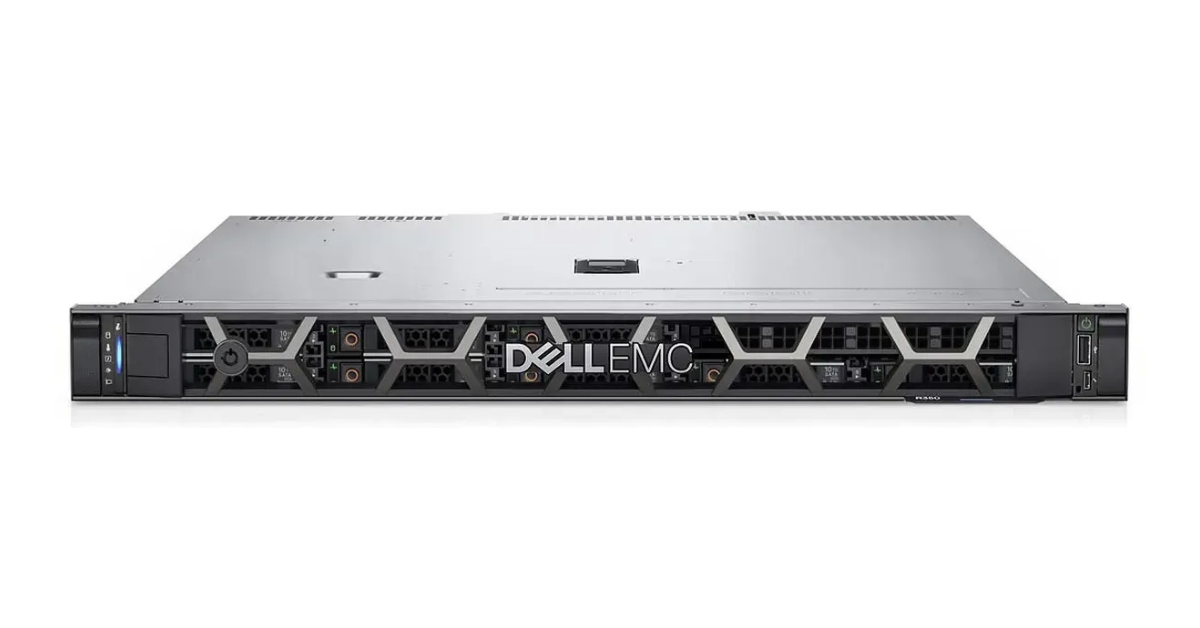
The DELL PowerEdge R350 represents an enhanced version of the R250 with hot-swap drive support and redundant power supplies. The 1U form factor and support for up to 8 × 2.5" drives make it a versatile solution for home use. The cooling system with four cabled fans provides effective cooling at acceptable noise levels.
Technical Specifications
- Processor: Intel Xeon E-2300 series (up to 8 cores)
- Memory: up to 128 GB DDR4 UDIMM (4 slots)
- Storage: up to 4 × 3.5" or 8 × 2.5" hot-swap SAS/SATA
- RAID Controllers: PERC H355/H355f, H345/H345f, H755/H755f, HBA355i
- Network: 2 × 1GbE LOM
- Management: iDRAC 9 with Intelligent Provisioning
- Power Supply: 2 × 600W Platinum (hot-swap, redundant)
- PCIe Slots: 3 slots (Gen4)
- Form Factor: 1U rack (height 42.8 mm)
Best Suited For
The R350 excels at medium complexity virtualization tasks (VMware ESXi, Proxmox), containerization (Docker, Kubernetes), database hosting, and web applications. Redundant power supplies ensure reliability, while support for up to 8 × 2.5" SSDs enables fast storage with RAID. Recommended for users planning to run 5-10 virtual machines simultaneously.
HPE DL20 Gen11

The compact HPE DL20 Gen11 is a modern single-processor server based on Intel Xeon E-2400 series processors. The use of latest-generation processors ensures high energy efficiency and low thermal output, directly affecting the cooling system noise level. DDR5 memory support provides high bandwidth for modern applications.
Technical Specifications
- Processor: Intel Xeon E-2400 series (up to 8 cores, up to 5.8 GHz)
- Memory: up to 128 GB DDR5 (4 slots, up to 3200 MT/s)
- Storage: 2 NHP LFF, 2 HP LFF, or 4+2 HP SFF
- RAID Controllers: Intel VROC SATA
- Network: HPE 1Gb 4-port BCM5720 (integrated)
- Management: HPE iLO 6
- Power Supply: 290W / 500W / 800W / 1000W (depending on configuration)
- PCIe Slots: 2 slots maximum
- Form Factor: 1U rack (height 4.32 cm)
- Weight: 9 to 12 kg
Best Suited For
The DL20 Gen11 is ideal for compact home laboratories where low power consumption and minimal noise are important. DDR5 memory support makes it a forward-looking choice for long-term use. Suitable for web hosting, mail servers, VPN gateways, light virtualization, and containers. Thanks to compact dimensions and low weight, it easily installs even in wall-mounted mini-racks.
DELL PowerEdge R450

The dual-processor DELL PowerEdge R450 in 1U form factor offers significant performance gains compared to single-processor models. Support for 3rd Generation Intel Xeon Scalable processors (up to 24 cores per processor) enables running dozens of virtual machines simultaneously. The cooling system with seven cold-swap fans requires attention to server placement, but modern fan management algorithms minimize noise under average loads.
Technical Specifications
- Processor: up to 2 × Intel Xeon Scalable 3rd Gen (up to 24 cores per processor)
- Memory: up to 1 TB DDR4 RDIMM (16 slots, up to 2933 MT/s)
- Storage: up to 4 × 3.5" or 8 × 2.5" hot-swap SAS/SATA
- RAID Controllers: PERC H345, H355, HBA355i, H745, H755, S150
- Network: 2 × 1GbE LOM + optional OCP 3.0
- Management: iDRAC 9 with Quick Sync 2
- Power Supply: 2 × 600W/800W/1100W Platinum (hot-swap)
- PCIe Slots: 2 Gen4 slots + 1 Gen3 slot
- Form Factor: 1U rack (height 42.8 mm, depth 734.95 mm)
Best Suited For
The R450 is designed for experienced users requiring high performance in a compact form factor. Excellent for running multiple virtual machines (10-20+), Kubernetes clusters, private cloud solutions based on OpenStack or Proxmox, and development/testing tasks. Important to note that under high loads, noise levels will be higher than single-processor models—placement in an isolated room or using a sound-insulated cabinet is recommended.
HPE DL360 Gen11
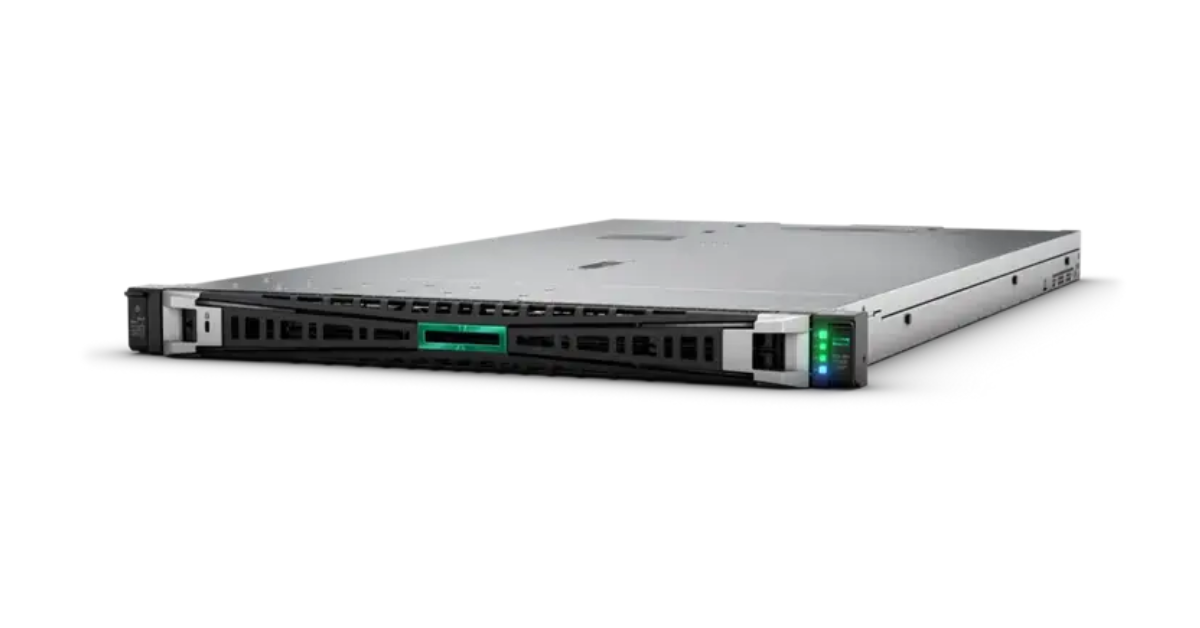
The flagship single-rack server HPE DL360 Gen11 represents the pinnacle of technology in 1U form factor. Support for Intel Xeon Scalable 4th and 5th Generation processors (up to 64 cores per processor) and up to 4 TB of DDR5 memory per socket makes it the most powerful solution for advanced home laboratories. The cooling system is designed with a balance between performance and acoustics—under average loads, the server operates relatively quietly thanks to intelligent fan management.
Technical Specifications
- Processor: up to 2 × Intel Xeon Scalable 4th/5th Gen (up to 64 cores, up to 3.9 GHz)
- Memory: up to 8 TB DDR5 (32 slots, up to 256 GB per module)
- Storage: up to 10 SFF SAS/SATA/NVMe or 20 EDSFF NVMe
- RAID Controllers: Intel VROC SATA, optional HPE Smart Array Gen11
- Network: wide range from 1GbE to 200GbE (PCIe/OCP 3.0)
- Management: HPE iLO Standard/Advanced with Intelligent Provisioning
- Power Supply: 500W/800W/1000W/1600W/1800-2200W (hot-swap)
- PCIe Slots: up to 3 Gen5 + 2 OCP 3.0 Gen5
- Form Factor: 1U rack (height 4.29 cm)
- Weight: 14.56-20.44 kg (depending on configuration)
Best Suited For
The DL360 Gen11 is the choice of professionals and enthusiasts building serious home infrastructures. Suitable for virtualization with hundreds of virtual machines, high-density private clouds, high-availability clusters, machine learning and AI (with GPU support), high-performance databases. Despite the compact 1U form factor, fans will work actively under maximum loads—placement in a separate room or professional sound-insulated cabinet is recommended.
DELL PowerEdge R550
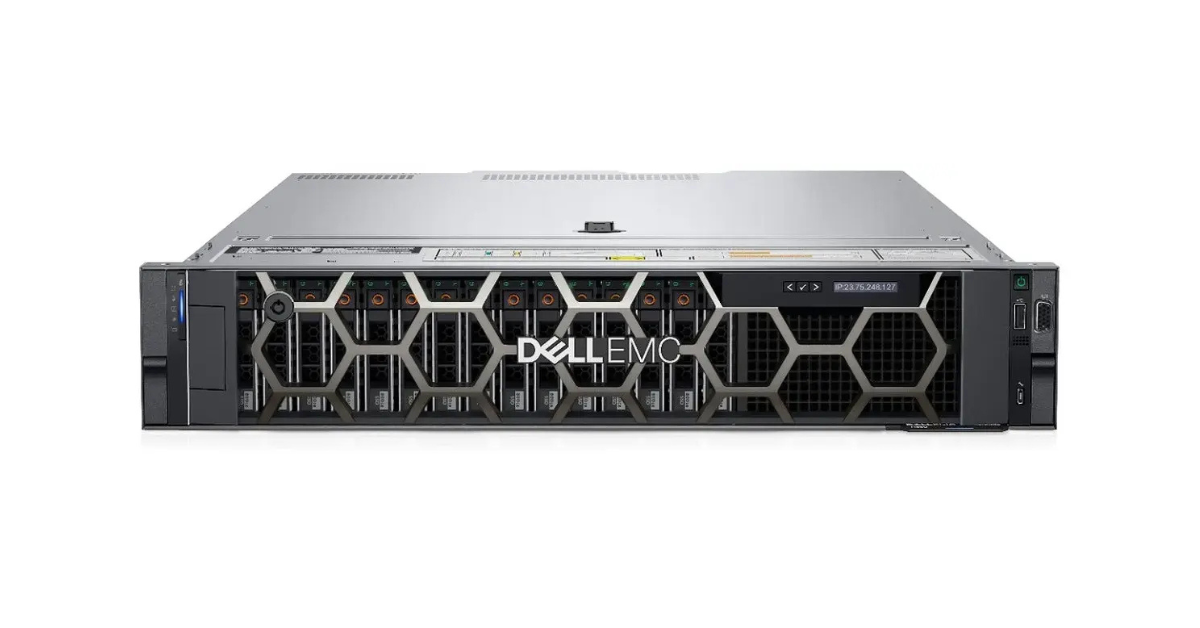
The two-rack server DELL PowerEdge R550 in 2U form factor offers an excellent balance between performance, drive capacity, and noise level. The 2U form factor provides better cooling compared to 1U models at the same performance level, resulting in lower noise. Five cabled fans operate at lower RPMs thanks to greater space for air circulation.
Technical Specifications
- Processor: up to 2 × Intel Xeon Scalable 3rd Gen (up to 24 cores per processor)
- Memory: up to 1 TB DDR4 RDIMM (16 slots, up to 2933 MT/s)
- Storage: up to 16 × 2.5" or 8 × 3.5" hot-swap SAS/SATA
- RAID Controllers: PERC H345, H355, HBA355i, H745, H755, S150
- Network: 2 × 1GbE LOM + optional OCP 3.0
- Management: iDRAC 9 with Quick Sync 2
- Power Supply: 2 × 600W/800W/1100W (hot-swap)
- PCIe Slots: 3 × Gen4 + 1 × Gen3
- Form Factor: 2U rack (height 86.8 mm)
Best Suited For
The R550 is ideal for home media centers with large collections (Plex, Jellyfin with transcoding), backup servers, NAS systems with virtualization, and laboratories requiring substantial disk space (up to 128 TB with 3.5" drives). The 2U form factor ensures significantly quieter operation compared to 1U models of similar performance—under average loads, noise is around 38-42 dB, which is acceptable for home use even in adjacent rooms.
HPE DL380 Gen11
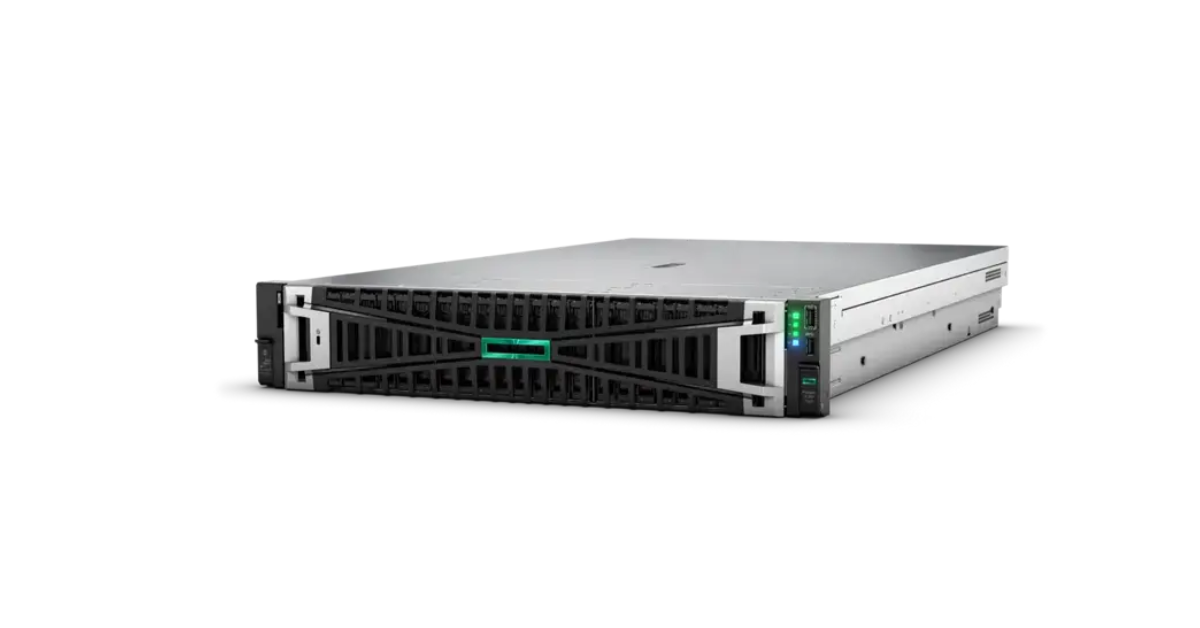
The universal two-rack HPE DL380 Gen11 is the most popular enterprise server adapted for home use. The 2U form factor combined with advanced cooling technologies makes it one of the quietest servers in its class. Support for up to 8 TB of DDR5 memory and 24 SFF drives opens wide possibilities for creating powerful home infrastructure.
Technical Specifications
- Processor: up to 2 × Intel Xeon Scalable 4th/5th Gen (up to 60 cores, up to 5.8 GHz)
- Memory: up to 8 TB DDR5 (32 slots, up to 256 GB per module)
- Storage: up to 24 SFF or 12 LFF SAS/SATA/SSD, optionally 6 SFF rear
- RAID Controllers: HPE SR932i-p, MR216i-o/p, MR416i-o/p, MR408i-o
- Network: from 1GbE to 200GbE (PCIe or OCP 3.0)
- Management: HPE iLO Standard/Advanced with Intelligent Provisioning
- Power Supply: 800W/1000W/1600W (hot-swap, redundant)
- PCIe Slots: up to 8 Gen5 + 2 OCP 3.0
- Form Factor: 2U rack (height 8.75 cm)
- Weight: 16-37 kg (depending on configuration)
Best Suited For
The DL380 Gen11 is a universal solution for the most demanding home projects. Suitable for enterprise-level private clouds, large virtualization clusters (50+ VMs), high-load databases, media servers with multiple transcoding, and training/certification for enterprise technologies. The 2U form factor provides excellent cooling and low noise—under 60-70% load, fans operate in moderate mode, creating noise around 40-45 dB. This makes the DL380 Gen11 an optimal choice for placement in home server rooms with minimal soundproofing.
Recommendations for Choosing a Quiet Rack Server
Selection Criteria by Noise Level
When selecting a quiet rack server for home use, several key factors affecting acoustic comfort must be considered:
Form Factor: 2U servers are almost always quieter than performance-equivalent 1U models. Greater internal space allows the use of larger diameter fans operating at lower RPMs. If your rack has sufficient space, always choose the 2U variant to minimize noise. 1U servers are optimal only under strict space constraints.
Processors: TDP (thermal design power) of the processor directly affects cooling system operation. Intel Xeon E-2300/E-2400 series processors have TDP of 65-95W, significantly lower than Xeon Scalable (up to 270W). For home use, choose processors with TDP up to 150W per socket—this ensures comfortable noise levels even under full load. High TDP processors are justified only for specific tasks requiring maximum performance.
Storage Drives: SSD drives are absolutely silent and generate no heat, unlike mechanical HDDs which create vibration and heat during operation. If budget permits, use exclusively SSDs—this significantly reduces overall noise and heat generation. When using HDDs for large storage volumes is necessary, choose energy-efficient models with 5400-7200 RPM rotation speed, avoiding high-speed 10K and 15K RPM enterprise-class disks.
Power Supplies: Power supplies with Platinum and Titanium certification (92-96% efficiency) generate less heat and require less cooling from their own fans. Avoid overloaded configurations—if the server consumes 300W, using 800W power supplies will be more efficient than 500W, as the PSU will operate in the optimal load range with minimal fan noise.
Selection by Usage Scenarios
Entry Home Lab (Learning, Testing): Recommended DELL PowerEdge R250 or HPE DL20 Gen11. Single-processor systems with low TDP, minimal noise level (35-40 dB at idle), sufficient performance for 2-5 virtual machines. Total cost of ownership is minimal due to low power consumption.
Home Virtualization (10-15 VMs): Optimal DELL PowerEdge R350 or DELL PowerEdge R450. Support for larger RAM volumes, ability to install multiple SSDs for fast storage, redundancy of critical components. Noise level is acceptable for placement in adjacent rooms (42-48 dB under load).
Media Server with Large Storage: Ideally suited DELL PowerEdge R550 in 2U configuration. Up to 8 × 3.5" drives allow creating a 128 TB array, the 2U form factor ensures quiet operation. When using energy-efficient HDDs (WD Red, Seagate IronWolf) and SSD for OS, noise level remains at 38-42 dB.
Professional Home Lab, Clusters: Choice between HPE DL360 Gen11 and HPE DL380 Gen11. DL360 Gen11 is more compact (1U), but DL380 Gen11 (2U) is significantly quieter at the same performance. For home placement, always choose DL380 Gen11 if rack space permits—the difference in noise level is 5-8 dB, which is subjectively perceived as a twofold reduction in loudness.
Additional Noise Reduction Measures
Placement: Optimally allocate a separate room for server equipment with good ventilation. Room temperature should not exceed 25°C—every 5°C above normal increases fan speed by 15-20%. Install the server rack on anti-vibration platforms to minimize vibration transmission to floors and walls.
BIOS Configuration: Use fan management profiles in BIOS/iDRAC/iLO. "Quiet" or "Optimal" modes allow reducing base fan RPMs by 10-15%. Ensure processor power management mode is enabled (C-states, P-states)—this reduces heat generation during low-load periods.
Soundproofing: Server cabinets with soundproofing can reduce noise by 15-20 dB but require active ventilation for heat dissipation. A more accessible solution is placing the rack in a storage room or technical space with additional wall soundproofing using acoustic panels. Important: never enclose servers in sealed spaces without ventilation—this leads to overheating and even greater noise.
Monitoring and Maintenance: Regularly clean fans and heatsinks of dust—contamination leads to overheating and increased RPMs. Use monitoring systems (iDRAC, iLO, IPMI) to control temperatures and fan speeds. Replacing thermal paste on processors every 2-3 years can reduce temperature by 5-10°C and, consequently, decrease noise.
Conclusion
Choosing a quiet rack server for home use in 2025 is a balance between performance, cost, and acoustic comfort. Modern DELL PowerEdge and HPE ProLiant models offer impressive capabilities at acceptable noise levels thanks to energy-efficient processors, intelligent cooling system management, and thoughtful construction.
For beginners and small projects, DELL PowerEdge R250, R350, or HPE DL20 Gen11 are optimal—these models provide minimal noise levels (35-42 dB) and sufficient performance for learning and light virtualization. For more serious tasks, consider two-rack solutions DELL PowerEdge R550 or HPE DL380 Gen11, which offer significantly better balance of performance and acoustics.
Remember that noise level depends not only on model selection but also on configuration, placement, and server maintenance. Proper BIOS configuration, using SSDs instead of HDDs, maintaining cleanliness and optimal room temperature will minimize noise even from powerful servers.
Ready to create your quiet home data center? Explore the complete server catalog at ServerMall and choose the optimal solution for your needs. Our specialists will help select a configuration with minimal noise level and maximum performance.


