Finding the best compact server for home use requires a balance between small size, sufficient performance, and reasonable power consumption. The ideal home server should comfortably fit in a home office or storage closet, providing enough computing power for media streaming, virtualization, network storage, or experimentation in a home lab. Based on current market offerings, DELL PowerEdge R250 and HPE ProLiant DL20 Gen11 represent top choices for compact 1U rack servers, while DELL PowerEdge T150 and HPE ProLiant ML30 Gen11 offer excellent tower configurations for traditional desktop placement.
Requirements for home servers have significantly evolved as users increasingly run containerized applications, virtual machines, and high-resolution media libraries. Modern small servers deliver enterprise-level reliability and management features in chassis designed for quieter operation and lower heat output compared to data center equipment. These systems support 24/7 operation while consuming far less energy than their larger counterparts, making them economically viable for home use. Whether you're building a Plex media server, running Docker containers, hosting a personal cloud, or creating a learning environment for IT certifications, the right platform choice determines your long-term satisfaction and expansion capabilities.
Small Home Servers Comparison
| Model | Processor | RAM | Storage | Form Factor | Best For |
|---|---|---|---|---|---|
| DELL PowerEdge R250 | Intel Xeon E-2324G (4C 3.10 GHz) | 8GB DDR4 (max. 128GB) | Up to 4x 3.5" drives | 1U Rack | Compact rack placement, basic virtualization |
| HPE ProLiant DL20 Gen11 | Intel Xeon E-2400 (up to 8C 5.8 GHz) | DDR5 (max. 128GB) | Up to 4 hot-plug drives | 1U Rack | Modern performance, edge computing |
| DELL PowerEdge T150 | Intel Xeon E-2314 (4C 2.80 GHz) | 8GB DDR4 (max. 128GB) | Up to 4x 3.5" drives | 4U Tower | Quiet desktop placement, file storage |
| HPE ProLiant ML30 Gen11 | Intel Xeon E-2400 (up to 8C) | DDR5 (max. 128GB) | Up to 8x 2.5" drives | 4U Tower | Home office deployment, expandability |
| DELL PowerEdge R350 | Intel Xeon E-2314 (4C 2.80 GHz) | 8GB DDR4 (max. 128GB) | Up to 8x 2.5" drives | 1U Rack | High-density storage, media server |
DELL PowerEdge R250 - Compact 1U Entry-Level Server

DELL PowerEdge R250 represents an excellent entry point for users seeking a true rack server in a compact 1U form factor. This DELL 15th generation platform delivers enterprise-level reliability and remote management capabilities via iDRAC9, making it substantially more capable than consumer NAS devices or repurposed desktop equipment.
Technical Specifications
- Processor: Intel Xeon E-2324G (4 cores, 8 threads, 3.10 GHz base, 4.60 GHz turbo frequency)
- Memory: 8GB DDR4 UDIMM 3200MHz (expandable to 128GB across 4 DIMM slots)
- Storage Controller: DELL PERC S150 software RAID (SATA only, supports up to 8 drives)
- Drive Bays: Up to 4x 3.5-inch hot-swap SATA/SAS bays (max. capacity 30.72TB)
- Network: Dual integrated 1GbE ports
- Remote Management: iDRAC9 Express with dedicated management port
- Power Supply: Single cable PSU 450W (Bronze efficiency)
- Dimensions: 1U (42.8mm H × 482.6mm W × 598.64mm D with bezel)
- Operating Systems: Windows Server, Linux distributions, VMware ESXi support
Ideal Use Cases
PowerEdge R250 excels as a dedicated media server running Plex or Jellyfin with direct-attached storage, handling several simultaneous 4K transcoding streams without strain. Its compact form factor is ideal for installation in network cabinets or small server racks where space is limited. The system provides sufficient resources for light virtualization, including multiple Ubuntu containers, Windows VMs for testing, or a pfSense firewall VM. Home lab enthusiasts will appreciate the authentic enterprise management experience via iDRAC9, providing access to remote console, firmware updates, and comprehensive hardware monitoring without physical access to the server.
This configuration works well for users transitioning from consumer NAS devices who need more computing power while maintaining a small form factor. The server supports basic RAID configurations via software RAID, although users requiring advanced RAID levels should consider upgrading to a hardware RAID controller. Power consumption remains reasonable for 24/7 operation, typically consuming 40-60W idle and scaling to 150W under moderate loads.
HPE ProLiant DL20 Gen11 - Latest Generation Compact Server

HPE ProLiant DL20 Gen11 brings current-generation Intel Xeon E-2400 series processors and DDR5 memory to the compact 1U home server segment. This latest generation platform offers significantly improved performance per watt compared to previous generations, making it particularly attractive for users prioritizing energy efficiency and modern features.
Technical Specifications
- Processor: Intel Xeon E-2400 series (from 4 to 8 cores, up to 5.8 GHz max turbo frequency)
- Memory: DDR5 Standard Memory with ECC (expandable to 128GB across 4 DIMM slots)
- Storage Controller: Intel VROC SATA with optional hardware RAID controllers
- Drive Bays: 2 non-hot-plug LFF or 2 hot-plug LFF or 4+2 hot-plug SFF configurations
- Network: HPE embedded 1Gb 4-port BCM5720 network adapter
- Remote Management: HPE iLO6 with dedicated management interface
- Power Supply: 290W, 500W, 800W, or 1000W options available
- Dimensions: 1U (43.2mm H × 434.6mm W × from 378.4mm to 438.4mm D depending on configuration)
- Weight: 9-12 kg depending on configuration
Choosing the Right Equipment
Our specialists will contact you and answer all your questions
Ideal Use Cases
DL20 Gen11 represents the cutting edge for compact home servers, offering DDR5 memory performance that significantly benefits memory-intensive workloads such as database servers, caching applications, and virtual machine environments. The platform's support for new Intel Xeon E-2400 processors with up to 8 cores provides substantial computational headroom for running multiple Docker containers, Kubernetes clusters, or concurrently executing several VMs under Proxmox or ESXi.
This server particularly excels in edge computing scenarios where users require enterprise reliability in remote locations, such as country houses with surveillance systems, remote branch offices, or distributed IoT gateways. Four integrated 1GbE ports eliminate the need for additional network cards in most home deployments, supporting link aggregation, network segmentation, and dedicated management interfaces. The HPE iLO6 management processor delivers industry-leading remote capabilities, including virtual media mounting, comprehensive health monitoring, and secure remote console access.
The platform's support for Gen11 DDR5 protects future investments as memory prices decline over time, while the latest Intel processors provide improved instruction sets useful for modern workloads, including machine learning inference, video encoding, and cryptographic operations. Energy efficiency improvements mean lower electricity costs during continuous operation, with typical idle consumption around 35-50W and power consumption scaling under load according to workload intensity.
DELL PowerEdge T150 - Quiet Tower Server

DELL PowerEdge T150 offers genuine server capabilities in a traditional tower form factor designed for office environments where noise levels matter. Unlike rack servers with high-speed fans, T150 operates quietly enough for placement under a desk or in an adjacent cabinet, making it ideal for home offices where 24/7 operation cannot disrupt living spaces.
Technical Specifications
- Processor: Intel Xeon E-2314 (4 cores, 8 threads, 2.80 GHz base frequency)
- Memory: 8GB DDR4 UDIMM 3200MHz (expandable to 128GB across 4 DIMM slots)
- Storage Controller: DELL PERC S150 software RAID (SATA only, supports up to 8 drives)
- Drive Bays: Up to 4x 3.5-inch cabled SATA/SAS bays (max. capacity 30.72TB)
- Network: Dual integrated 1GbE ports
- Remote Management: iDRAC9 Express with dedicated micro-USB and RJ45 interfaces
- Power Supply: Single 300W PSU Bronze efficiency
- Expansion: 4 PCIe slots for network cards, storage controllers, or other peripherals
- Dimensions: 4U tower (360mm H × 175mm W × 453.75mm D with bezel)
- Security: Security panel with lock, TPM 2.0 support, Secure Boot
Ideal Use Cases
PowerEdge T150 serves excellently as a primary home server for users prioritizing quiet operation and the convenience of traditional tower over rack density. The system's acoustic profile allows placement in home offices, living rooms, or bedrooms without generating the constant fan noise characteristic of rack equipment. This makes it ideal for home theater PC (HTPC) integration, always-on file servers, or continuous backup assignments that must operate in inhabited spaces.
With four 3.5-inch drive bays, T150 supports substantial storage capacity, perfect for media collections, Time Machine backups, family photo archives, and surveillance camera recordings. The cabled drive configuration keeps costs lower than hot-swap alternatives while remaining perfectly adequate for home environments where drive replacement urgency is minimal. Users can easily install multiple high-capacity HDDs for bulk storage alongside SSDs for OS and application performance.
The tower form factor provides easier physical access compared to rack servers, simplifying drive installation, memory upgrades, and peripheral card additions. Four PCIe expansion slots allow adding 10GbE network cards for high-speed NAS performance, additional USB controllers for peripheral connectivity, or GPU cards for transcoding acceleration. T150 represents an excellent choice for users wanting enterprise reliability and server manageability without investing in rack infrastructure or tolerating data center noise levels in residential spaces.
HPE ProLiant ML30 Gen11 - Modern Tower Platform

HPE ProLiant ML30 Gen11 combines the quiet operation and accessibility of tower design with cutting-edge DDR5 memory technology and latest-generation Intel Xeon processors. This platform represents HPE's newest compact server offering, bringing enterprise features to home and small office deployments that cannot accommodate rack infrastructure.
Technical Specifications
- Processor: Intel Xeon E-2400 series (from 4 to 8 cores, up to 3.6 GHz base, 5.8 GHz max turbo frequency)
- Memory: HPE DDR5 Standard Memory with unbuffered ECC (expandable to 128GB with 32GB modules across 4 DIMM slots)
- Storage Controller: Intel VROC SATA with optional HPE Smart Array controllers
- Drive Bays: 4 NHP LFF SATA HDD, 4 LFF SAS/SATA HDD/SSD or 8 SFF SAS/SATA HDD/SSD configurations
- Network: HPE embedded 1Gb 4-port BCM5719 network adapter with optional additional controllers
- Remote Management: HPE iLO Standard with Intelligent Provisioning (built-in), upgradable to iLO Advanced
- Power Supply: HPE 500W, 800W, and 1000W options available
- Dimensions: 4U tower form factor designed for office environments
- Operating Systems: Windows Server, Linux distributions, VMware ESXi certified
Ideal Use Cases
ML30 Gen11 excels as a comprehensive home server platform where performance, expandability, and quiet operation carry equal weight. The combination of DDR5 memory and modern Intel Xeon E-2400 processors delivers exceptional virtualization performance, easily running 10-15 lightweight Linux VMs or 5-8 Windows Server instances concurrently. This makes it ideal for home lab environments where users test multiple operating systems, study enterprise technologies, or prepare for IT certifications requiring hands-on experience.
The flexible storage configuration supports either high-capacity 3.5-inch drives for bulk storage applications or dense 2.5-inch arrays for higher IOPS when using SSD storage. Users building media servers benefit from installing large HDDs for content storage while adding SSDs for metadata and transcoding cache. The eight SFF drive configuration particularly suits database servers, virtual machine datastores, or high-performance NAS deployments where speed matters more than capacity.
Four integrated 1GbE network ports enable sophisticated networking configurations without additional hardware, supporting link aggregation for increased throughput, VLAN segmentation for security isolation, dedicated management interfaces, and redundant connections for high availability. The platform's Gen11 support for optional HPE network controllers makes upgrading to 10GbE or 25GbE connectivity easy as home network infrastructure evolves. Power supply options from 500W to 1000W accommodate future expansion with additional drives, PCIe cards, or peripheral devices.
HPE's comprehensive management ecosystem, including iLO, Intelligent Provisioning, and optional OneView integration, provides enterprise-level deployment and monitoring capabilities typically unavailable in home server products. ML30 Gen11 represents the premium choice for users wanting maximum expandability, modern hardware specifications, and long-term platform viability in a quiet tower chassis.
DELL PowerEdge R350 - High-Density Storage Option
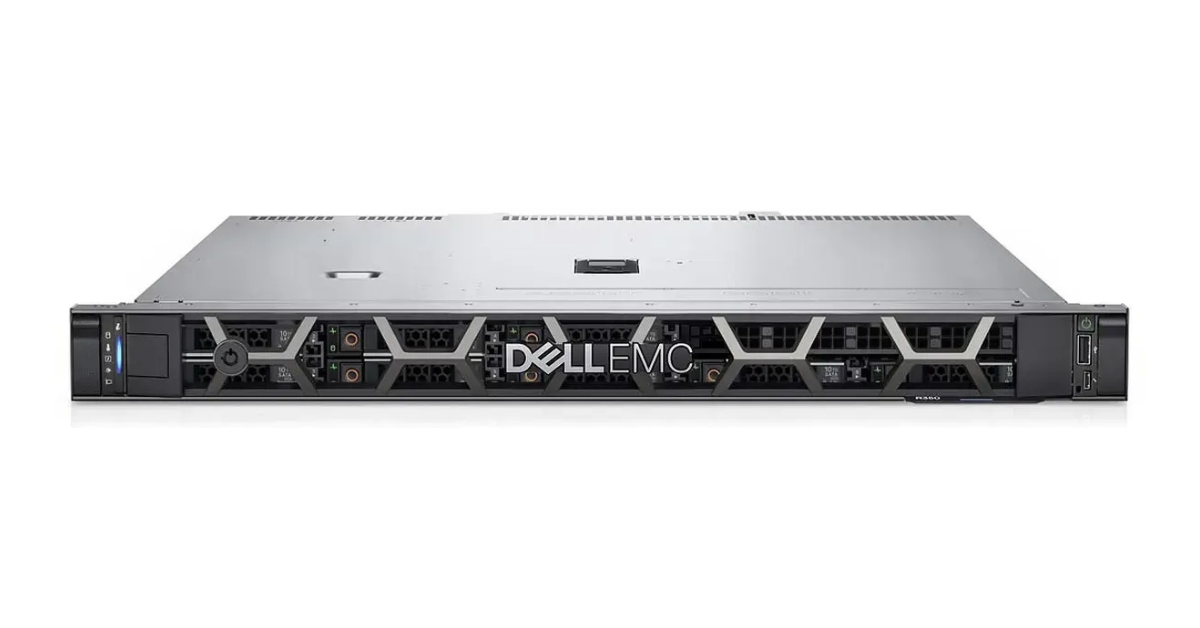
DELL PowerEdge R350 addresses the specific need for compact servers with higher drive density, supporting up to 8 hot-swap 2.5-inch drives in a 1U chassis. This configuration particularly benefits users prioritizing storage capacity and flexibility while maintaining a small rack form factor.
Technical Specifications
- Processor: Intel Xeon E-2314 (4 cores, 8 threads, 2.80 GHz base, 4.50 GHz turbo frequency)
- Memory: 8GB DDR4 UDIMM 3200MHz (expandable to 128GB across 4 DIMM slots)
- Storage Controller: DELL PERC S150 software RAID with support for optional hardware controllers
- Drive Bays: Up to 8x 2.5-inch hot-swap SAS/SATA bays (max. capacity 128TB with 16TB drives)
- Network: Dual integrated 1GbE ports
- Remote Management: iDRAC9 Express with dedicated management network port
- Power Supply: Dual 600W Platinum redundant hot-swap PSUs
- Expansion: 3 PCIe Gen4 slots, including options for low-profile and half-length cards
- Dimensions: 1U (42.8mm H × 482mm W × 585.3mm D without bezel)
- Optional: Security bezel available for physical access protection
Ideal Use Cases
PowerEdge R350 particularly suits home media server deployments where users maintain large 4K video libraries requiring both capacity and performance. The eight 2.5-inch drive configuration allows installing multiple SSDs for hot data and application storage while using higher-capacity SSDs or 2.5-inch HDDs for bulk media storage. Hot-swap drive capability enables continuous drive replacement or expansion, valuable for media servers that must remain available 24/7.
This platform performs exceptionally well for users running surveillance systems with multiple high-resolution IP cameras requiring continuous recording. The combination of adequate CPU resources for video processing, sufficient storage for retention policies, and redundant power supplies ensures reliable operation critical for security applications. iDRAC9 remote management allows monitoring system health, checking storage capacity, and receiving alerts about potential drive failures before data loss occurs.
R350's redundant power supply configuration provides higher reliability than single-PSU alternatives, important for home servers hosting critical services such as network infrastructure, family file storage, or always-on applications. Three PCIe expansion slots accommodate 10GbE network cards for high-speed connectivity, hardware RAID controllers for advanced storage features, or GPU cards for transcoding acceleration and machine learning workloads.
Users prioritizing storage flexibility will appreciate support for the 2.5-inch form factor of both traditional SATA SSDs and enterprise SAS drives, enabling mixed storage tiers optimized for different data types. The platform effectively scales from basic file server configurations using economical SATA SSDs to high-performance arrays employing faster NVMe or SAS drives as budgets allow. For home users managing growing storage demands, R350's eight-bay design provides an excellent balance between capacity and density without transitioning to larger 2U chassis.
Our most popular servers

Free shipping on orders over 500 € in the EU, £500 in the UK, and $3,000 in the USA
Free shipping on orders over 500 € in the EU, £500 in the UK, and $3,000 in the USA
Free shipping on orders over 500 € in the EU, £500 in the UK, and $3,000 in the USA

Free shipping on orders over 500 € in the EU, £500 in the UK, and $3,000 in the USA
Choosing the Right Equipment
Our specialists will contact you and answer all your questions
Selecting a Home Server: Key Considerations
Choosing the optimal small server for home use requires evaluating several critical factors that determine long-term satisfaction and platform suitability for intended workloads. Understanding these considerations helps align hardware capabilities with specific requirements, avoiding common mistakes leading to premature upgrades or disappointing performance.
Form Factor Decision: Rack vs. Tower
The fundamental choice between rack and tower servers significantly impacts installation flexibility and acoustic considerations. Rack servers like DELL PowerEdge R250 or HPE ProLiant DL20 Gen11 require either a network rack (wall-mounted or floor-standing) or conversion to desktop orientation using optional brackets. These 1U systems deliver maximum density but generate more fan noise due to smaller, high-speed cooling fans needed in constrained spaces.
Tower servers like DELL PowerEdge T150 and HPE ProLiant ML30 Gen11 operate significantly quieter, making them suitable for placement in home offices, utility rooms, or even living spaces. Tower designs also simplify physical access for drive installation, memory upgrades, and expansion card additions compared to rack servers requiring extraction from cabinets. Choose rack form factors when building dedicated home lab infrastructure with multiple systems; choose towers when noise concerns, physical accessibility, or lack of rack infrastructure dictate design priorities.
Processor Selection and Performance Scaling
Intel Xeon E-2300 and E-2400 series processors found in these compact servers provide substantial performance for home workloads while maintaining reasonable power consumption. Quad-core configurations handle most basic server tasks, including file sharing, media streaming, and light virtualization. Users planning to run multiple concurrent virtual machines, Docker containers, or perform CPU-intensive tasks like video transcoding should prioritize systems offering 6 or 8-core options.
The performance difference between DDR4-based systems like DELL models and DDR5-equipped HPE Gen11 servers matters primarily for memory-intensive workloads, including database servers, in-memory caching, and heavily loaded virtualization environments. DDR5's higher bandwidth particularly benefits applications with large working sets constantly accessing memory, while general file sharing and media streaming see minimal advantage. Consider DDR5 platforms when future-proofing investments or running bandwidth-sensitive applications; DDR4 systems remain perfectly adequate and more economical for typical home server deployments.
Storage Architecture Planning
Drive bay configuration fundamentally determines storage capacity, performance potential, and expansion headroom. Four-bay configurations in DELL PowerEdge R250 and T150 support 3.5-inch drives, maximizing cost per terabyte with high-capacity HDDs but limiting total drive count. The eight-bay DELL PowerEdge R350 using 2.5-inch bays enables mixing SSDs for performance with high-capacity 2.5-inch drives for bulk storage, creating flexible tiered storage architectures.
Software RAID via PERC S150 or Intel VROC suffices for basic redundancy and performance needs, supporting RAID 0, 1, 5, and 10 configurations without additional hardware costs. Users requiring advanced features like hot spare drives, cache acceleration, or sophisticated monitoring should budget for hardware RAID controllers like HPE Smart Array or DELL PERC H-series adapters. Hot-swap drive capability, standard on R350 and available on other models, ensures continuous drive replacement critical for systems requiring constant availability.
Network Connectivity Requirements
All recommended servers include minimum dual 1GbE network ports, adequate for most home deployments where internet connections rarely exceed gigabit speeds. Users building high-performance NAS systems connecting to 10GbE home networks or requiring link aggregation for increased throughput should verify PCIe slot availability for aftermarket 10GbE cards. HPE ProLiant ML30 Gen11 with four integrated 1GbE ports provides exceptional flexibility for network segmentation without consuming expansion slots.
Consider dedicated management network interfaces when implementing proper home lab infrastructure, as separate management networks provide remote access even during OS failures or network stack issues. The iDRAC9 and iLO management processors on these servers support out-of-band management via dedicated RJ45 ports, essential for remote troubleshooting and maintenance scenarios.
Power Consumption and Efficiency
Home servers operate 24/7, making energy efficiency a significant long-term cost factor. Typical idle consumption varies from 35W to 60W depending on configuration, while power consumption under load scales with CPU activity, drive count, and peripheral devices. Redundant power supply configurations like those available on DELL PowerEdge R350 increase reliability but slightly elevate idle consumption compared to single-PSU alternatives.
Calculate annual energy costs by multiplying average power consumption by local electricity rates and 8,760 hours per year. A server consuming 50W averages about 438 kWh annually, costing approximately $50-60 per year at typical residential rates. Energy-efficient configurations using SSDs instead of spinning drives and appropriately sized processors for workloads significantly impact long-term operational expenses.
Remote Management Capabilities
Enterprise management features including DELL iDRAC9 and HPE iLO distinguish genuine servers from consumer equipment, providing remote KVM access, virtual media mounting, hardware monitoring, and firmware update capabilities without requiring OS-level tools. These features prove invaluable for managing headless servers installed in closets, basements, or remote locations. iLO and iDRAC provide complete system control through web browsers, including BIOS configuration, OS installation via virtual media, and recovery from boot failures or OS corruption.
Standard management licensing included with these servers provides substantial functionality, while optional Advanced licenses unlock additional features like remote console recording, advanced scripting, and enhanced security capabilities. For most home deployments, standard management features suffice, though users managing multiple servers or implementing complex automation may justify Advanced licensing costs.
Conclusion: Choosing the Perfect Home Server
The best small server for home infundamentally depends on specific deployment requirements, form factor preferences, and workload characteristics. For users prioritizing compact rack placement with authentic enterprise features, DELL PowerEdge R250 and HPE ProLiant DL20 Gen11 deliver exceptional value in proven 1U platforms. DL20 Gen11 particularly stands out for users wanting the latest DDR5 technology and current-generation processors, while R250 offers excellent price-performance for more budget-conscious deployments.
Users who cannot accommodate rack infrastructure or prioritize quiet operation should seriously consider tower alternatives. DELL PowerEdge T150 provides an economical entry point with genuine server capabilities in a whisper-quiet chassis suitable for office environments. For users wanting absolutely latest technology in tower format, HPE ProLiant ML30 Gen11 combines DDR5 memory, modern processors, and flexible storage configurations in a platform designed for long-term viability and expansion.
DELL PowerEdge R350 occupies a specialized niche for users requiring higher drive density in compact form factors, particularly benefiting media server deployments, surveillance systems, or high-capacity NAS applications where eight hot-swap bays provide ideal storage flexibility. Its redundant power supply configuration and enhanced storage options justify the premium over four-bay alternatives for mission-critical home deployments.
Regardless of specific model choice, all these servers deliver enterprise-level reliability, professional remote management via iDRAC or iLO, and expandability unachievable with consumer NAS devices or repurposed desktop equipment.