VMware vSphere remains the leading virtualization platform for enterprise environments, and choosing the right server hardware is critically important for ensuring maximum performance, reliability, and scalability of your virtual infrastructure. In 2025, servers for VMware must meet growing demands for computing power, support modern processors, and provide efficient resource management.
The optimal server for VMware ESXi should combine several key characteristics: sufficient processor cores to handle multiple virtual machines, large amounts of RAM for distribution among guest systems, fast storage systems, and reliable network adapters. It's essential to consider not only technical specifications but also official compatibility with the VMware Hardware Compatibility List (HCL).
In this guide, we'll examine five best server solutions from DELL and HPE that are ideal for deploying VMware vSphere in 2025. We'll analyze their technical specifications, configuration features, and optimal use cases to help you choose the most suitable option for your virtual infrastructure.
VMware Server Comparison Table
| Model | Processor | Maximum RAM | Storage | Form Factor | Use Case |
|---|---|---|---|---|---|
| DELL PowerEdge R650 | Up to 2x Intel Xeon Scalable 3rd Gen (up to 40 cores) | Up to 4 TB DDR4 | Up to 10x 2.5" SAS/SATA/NVMe | 1U Rack | Universal virtualization, VDI |
| DELL PowerEdge R750 | Up to 2x Intel Xeon Scalable 3rd Gen (up to 40 cores) | Up to 8 TB DDR4 | Up to 24x 2.5" SAS/SATA/NVMe | 2U Rack | Large-scale virtualization, private clouds |
| HPE ProLiant DL380 Gen11 | Up to 2x Intel Xeon Scalable 4th/5th Gen (up to 64 cores) | Up to 8 TB DDR5 | Up to 24x 2.5" SAS/SATA/NVMe | 2U Rack | Mission-critical apps, enterprise virtualization |
| DELL PowerEdge R450 | Up to 2x Intel Xeon Scalable 3rd Gen (up to 24 cores) | Up to 1 TB DDR4 | Up to 8x 2.5" SAS/SATA | 1U Rack | Compact virtualization, branch offices |
| HPE ProLiant DL360 Gen11 | Up to 2x Intel Xeon Scalable 4th/5th Gen (up to 64 cores) | Up to 8 TB DDR5 | Up to 20x EDSFF E3.s NVMe | 1U Rack | High-density virtualization, edge computing |
DELL PowerEdge R650: Universal Virtualization Solution

The DELL PowerEdge R650 server represents an optimal balance of performance, rack density, and energy efficiency for VMware virtualization. This dual-processor server in a 1U form factor is ideal for deploying medium and large virtual infrastructures, providing high virtual machine density per rack unit.
Technical Specifications
- Processors: Up to two 3rd Generation Intel Xeon Scalable processors with support for up to 40 cores per processor
- Memory: 16 DDR4 DIMM slots, supporting up to 4 TB RDIMM or LRDIMM at speeds up to 3200 MT/s
- Storage: Up to 10x 2.5" SAS/SATA/NVMe drives (up to 153 TB) with optional 2x 2.5" rear bays
- RAID Controllers: PERC H745, H755, H755N, HBA355i for flexible storage configuration
- Network Adapters: Embedded 2x 1GbE LOM with optional OCP 3.0 adapters
- Management: iDRAC9 with Quick Sync 2 support for remote management
- Power Supplies: From 800W to 1600W with hot-swap and redundancy support
- Cooling: From 4 to 8 hot-swappable fans with full redundancy
VMware Benefits
PowerEdge R650 is VMware certified and included in the Hardware Compatibility List (HCL), guaranteeing seamless operation with VMware vSphere 7.0 and later versions. The server architecture is optimized for virtualization: high core counts ensure high virtual machine density, while support for up to 4 TB of RAM allows adequate resource allocation for demanding workloads.
NVMe drive support is particularly important, providing low latency and high IOPS performance – critical parameters for virtual environments with intensive storage use. Integration with iDRAC9 simplifies deployment and management of ESXi hosts through VMware vCenter.
Best For
DELL PowerEdge R650 is ideal for medium and large businesses requiring a universal virtualization platform. The server excels at server consolidation, VDI (Virtual Desktop Infrastructure) deployment, application hosting, and creating test/development environments. The compact 1U form factor makes it the optimal choice for data centers with limited rack space.
DELL PowerEdge R750: Power for Critical Workloads

For organizations requiring maximum performance and scalability in virtual infrastructure, the DELL PowerEdge R750 offers unmatched capabilities. This dual-processor server in a 2U form factor is designed for the most demanding virtualization scenarios and can support hundreds of virtual machines simultaneously.
Technical Specifications
- Processors: Up to two 3rd Generation Intel Xeon Scalable processors with support for up to 40 cores per processor (80 cores in configuration)
- Memory: 32 DDR4 DIMM slots, supporting up to 8 TB with RDIMM or LRDIMM, speeds up to 3200 MT/s
- Persistent Memory: Up to 16 Intel Persistent Memory 200 series slots (up to 8 TB)
- Storage: Flexible configurations up to 24x 2.5" SAS/SATA/NVMe (up to 368.84 TB) with additional rear bays
- RAID Controllers: PERC H745, H755, H755N, H840 for advanced data protection
- Network Interfaces: Embedded 2x 1GbE LOM with OCP 3.0 support for 10/25/100 GbE adapters
- GPU Support: Up to 2x double-width 300W or 6x single-width 75W accelerators
- Management: iDRAC9 Enterprise with Quick Sync 2 and OpenManage Enterprise integration
- Power Supplies: From 800W to 1400W Platinum with hot-swap
VMware Benefits
PowerEdge R750 is DELL's flagship solution for VMware vSphere virtualization. The server supports all advanced vSphere features, including vMotion, DRS (Distributed Resource Scheduler), HA (High Availability), and vSAN. The massive RAM capacity of up to 8 TB allows hosting hundreds of virtual machines or several large instances with memory-intensive applications such as SAP HANA databases or large analytics systems.
Intel Persistent Memory support opens new possibilities for accelerating data operations in virtual environments, providing performance close to DRAM with greater capacity. For VMware vSAN, this means the ability to create high-performance software-defined storage directly on virtualization servers.
Best For
DELL PowerEdge R750 is designed for large enterprises and service providers requiring maximum virtual machine density and performance. The server is ideal for deploying private clouds based on VMware Cloud Foundation, large VDI infrastructures with thousands of virtual desktops, consolidating mission-critical applications, and creating high-performance vSAN clusters.
HPE ProLiant DL380 Gen11: Next-Generation Reliability
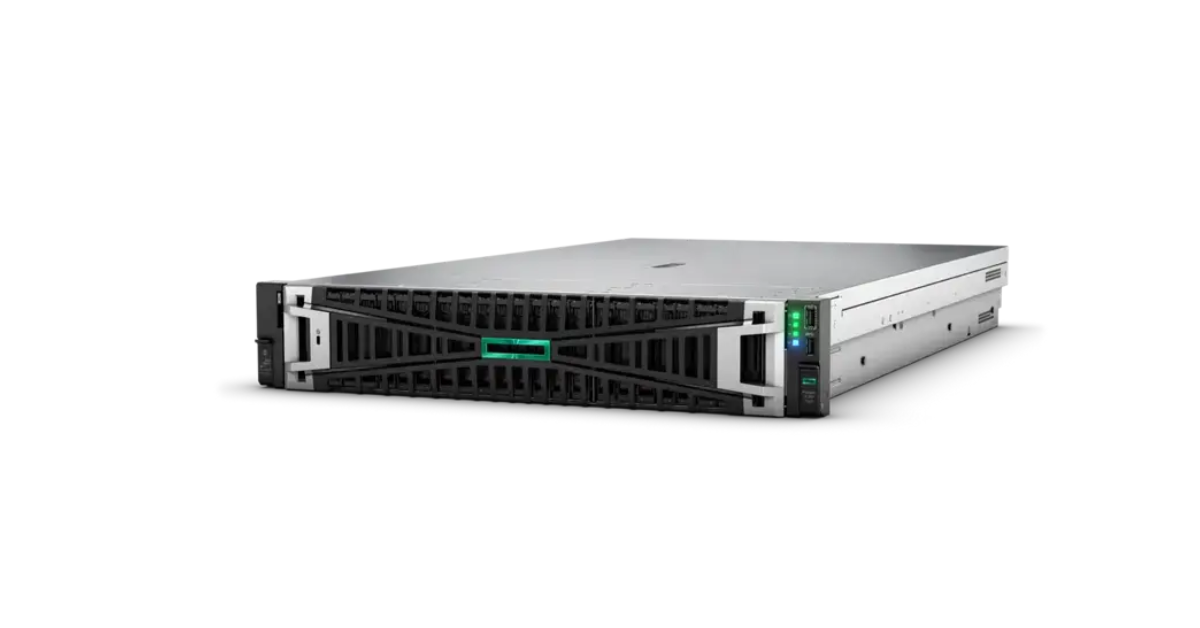
The HPE ProLiant DL380 Gen11 server represents the latest generation of the legendary DL380 series, which has long been synonymous with reliability for VMware virtualization. Gen11 brings support for Intel Xeon Scalable 4th and 5th generation processors, DDR5 memory, and advanced security technologies.
Technical Specifications
- Processors: Up to two Intel Xeon Scalable 4th or 5th generation with support for up to 64 cores per processor
- Memory: 32 DDR5 SmartMemory slots, supporting up to 8 TB with increased bandwidth
- Storage: From 8 to 24x 2.5" SAS/SATA/NVMe drives with optional rear bays
- RAID Controllers: HPE SR932i-p, MR216i-o, MR416i-o, MR416i-p for various scenarios
- Network Adapters: Wide selection from 1GbE to 200GbE in PCIe and OCP 3.0 formats
- Management: HPE iLO 6 with InfoSight integration and enhanced security capabilities
- Power Supplies: From 800W to 1800W-2200W with high Titanium efficiency
- Expansion: Up to 8x PCIe Gen5 slots and 2x OCP 3.0
VMware Benefits
HPE ProLiant DL380 Gen11 is fully VMware certified and optimized for vSphere 8.0 and later versions. The transition to DDR5 memory provides up to 50% bandwidth increase compared to the previous generation, particularly critical for virtual machines with intensive memory usage. 5th generation Intel Xeon Scalable processors offer built-in AI accelerators and improved performance per watt.
HPE iLO 6 offers deep integration with VMware vCenter, automating many server lifecycle management tasks. HPE InfoSight for Servers uses machine learning for predictive analytics, helping prevent problems before they occur – a critically important function for production virtual infrastructures.
Best For
HPE ProLiant DL380 Gen11 is the choice for organizations that value reliability, security, and long-term support. The server is ideal for deploying mission-critical enterprise applications on VMware, creating fault-tolerant vSphere clusters, implementing compliance requirements in regulated industries, and building hybrid cloud infrastructures based on VMware Cloud.
DELL PowerEdge R450: Compact for Branch Offices

For organizations with distributed infrastructure and virtualization requirements in branch and remote offices, the DELL PowerEdge R450 offers the perfect combination of compactness, performance, and affordability. This server in 1U form factor is designed for ROBO (Remote Office/Branch Office) scenarios.
Technical Specifications
- Processors: Up to two 3rd Generation Intel Xeon Scalable processors with support for up to 24 cores per processor
- Memory: 16 DDR4 DIMM slots, supporting up to 1 TB RDIMM at speeds up to 2933 MT/s
- Storage: Up to 8x 2.5" SAS/SATA drives (up to 61.4 TB)
- RAID Controllers: PERC H345, H355, H745, H755, HBA355i
- Network Interfaces: Embedded 2x 1GbE LOM with optional OCP 3.0
- Management: iDRAC9 with Quick Sync 2 for simplified management
- Power Supplies: From 600W to 1100W with redundancy
- Cooling: Up to 7 cold-swap fans
VMware Benefits
PowerEdge R450 is optimized for deploying VMware vSphere in ROBO scenarios and supports all key features necessary for remote virtualization. Despite its compact form factor, the server can host sufficient virtual machines for a typical branch office – from file servers and domain controllers to business applications.
Integration with iDRAC9 is particularly important for branch offices, allowing centralized server management from the main office without requiring physical IT personnel presence. Remote KVM, virtual media, and automatic recovery functions are critical for maintaining operability of remote locations.
Best For
DELL PowerEdge R450 is ideal for organizations with distributed geography requiring virtualization deployment in branches, remote offices, and edge locations. The server is excellent for implementing VMware vSphere architecture in ROBO scenarios, creating local virtual infrastructures with centralized management, and ensuring fault tolerance of critical services in branch offices.
HPE ProLiant DL360 Gen11: Density and Efficiency
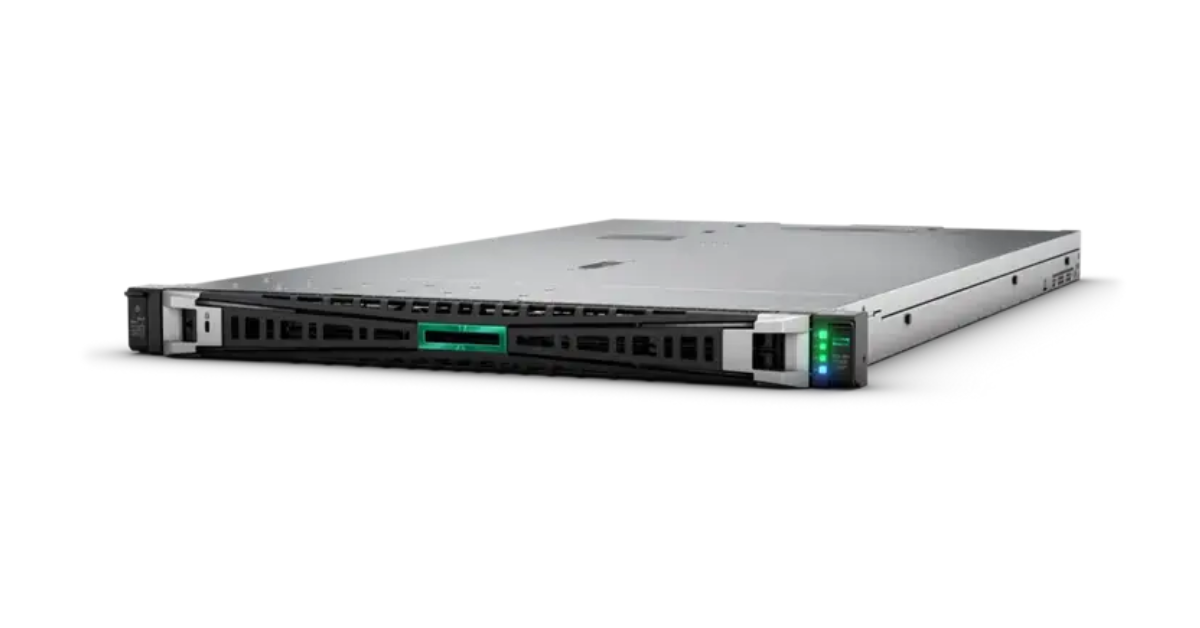
Completing our review is the HPE ProLiant DL360 Gen11 – a dual-processor server in 1U form factor that sets new standards for virtualization density and energy efficiency. Gen11 brings support for the latest Intel technologies and offers unique capabilities for high-density virtual infrastructures.
Technical Specifications
- Processors: Up to two Intel Xeon Scalable 4th or 5th generation with support for up to 64 cores per processor
- Memory: 32 DDR5 SmartMemory slots, supporting up to 8 TB memory
- Storage: Up to 20x EDSFF E3.s 1T NVMe drives or 10x 2.5" with rear bays
- RAID Controllers: Wide selection of HPE Smart Array Gen11 controllers
- Network Adapters: Optional OCP 3.0 and PCIe adapters up to 200GbE
- Management: HPE iLO 6 Standard with Intelligent Provisioning
- Power Supplies: From 500W to 1800W-2200W with Titanium efficiency
- Expansion: Up to 3x PCIe Gen5 and 2x OCP 3.0 slots
VMware Benefits
HPE ProLiant DL360 Gen11 offers a unique combination of high virtualization density and modern storage technologies. Support for up to 20 EDSFF E3.s NVMe drives in 1U form factor provides unprecedented storage performance for virtual machines with intensive I/O operations. This makes the server ideal for VMware vSAN All-Flash configurations.
Intel Xeon 5th generation processors include built-in accelerators for cryptography, compression, and AI workloads, enhancing overall virtual machine performance. HPE iLO 6 provides deep integration with VMware vCenter and supports automated ESXi deployment through Intelligent Provisioning.
Best For
HPE ProLiant DL360 Gen11 is the choice for organizations requiring maximum virtualization density in limited rack space. The server is ideal for creating high-density VMware clusters, deploying edge computing infrastructures with virtualization, implementing software-defined storage based on vSAN, and building high-performance VDI solutions with fast storage.
VMware Server Selection Recommendations
Processor Selection Criteria
When choosing a server for VMware, the key parameter is the number of processor cores. Modern virtual environments require a balance between processor frequency and core count. For most scenarios, it's recommended to choose processors with a base frequency no lower than 2.0 GHz and core counts from 16 to 32 per processor. This ensures optimal performance per virtual machine and overall density ratio.
For high-load databases and real-time applications, high clock frequency is important, so consider processors with Turbo Boost up to 3.5-4.0 GHz. For consolidating large numbers of light workloads, maximum core count becomes the priority.
RAM Requirements
VMware vSphere requires a minimum of 8 GB memory for the hypervisor itself, but actual needs are determined by the number and type of virtual machines. It's recommended to plan a minimum of 4-8 GB memory per virtual machine, plus a 20-30% reserve for hypervisor buffers and caches.
For small infrastructures (10-20 VMs), 128-256 GB memory per host is sufficient. Medium environments (50-100 VMs) require 512 GB - 1 TB. Large consolidated infrastructures and VDI may need 2-8 TB memory per server. It's important to consider future memory expansion capabilities.
Storage System Configuration
Storage system performance is critical for VMware, as it directly affects virtual machine responsiveness. Minimum recommended configuration includes a RAID controller with cache memory and data loss protection (BBU or supercapacitors).
For ESXi boot and swap files, two SSD drives in RAID 1 are sufficient. For virtual machine storage, NVMe SSDs are recommended, providing low latency (less than 1 ms) and high IOPS. When using VMware vSAN, plan for at least 1 NVMe cache drive and 3-4 capacity drives per host.
Network Subsystem
VMware requires reliable and high-performance network infrastructure. Minimum recommended configuration includes 4 network ports: 2 for management network (vMotion, Management) and 2 for production virtual machine traffic. For small infrastructures, 1 GbE is sufficient, but 10 GbE or higher is recommended for production environments.
When using vSAN, a dedicated 10/25 GbE network for Storage Traffic is critically important. For large infrastructures and VDI, consider 25/40/100 GbE adapters. Always ensure network path redundancy for critical functions.
Selection by Infrastructure Scale
Small Business and Branches (up to 25 VMs): DELL PowerEdge R450 – optimal choice. Configuration: 2x processors 12-16 cores, 256-512 GB RAM, 4-6 SSD drives, 10 GbE network adapters.
Medium Business (25-100 VMs): DELL PowerEdge R650 or HPE ProLiant DL360 Gen11. Configuration: 2x processors 24-32 cores, 512 GB - 1 TB RAM, 8-10 NVMe drives, 25 GbE network adapters.
Large Business (100-300+ VMs): DELL PowerEdge R750 or HPE ProLiant DL380 Gen11. Configuration: 2x processors 32-40 cores, 2-4 TB RAM, 16-24 NVMe drives, 25/40 GbE network adapters, GPU support for VDI.
VDI Infrastructures: Priority on high core density and large memory capacity. Recommended HPE ProLiant DL380 Gen11 or DELL PowerEdge R750 with maximum memory configuration and fast NVMe drives.
vSAN Clusters: Require balance between compute and storage. Optimal HPE ProLiant DL360 Gen11 (for All-Flash) or DELL PowerEdge R650 with sufficient NVMe slots and 25 GbE network for storage traffic.
Conclusion
Choosing the right server hardware for VMware vSphere is an investment in the performance, reliability, and scalability of your virtual infrastructure. All reviewed servers – DELL PowerEdge R450, R650, R750, and HPE ProLiant DL360 Gen11, DL380 Gen11 – are officially VMware certified and included in the Hardware Compatibility List (HCL), guaranteeing their compatibility and optimal operation with vSphere.
When selecting a specific model, consider not only current needs but also infrastructure development plans for the next 3-5 years. Invest in servers with reserve processor, memory, and storage resources to avoid premature equipment replacement. Pay attention to server expansion and upgrade capabilities.
For small infrastructures and branches, DELL PowerEdge R450 is optimal, providing necessary performance in compact form factor. Medium organizations will get maximum value from DELL PowerEdge R650 or HPE ProLiant DL360 Gen11, which offer excellent balance of characteristics. Large enterprises and service providers should consider flagship DELL PowerEdge R750 or HPE ProLiant DL380 Gen11 with maximum scalability capabilities.
All described servers are available in various configurations on the ServerMall website. Our specialists will help select the optimal configuration for your VMware virtualization requirements, offer professional deployment and configuration services, and provide technical support at all stages of operation. Visit our server catalog to learn more about available models and get expert consultation.