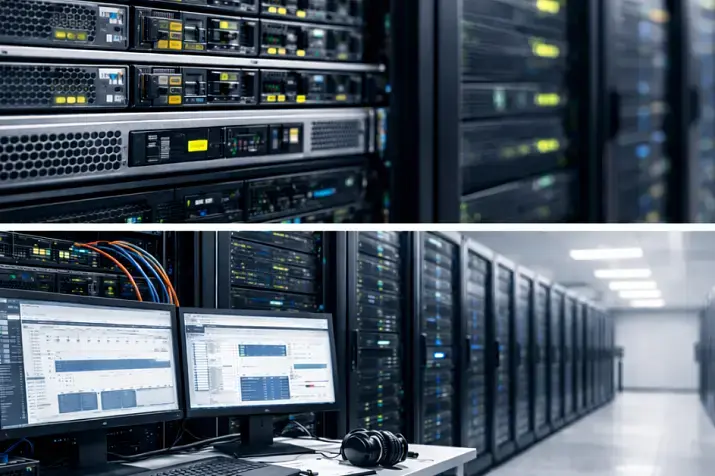
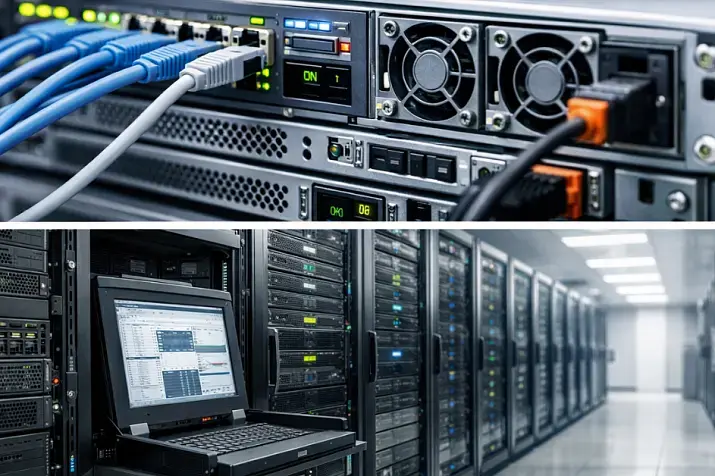
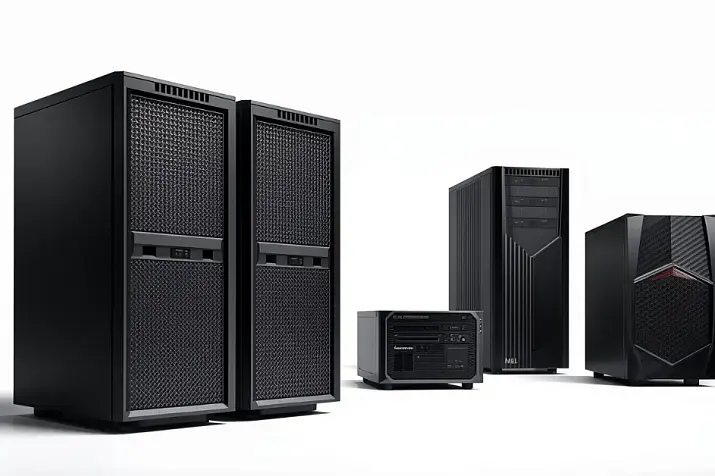
When selecting a server for business operations, a common question arises: which model should you choose from the DELL PowerEdge 14th generation lineup? Two popular options — DELL PowerEdge R430 and DELL PowerEdge R630 — represent reliable solutions for various tasks, but feature significant differences in architecture, performance, and scalability.
The key difference between R430 and R630 lies in form factor and computing power: R430 is a compact 1U server supporting one processor and up to 16 memory slots, ideal for basic business applications and small-scale virtualization. R630, also in a 1U form factor, supports two processors and up to 24 memory slots, making it a more powerful solution for demanding tasks, enterprise-level virtualization, and database workloads.
In this article, we'll comprehensively compare both models across key parameters: processor power, memory capacity, storage capabilities, expandability, and typical use cases. This will help you make an informed decision about which server best suits your specific business requirements and budget.
DELL R430 vs R630 Comparison Table
| Specification | DELL PowerEdge R430 | DELL PowerEdge R630 |
|---|---|---|
| Form Factor | 1U Rack | 1U Rack |
| Processors | Up to 1x Intel Xeon E5-2600 v3/v4 (up to 22 cores) | Up to 2x Intel Xeon E5-2600 v3/v4 (up to 44 cores) |
| Memory | 16 DIMM slots, up to 512 GB DDR4 | 24 DIMM slots, up to 1.5 TB DDR4 |
| Storage | Up to 4x 3.5" or 8x 2.5" drives | Up to 10x 2.5" drives (including NVMe) |
| PCIe Slots | 2 PCIe Gen3 slots | 3 PCIe Gen3 slots |
| Network Adapters | 4x 1GbE baseline | 4x 1GbE or 10GbE/25GbE options |
| Management | iDRAC8 Express/Enterprise | iDRAC8 Express/Enterprise |
| Power Supplies | 350W, 550W (Platinum) | 495W, 750W, 1100W (Platinum/Titanium) |
| Use Cases | Small business, web hosting, basic virtualization, file servers | Enterprise virtualization, databases, HPC, cloud computing |
DELL PowerEdge R430: Compact Solution for Small Business
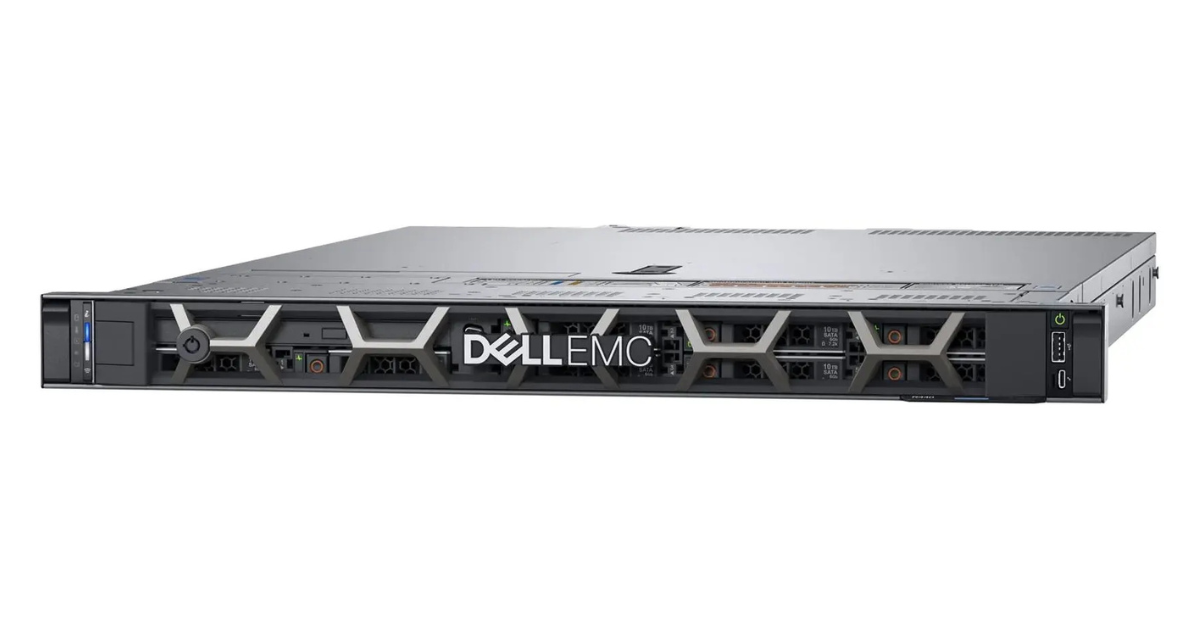
The DELL PowerEdge R430 server is a reliable single-processor solution in a compact 1U chassis, designed specifically for small and medium-sized businesses. This server is ideal for companies requiring a balance between performance, compactness, and affordability.
DELL R430 Technical Specifications
- Processor: 1x Intel Xeon E5-2600 v3/v4 (Haswell/Broadwell), up to 22 cores per processor
- Memory: 16 DDR4 DIMM slots, up to 512 GB (with RDIMM/LRDIMM), speeds up to 2400 MT/s
- Storage Controllers: PERC H330, H730, H730P (RAID), Software RAID S130
- Drive Bays: Up to 4x 3.5" hot-plug SAS/SATA HDD/SSD (max 32 TB) or up to 8x 2.5" hot-plug drives (max 9.6 TB)
- Network: Embedded 4-port 1GbE Broadcom 5720 adapter, optional LOM riser
- PCIe Slots: 2 PCIe Gen3 slots (1x x16 low-profile, 1x x8 low-profile)
- Power Supplies: Single or redundant 350W/550W Platinum
- Dimensions: Height 42.8 mm (1.68"), width 434 mm, depth 660.3 mm
- Weight: 16.3 kg to 19.3 kg depending on configuration
- Management: iDRAC8 Express or Enterprise with Lifecycle Controller
Who Should Choose DELL R430
DELL PowerEdge R430 is optimal for the following scenarios:
- Small Business: Companies with 10-50 employees requiring a reliable server for basic business applications
- Web Hosting: Hosting small to medium websites and online stores
- File Servers: Centralized file storage and sharing within local networks
- Basic Virtualization: Deploying 5-10 virtual machines with moderate loads
- Video Surveillance Systems: Processing and storing video streams for small security systems
- Office Applications: Microsoft Exchange, SharePoint for small teams
- Remote Offices: Compact solution for branch locations with limited space
With its compact 1U form factor, R430 saves rack space, which is critical for small server rooms. The single-processor architecture reduces power consumption and heat generation, also lowering operational costs.
DELL PowerEdge R630: Power for Mission-Critical Applications

The DELL PowerEdge R630 server is a dual-processor workhorse in a 1U form factor, designed for demanding enterprise applications. This server delivers significantly higher performance and scalability compared to R430, while maintaining 1U chassis compactness.
DELL R630 Technical Specifications
- Processors: Up to 2x Intel Xeon E5-2600 v3/v4 (Haswell/Broadwell), up to 44 cores total
- Memory: 24 DDR4 DIMM slots, up to 1.5 TB (with LRDIMM), speeds up to 2400 MT/s
- Memory Protection: Advanced ECC, Online Spare, Mirror Mode, Lock-step Mode
- Storage Controllers: PERC H330, H730, H730P, H830 (RAID), Software RAID S130
- Drive Bays: Up to 10x 2.5" hot-plug SAS/SATA/NVMe (max 76.8 TB with SSD), optional 2x 2.5" rear drives
- Network: Baseline 4x 1GbE, optional 10GbE SFP+, 10GbE Base-T, 25GbE adapters
- PCIe Slots: 3 PCIe Gen3 slots (configurable x16/x8 low-profile)
- GPU Support: Up to 3x single-width NVIDIA Tesla GPUs (T4 and similar)
- Power Supplies: 495W, 750W, 1100W, 1600W (Platinum/Titanium) with full redundancy
- Dimensions: Height 42.8 mm (1.69"), width 482 mm, depth 808.5 mm
- Weight: 19.5 kg to 23.6 kg depending on configuration
- Management: iDRAC8 Express/Enterprise with Quick Sync 2
Who Should Choose DELL R630
DELL PowerEdge R630 is ideal for the following enterprise-level tasks:
- Enterprise Virtualization: VMware vSphere, Microsoft Hyper-V, Citrix Hypervisor with dense consolidation (20-50+ VMs)
- Databases: Microsoft SQL Server, Oracle Database, MySQL, PostgreSQL with high transactional loads
- Business Applications: SAP, Oracle ERP, Microsoft Exchange for medium to large organizations
- Web Infrastructure: High-traffic web services, e-commerce applications
- VDI (Virtual Desktop Infrastructure): Citrix Virtual Apps and Desktops, VMware Horizon for 100+ users
- Cloud Computing: Private cloud, OpenStack, container platforms (Kubernetes, Docker)
- Data Analytics: Business Intelligence, big data processing with moderate requirements
- HPC (High-Performance Computing): Scientific calculations, entry-level engineering simulations
- Media Streaming: Video streaming, content transcoding
R630's dual-processor architecture delivers twice the computing power, critical for multi-threaded applications and virtualization. Enhanced memory capabilities (up to 1.5 TB) enable running in-memory databases and multiple virtual machines with large RAM allocations.
Detailed Comparison of Key Aspects
Processor Performance
The most significant difference between R430 and R630 is the number of processor sockets. R430 supports only one processor, limiting maximum core count to 22 (with the top E5-2699 v4). R630 with two sockets can accommodate up to 44 cores, doubling computational power.
For single-threaded applications, the difference is less noticeable, but multi-threaded workloads (virtualization, databases, rendering) see dramatic acceleration on R630. For example, when consolidating virtual machines, R630 can handle 2-2.5 times more VMs with the same per-VM performance.
Memory and Bandwidth
R430 with 16 DIMM slots provides up to 512 GB memory, sufficient for most small and medium business tasks. R630 with 24 slots offers up to 1.5 TB, necessary for:
- In-memory databases (SAP HANA, Oracle TimesTen)
- Dense virtualization consolidation with dozens of VMs
- Caching large data volumes
- In-memory big data analytics
Memory bandwidth is also higher on R630 thanks to two processors with independent memory controllers, providing up to 153.6 GB/s versus 76.8 GB/s on R430 (using DDR4-2400).
Storage Capabilities
R430 offers flexibility between large 3.5" drives (up to 4, ideal for file servers with large HDDs) or compact 2.5" drives (up to 8). This suits moderate storage requirements.
R630 focuses on performance with up to 10x 2.5" bays supporting NVMe SSDs. This provides:
- High IOPS for databases (hundreds of thousands of operations per second)
- Low latency for transactional systems
- Fast data access for virtualization
- Ability to tier between SAS, SATA, and NVMe in one server
Expandability and PCIe
R430 with 2 PCIe slots suits basic expansion needs — additional network adapter and possibly an HBA or GPU. R630 with 3 slots provides more flexibility:
- High-speed network adapters (10/25/40GbE)
- Specialized accelerators (GPU for ML, FPGA)
- Additional storage controllers
- Fiber Channel HBA for SAN
R630 also supports up to 3 single-width GPUs, opening possibilities for machine learning, rendering, and GPU-accelerated VDI.
Network Capabilities
Both servers have a baseline 4x 1GbE adapter, but R630 offers a wider range of optional high-speed adapters:
- 10GbE SFP+ (fiber or Direct Attach)
- 10GbE Base-T (copper RJ45)
- 25GbE SFP28 (for modern networks)
For applications with high network requirements (storage, virtualization, big data), R630 provides better throughput and lower latency.
Power Consumption and Cooling
R430 with one processor and fewer components consumes significantly less power:
- Idle: ~80-100W
- Typical load: 150-250W
- Maximum: 350-550W (depending on PSU)
R630 requires more power due to two processors and additional components:
- Idle: ~120-150W
- Typical load: 300-500W
- Maximum: 1100-1600W (depending on configuration)
For companies with limited power budgets or high electricity rates, R430 offers lower total cost of ownership (TCO). R630, despite higher power consumption, provides better performance-per-watt for demanding tasks.
Management and Monitoring
Both servers feature iDRAC8 (Integrated DELL Remote Access Controller), providing:
- 24/7 remote management and monitoring
- Virtual consoles (keyboard, video, mouse)
- Virtual media for remote OS installation
- Real-time component health monitoring
- Automatic problem notifications
- Lifecycle Controller for firmware updates
The Enterprise version of iDRAC8 adds advanced features like Quick Sync 2 for mobile management via NFC.
Use Case Scenarios: When to Choose R430 vs R630
Choose DELL R430 if:
- You're a small or medium business with 10-50 users
- Basic virtualization required (5-15 VMs with moderate resources)
- Need a file server with large HDDs (3.5" drives)
- Budget is limited but reliable solution required
- Energy efficiency is critical for reducing operational costs
- Rack space is limited in server room
- Planning deployment in remote offices or branches
- Load is stable and predictable without spikes
- High-performance GPUs or specialized accelerators not required
Choose DELL R630 if:
- High-density virtualization required (20-50+ VMs)
- Planning to run mission-critical databases (SQL Server, Oracle)
- Need support for large memory volumes (over 512 GB)
- Applications are multi-threaded and scale across many cores
- High storage performance required (NVMe SSDs)
- Planning to use high-speed networks (10/25GbE)
- Need GPU support for machine learning, VDI, or rendering
- Maximum performance per rack unit is critical
- Planning load growth and require scalability headroom
- Ready to invest in performance to reduce application response times
Hybrid Scenario
Many organizations use a combination of both models:
- R630 in central datacenter for mission-critical applications, databases, and primary virtualization
- R430 in branch offices for local services, caching, and basic applications
This approach optimizes both performance and cost, placing powerful resources where they're truly needed.
Migration and Upgrade from R430 to R630
If your business has grown and R430 no longer handles the load, migrating to R630 is a logical step. Signs it's time to upgrade:
- Constant CPU load above 80-85%
- Memory shortage (high swap, slow VM performance)
- Need for more virtual machines
- Plans to implement resource-intensive applications (analytics, ML)
- Database scaling required
The migration process is relatively straightforward due to similar architecture:
- Current Load Assessment: Analyze resource usage on R430
- R630 Configuration Planning: Choose processors, memory, disks
- Data Backup: Full backup of all critical data and VMs
- Parallel Deployment: Set up R630 parallel to running R430
- Phased Migration: Move virtual machines and applications one by one
- Testing: Verify all services functionality on new server
- Final Switchover: Move all users to R630
- R430 Reconfiguration: Use old server for backup or non-critical tasks
It's important to note that both servers use E5-2600 v3/v4 processors and DDR4 memory, theoretically allowing component transfers between servers (though not recommended due to configuration and support differences).
Cost Analysis and ROI
Initial Investment
R430, as a single-processor solution, typically costs 30-50% less than R630 in comparable configuration. Typical prices on the used server market (Refurbished condition):
- R430 basic configuration (1x E5-2620 v4, 32GB RAM, no drives): $400-600
- R430 mid configuration (1x E5-2650 v4, 128GB RAM, 4x 1TB SATA): $800-1200
- R630 basic configuration (2x E5-2620 v4, 64GB RAM, no drives): $700-1000
- R630 performance configuration (2x E5-2680 v4, 256GB RAM, 8x 960GB SSD): $2000-3000
For new servers (if still available), the difference is even more significant, with R630 costing 40-60% more.
Operational Expenses (OpEx)
Key operational expenses include electricity, cooling, and maintenance:
R430:
- Average power consumption: 200W
- Annual consumption: 1,752 kWh
- Electricity cost (at $0.12/kWh): $210/year
- Cooling (1.3x power consumption): $273/year
- Total OpEx: ~$483/year
R630:
- Average power consumption: 400W
- Annual consumption: 3,504 kWh
- Electricity cost (at $0.12/kWh): $420/year
- Cooling (1.3x power consumption): $546/year
- Total OpEx: ~$966/year
Over a 5-year operational period, the OpEx difference is approximately $2,415 in R430's favor.
ROI Calculation
Return on investment depends on specific business tasks:
Scenario 1: Small business, basic applications
- R430 handles the task
- CapEx: $1,000
- 5-year OpEx: $2,415
- TCO: $3,415
- ROI: Positive, as more expensive R630 won't provide additional business value
Scenario 2: Medium business, virtualization, databases
- R630 provides 2x more performance
- CapEx: $2,500
- 5-year OpEx: $4,830
- TCO: $7,330
- ROI: Positive if additional performance reduces downtime, accelerates business processes, or consolidates multiple servers
Business Value Example: If R630 reduces order processing time by 30 seconds, and the company processes 10,000 orders monthly, this saves 83 hours of work time monthly. At $30/hour specialist cost, savings are $2,490/month or $29,880/year, many times over covering the server cost difference.
Recommendations for Choosing Between R430 and R630
Decision-Making Criteria
When choosing between DELL R430 and R630, follow this methodology:
- Assess Current and Future Needs
- How many virtual machines do you plan to run now and in 2-3 years?
- What memory volume do your applications require?
- How critical is performance for your business?
- Define Budget Framework
- What budget is allocated for server equipment?
- Can you afford higher operational expenses?
- Are there expansion plans in coming years?
- Consider Infrastructure Constraints
- How many rack units are available?
- What are power and cooling limitations?
- What network infrastructure is already deployed?
- Analyze Fault Tolerance Requirements
- How critical is downtime for your business?
- Is server-level redundancy required?
- Planning cluster solutions?
Selection Matrix
| Parameter | R430 | R630 |
|---|---|---|
| Company Size | 10-50 users | 50-500+ users |
| VM Count | 5-15 VMs | 20-50+ VMs |
| Memory Requirements | Up to 512 GB | 512 GB - 1.5 TB |
| Performance Criticality | Medium | High/Mission-Critical |
| Budget (Refurbished) | $500-1,500 | $1,000-3,500 |
| Typical Applications | File servers, web hosting, basic apps | Databases, virtualization, ERP, analytics |
| Payback Period | 1-2 years | 2-3 years (with intensive use) |
Alternative Solutions
If neither R430 nor R630 fits perfectly, consider these alternatives from the same DELL lineup:
- DELL R330: More compact and affordable alternative to R430 for very small business
- DELL R530: 2U server with greater storage flexibility if more drive bays needed
- DELL R730: 2U dual-processor server for maximum performance and expandability
- Newer Generations: R440/R640 (14th gen) or R450/R650 (15th gen) with modern Intel Xeon Scalable processors
Conclusion
Choosing between DELL PowerEdge R430 and DELL PowerEdge R630 ultimately depends on balancing your current needs, growth plans, and budget. R430 represents an excellent solution for small and medium businesses, offering reliable performance in a compact form factor at an affordable price. It's the ideal choice for basic business applications, web hosting, and moderate virtualization.
R630, on the other hand, is a powerful workhorse for enterprise applications requiring maximum performance, large memory volumes, and intensive computing. Dual-processor architecture, support for up to 1.5 TB memory, and expansion capabilities make it the preferred choice for mission-critical databases, dense virtualization, and demanding applications.
Key Takeaways:
- R430 is the best choice for small businesses with limited budgets and moderate requirements
- R630 is optimal for medium to large companies with mission-critical applications
- Both servers are reliable, well-supported, and have mature ecosystems
- Consider your needs 3-5 years ahead, not just current requirements
- TCO includes not only purchase but also power consumption, cooling, and maintenance
Regardless of your choice, both servers represent time-tested solutions from DELL that will ensure reliable operation of your IT infrastructure. If you need help choosing a configuration or consultation on specific applications, the ServerMall team is ready to provide expert support.
Check out current offers on DELL PowerEdge servers in our server catalog and find the perfect solution for your business.