
HP Servers in Europe


warranty
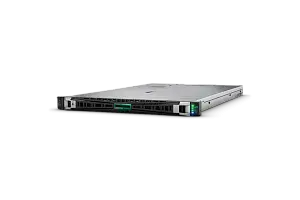

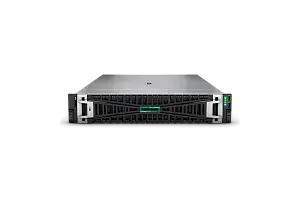


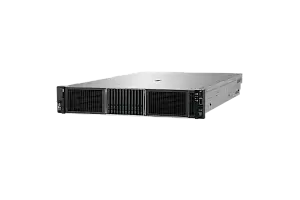

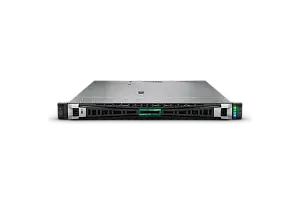


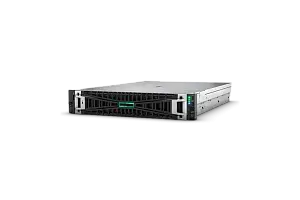
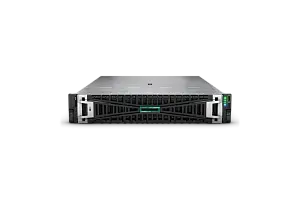
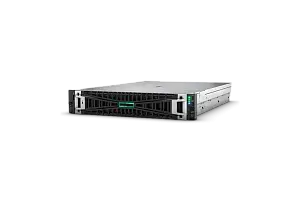
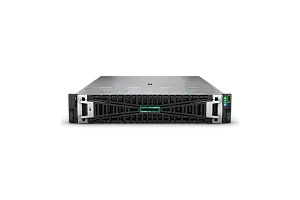
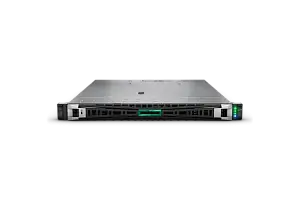
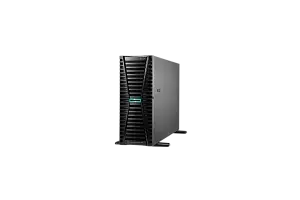
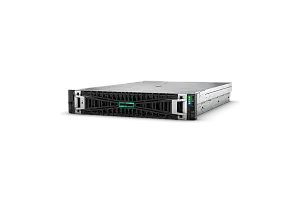
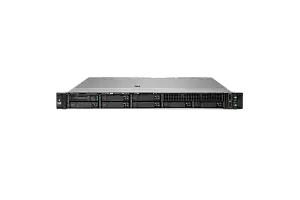
Any server or storage you can configure according to your demands in our configurator or by consulting with an expert. Our expertise helps us set new quality standards
to buy a servers
at Servermall
Ask to consultant
Repair and/or replacement of components.
More about warranty
warranty
testing
We want to make sure that our equipment is fully reliable for you. That’s why all our equipment (even new) is subject to complete diagnostics, testing, and part replacement.
testing
We fully load our equipment with various utilities and software. Rest assured, it’ll work for a very long time.
Power supply
The components work at full capacity and are tested for several days. If we are not sure about something, we replace it.
of all equipment
Our regulations imply the same testing for both used and new equipment. Oh, and by the way, we complement the official manufacturer’s warranty with our own warranty.
HPE ProLiant servers
Hewlett Packard Enterprise equipment helps companies grow, develop and follow world's business trends. Select HPE ProLiant servers, storages and switches for any task to solve it easily, quickly and reliably.
Generations of HPE ProLiant servers
HPE ProLiant Gen10 Plus and Gen10 Plus V2 current gen servers are advanced (PCIe 4.0, NVMe) and highly effective (Intel Xeon Scalable 3 и AMD EPYC 7003) systems for demanding tasks. Their potential is often too excessive for small and medium businesses. If you are limited with your budget, Servermall can offer past gen servers: Gen10 and Gen9. They would make a great solution for your business tasks with a smaller budget.
Form factors, lines and series of HPE ProLiant servers
HPE ProLiant servers come in three form factors: Tower, Rack and Blade.
HPE ProLiant line includes:
-
HPE MicroServer — small servers for basic office tasks. Their size and effectiveness are comparable to basic PCs (and they are even smaller than ATX),
-
HPE ML (Modular Line) — tower servers with good scalability for any task. Can be installed in an office or in a rack (if you purchase a railing),
-
HPE DL (Density Line) — standard rack servers for data centers and server rooms. They are installed in racks using a railing and won't fit open office spaces with many people: they are noisy and generate a lot of heat. However, they are small and effective,
-
HPE BL (Blade Line) — more compact than rack servers. To use blade servers, you need a large connecting chassis. The chassis also contains common components (network, power, active cooling, I/O interfaces, etc.). These are effective and fit data centers and virtualization,
-
HPE SL (Scalable Line) — blade systems with compact chassis for specific tasks.
How to choose an HPE server
Current generation of HPE ProLiant servers is based on x86 CPUs. To avoid issues with compatibility, clusterization and virtualization, the IT infrastructure should be based on only Intel or AMD CPUs. The cases when you use servers and CPUs from different vendors are rare: with those you can improve efficiency and/or reduce costs of independent systems.
Keep in mind that sockets of Intel motherboard are not compatible with AMD CPUs and vice versa. Sockets of different generation servers are, well, different. However, they are sometimes compatible. Check QuickSpecs files before you upgrade your CPU: otherwise, you'll purchase an expensive CPU that doesn't fit your server.
Always remember the golden rule of a stable system: 30% of server computational capacity should be the reserve. This way the system won't be at its limit and won't freeze or fail when the load increases. The companies plan for an additional reserve when they know that the load will increase along with the company's development.
HPE ProLiant lines have different series: they differ in efficiency and cost. Base your selection on the following descriptions:
Series 10. Low-end, small scale servers. Compact, low-efficient and almost not scalable servers (such as HPE ProLiant DL80 Gen9),
-
Series 100. Low-middle-end, right-sized servers. System with good balance between cost and efficiency. They are scalable and efficient (for example, HPE ProLiant DL160 Gen10),
-
Series 300. Middle-end, versatile performance servers. High-density general purpose servers with huge computational potential and small form factors. They are highly scalable (for example, HPE ProLiant DL560 Gen10),
-
Series 500. High-end, enterprise, scale-up servers. Fully scalable and highly effective servers. Thanks to large housings, you can install full-sized extension boards (network cards, GPU, RAID controllers), several supply units, large bins, several CPUs and many other components. Examples are HPE ProLiant DL385 Gen10 Plus V2.