
Dual CPU Servers


warranty





Any server or storage you can configure according to your demands in our configurator or by consulting with an expert. Our expertise helps us set new quality standards
to buy a servers
at Servermall
Ask to consultant
Repair and/or replacement of components.
More about warranty
warranty
testing
We want to make sure that our equipment is fully reliable for you. That’s why all our equipment (even new) is subject to complete diagnostics, testing, and part replacement.
testing
We fully load our equipment with various utilities and software. Rest assured, it’ll work for a very long time.
Power supply
The components work at full capacity and are tested for several days. If we are not sure about something, we replace it.
of all equipment
Our regulations imply the same testing for both used and new equipment. Oh, and by the way, we complement the official manufacturer’s warranty with our own warranty.
A dual CPU server is a type of server that has two physical processors, each with its own set of cores, cache, and memory. Dual CPU servers are designed to handle demanding workloads that require high computing power,such as virtualization, database management, and scientific simulations.
The two processors in a dual CPU server can work together to handle tasks in parallel, allowing for faster and more efficient processing.This is known as symmetric multiprocessing (SMP), which allows the system to run multiple processes simultaneously across multiple cores and processors.
Dual CPU servers are typically used in enterprise environments where high availability and scalability are critical. They can support large amounts of memory and storage, and can be configured with multiple network interfaces to handle high traffic loads.
Overall, dual CPU servers are an excellent choice for businesses that require high computing power and scalability, and can benefit from the ability to run multiple processes simultaneously.
Advantages
Dual CPU servers have several advantages over single CPU servers, including:
-
Increased computing power: Dual CPU servers have double the processing power of single CPU servers. This means that they can handle more demanding workloads, run more applications simultaneously, and process data faster.
-
Improved multitasking: Dual CPU servers can run multiple processes simultaneously across multiple cores and processors, improving multitasking performance and reducing latency.
-
Better virtualization performance: Dual CPU servers are ideal for virtualization, as they can run multiple virtual machines (VMs) with high performance and without sacrificing computing power.
-
Enhanced reliability: Dual CPU servers offer enhanced reliability and availability, as they can continue to operate even if one processor fails. This makes them suitable for mission-critical applications that require high availability.
-
Higher memory capacity: Dual CPU servers can support more memory than single CPU servers, which is essential for applications that require large memory capacity,such as data analytics and scientific simulations.
-
Improved scalability: Dual CPU servers are highly scalable, as they can be upgraded with additional CPUs and memory to meet growing demands.
Overall, dual CPU servers provide increased computing power, improved multitasking, enhanced reliability, higher memory capacity, and improved scalability, making them an excellent choice for businesses that require high-performance computing due to demanding workloads.
How to Choose
Choosing a dual CPU server involves understanding your workload requirements, considering the CPU architecture, memory and storage capacity, networking capabilities, server form factor, and budget, to ensure that you select a server that meets your business needs.
When choosing a dual CPU server, consider these factors:
-
Workload requirements: Determine the specific workload requirements for your business,including the type of applications you need to run, the amount of data you need to process, and the number of users who will be accessing the system. This will help you choose a server with the appropriate processor speed, memory capacity,and storage capacity.
-
CPU architecture: Choose a server with CPUs that are compatible with your operating system and applications. Consider the number of cores, clock speed, and cache size of each CPU to ensure that they meet your performance requirements.
-
Memory capacity: Dual CPU servers can support more memory than single CPU servers.Consider the amount of memory required to support your applications and data processing needs, and choose a server with enough memory slots to accommodate your requirements.
-
Storage capacity: Determine the amount of storage required to support your data processing needs and choose a server with sufficient storage capacity, such as hard disk drives (HDDs) or solid-state drives (SSDs).
-
Networking capabilities: Choose a server with sufficient networking capabilities,including Ethernet ports and network interface cards (NICs), to support your data traffic needs.
-
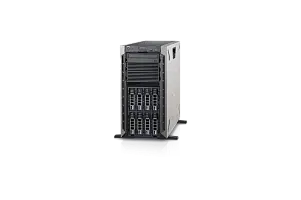
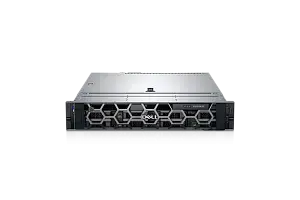
Form factor: Consider the form factor of the server, such as rack-mount or tower, and choose one that fits your data center or office space requirements.
-
Budget:Determine your budget for the server and choose one that provides the required performance and features within your budget.