
DELL Servers in Europe


warranty
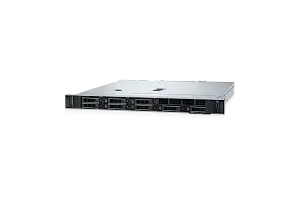


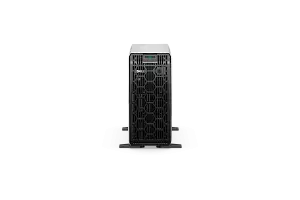

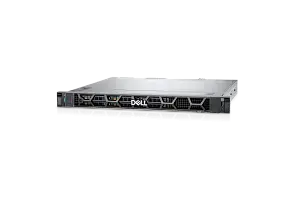


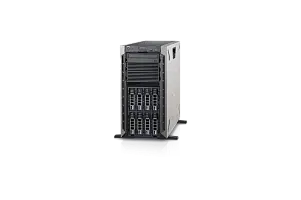


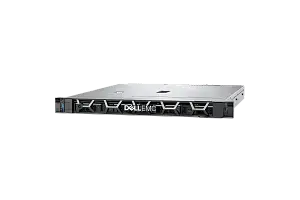
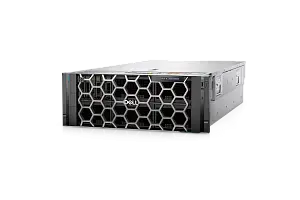

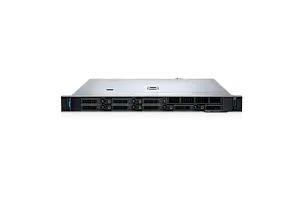
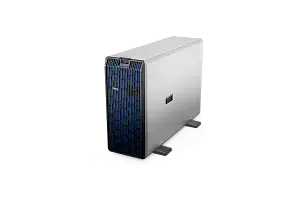
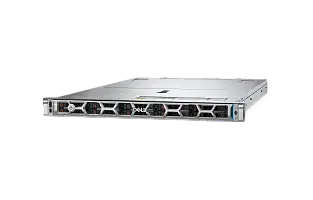

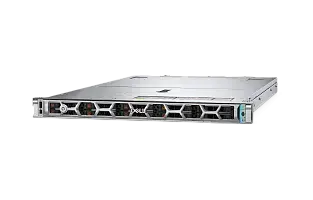
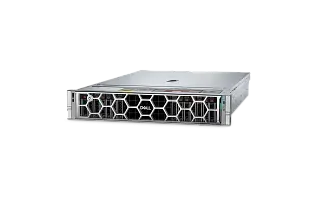
Any server or storage you can configure according to your demands in our configurator or by consulting with an expert. Our expertise helps us set new quality standards
to buy a servers
at Servermall
Ask to consultant
Repair and/or replacement of components.
More about warranty
warranty
testing
We want to make sure that our equipment is fully reliable for you. That’s why all our equipment (even new) is subject to complete diagnostics, testing, and part replacement.
testing
We fully load our equipment with various utilities and software. Rest assured, it’ll work for a very long time.
Power supply
The components work at full capacity and are tested for several days. If we are not sure about something, we replace it.
of all equipment
Our regulations imply the same testing for both used and new equipment. Oh, and by the way, we complement the official manufacturer’s warranty with our own warranty.
Dell PowerEdge servers are designed for organizations that need reliable compute, scalable capacity and predictable infrastructure value. The Dell PowerEdge line supports everyday business applications, databases, virtualization, storage-intensive environments, AI/ML workloads, GPU acceleration and high-performance computing. That makes Dell servers suitable for SMBs, growing startups, mid-sized companies and enterprise data centers.
The right Dell server depends on workload, budget, scalability and infrastructure requirements. A small business may need a practical platform for file services, backups or business applications, while a larger environment may prioritize redundancy, high network throughput, remote management and efficient operation at scale.
Dell PowerEdge line-up
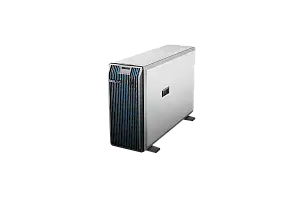
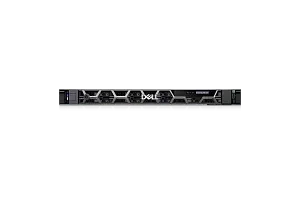
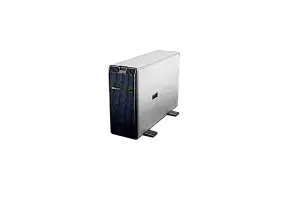
Dell PowerEdge is the main Dell server family for business infrastructure. In a typical catalog, buyers can compare several system types. Rack servers are the standard choice for data centers and server rooms because they support dense deployment, predictable airflow and scalable rack-based operation. Tower servers are often used in offices, branch locations and smaller infrastructures where a rack cabinet is not required. Modular and blade-style systems are intended for dense enterprise environments with centralized management needs.
PowerEdge R-Series servers are flexible rack systems for mixed business workloads, virtualization clusters, databases and general-purpose compute. PowerEdge XE-Series systems are better positioned for demanding AI, GPU, HPC and advanced workloads where accelerator support, thermal design and throughput matter more.
Reliability, SMB value and TCO
Dell PowerEdge servers are widely used for enterprise workloads, but reliability depends on the configuration and operating process. For business-critical systems, consider ECC memory, redundant power supplies, RAID or storage redundancy, hot-swap drive options, monitoring, firmware lifecycle management and remote management. These features help IT teams reduce operational risk and simplify serviceability.
For startups and SMBs, the best-value Dell server is rarely the largest configuration. A balanced system with enough CPU, RAM, storage flexibility and upgrade headroom is often a better investment. Total cost of ownership should include purchase price, power usage, support, maintenance time, storage expansion and rack space. Configured-to-order or refurbished Dell PowerEdge options can be effective when they match the workload and business model. Remote management, modular upgrades and workload consolidation may also help reduce IT and data center costs over time.
Virtualization, AI/ML and GPU workloads
For virtualization, the best Dell PowerEdge server is the one with the right balance of CPU core count, memory capacity, storage latency, network throughput and redundancy. Dense virtualization usually benefits from high RAM capacity, while database-heavy virtual machines may require faster storage, RAID planning or NVMe options. PowerEdge R-Series rack servers are often used as a flexible base for virtualization clusters, but the final choice should reflect the number of virtual machines, hypervisor, I/O profile and uptime requirements.
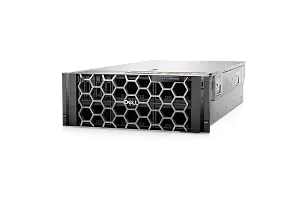
Dell PowerEdge servers can also support AI/ML workloads, including inference, fine-tuning, model training, generative AI and selected LLM workloads. Inference may need lower GPU capacity but strong latency and reliability. Training and fine-tuning usually require more GPU resources, more system memory, higher storage throughput and stronger cooling. LLM workloads depend on model size, GPU memory, interconnect, storage and the software stack. PowerEdge R-Series can fit mixed workloads and selected AI use cases, while PowerEdge XE-Series systems are better aligned with GPU-optimized AI clusters, HPC and demanding enterprise workloads.
Specifications, cooling and data center efficiency
No single benchmark defines the best Dell server for every scenario. Compare CPU performance for compute-heavy tasks, memory capacity and bandwidth for virtualization and analytics, storage IOPS and latency for databases or VDI, GPU performance for AI/ML, network throughput for clusters and storage traffic, and expandability for long-term use. Power efficiency also matters because TCO depends on utilization, power supplies, cooling design and correct sizing.
Many Dell PowerEdge deployments use air cooling in standard rack environments. Air-cooled performance at scale depends on airflow, rack layout, ambient temperature, workload density and maintenance discipline. Liquid cooling may be relevant for very dense, GPU-heavy or HPC configurations, but it is not required for every deployment. Use the catalog filters to compare Dell PowerEdge servers by form factor, generation, CPU, memory, storage bays and workload type, then choose a system that fits your workload, budget and scalability requirements.
FAQ about Dell PowerEdge servers
Are Dell PowerEdge servers suitable for businesses and SMBs?
Yes. Dell PowerEdge servers are suitable for SMBs, mid-sized companies and enterprise environments because the line includes systems for general business applications, virtualization, databases, storage-heavy workloads and AI-ready infrastructure.
Are Dell servers reliable for enterprise workloads?
Dell PowerEdge servers are widely used for enterprise workloads, but reliability depends on the right configuration, redundancy, cooling, monitoring and lifecycle management. Features such as ECC memory, redundant power supplies and remote management help support business-critical operation.
Which Dell servers deliver the best value for startups?
The best value usually comes from a balanced Dell PowerEdge configuration that matches the current workload but leaves room for upgrades. Startups should consider CPU, memory, storage, network capacity, power usage and future scalability rather than only the initial purchase price.
How much does a Dell server cost?
The cost of a Dell server depends on the generation, form factor, processor, memory, storage, GPU support, networking, warranty and configuration. Entry-level systems, refurbished servers and custom configurations can differ significantly in price.
Which Dell PowerEdge server is best for virtualization workloads?
For virtualization, the best Dell PowerEdge server is usually the one with enough CPU cores, high memory capacity, fast storage and reliable networking for the expected number of virtual machines. R-Series rack servers are often used as a flexible base for virtualization clusters.
Which Dell PowerEdge server is best for AI/ML workloads?
AI/ML workloads require a configuration based on the task. Inference, training, fine-tuning and generative AI have different requirements for GPU capacity, GPU memory, system RAM, storage throughput, networking and cooling.
Can Dell PowerEdge servers run LLMs and generative AI workloads?
Yes, selected Dell PowerEdge systems can run LLM, generative AI and model training workloads when configured with suitable GPUs, memory, storage and cooling. Larger models and training tasks usually require more specialized GPU-optimized infrastructure.
Are Dell R-Series and XE-Series servers suitable for AI clusters and HPC?
Yes, depending on the configuration. PowerEdge R-Series servers can support mixed workloads and selected AI use cases, while PowerEdge XE-Series systems are better positioned for GPU-optimized AI clusters, HPC and demanding enterprise workloads.
Do Dell PowerEdge servers use air cooling or liquid cooling?
Many Dell PowerEdge servers are designed for air-cooled data center environments. Liquid cooling may be relevant for very dense, GPU-heavy or HPC configurations where thermal requirements are higher.
How energy-efficient are Dell PowerEdge servers?
Energy efficiency depends on the exact configuration, workload, power supplies, cooling setup and utilization rate. Proper sizing, workload consolidation and efficient components can help reduce operating costs over time.